





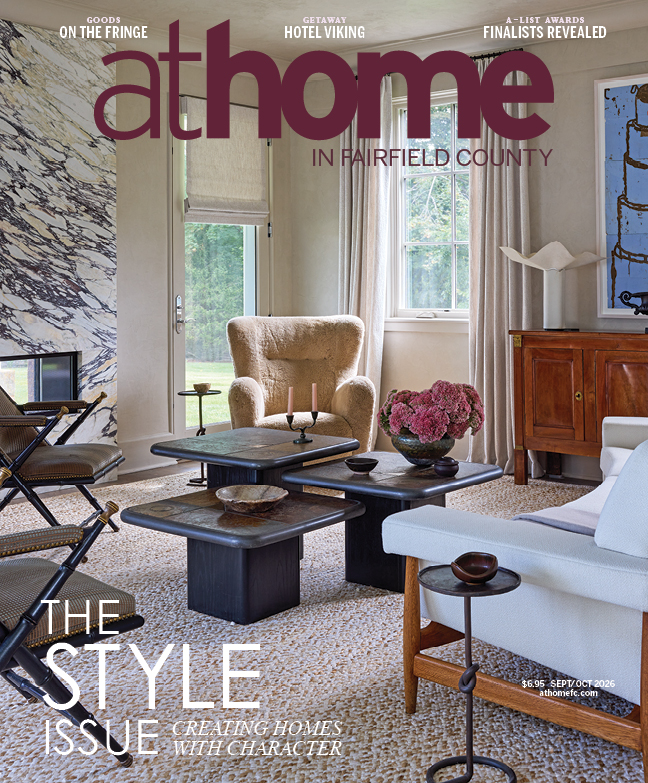

Photographs by Hulya Kolabas
When designing a room or even a whole house, countless decisions are made, yet overall success might just hinge on one in particular: lighting. You want a unique look that doesn’t dominant the room; isn’t so trendy that it’s dated in a year; and, of course, won’t fail at its main function: illumination. We turned to interior designer Michelle Hogue (www.hogueid.com), who has a passion for the art of using lighting to create spaces that are functional, personal and aesthetically pleasing.
FIND YOUR TYPE: “While there are general rules of design in lighting, like being sure all spaces have three types of lighting—overhead, task and ambient—there is more to good lighting design than the basics,” advises Michelle. Consider bulb style, wattage and overall size of the fixture in comparison to the room, furnishings, paneling and anything else that the eye. She offers these examples: “From my formal living room, one can see into my dining room, through the kitchen and into the family room. All of the light fixtures are exposed, therefore it was important that these fixtures coordinate and complement. Find a favorite and let it be a springboard for others. My kitchen island lights are from Urban Electric Company and were a must! Mix and match less expensive lighting throughout the home, as long as components, be it color or material, coordinate, it will create harmony. To that point, in the guest suite kitchen, the pendants are Pottery Barn Kids and were on sale for less than $99 each. Good design need not break the bank.”
LOCATION: Also think about where lighting is placed in each room. “Why not flank a bed and hang some pendants, especially if the bed wall is more than obvious in a room? The lights will be practical and become a design feature,” says Michelle. “Make the space more functional and beautiful by thinking ahead about how you utilize your own personal space. Automatic lights under a vanity, especially in a master or guest bath, always a good idea.”
MAN VS. NATURE: Natural and artificial light, she says, play together. “A good architect will consider the interior of a space, including window placement when designing a home, and a good designer will consider the exterior and natural light.” She offers some examples: “Typically, I like to raise windows in bathrooms so as to bring in as much natural light as possible. This way, homeowners do not feel the need to dress the windows. Add windows in stairwells. Eliminate hallways; have purposeful hallways. Offer smaller windows on walls for beds to still create more opportunities for natural light. Niches for reading nooks, banquettes, storage spaces are purposeful and create interest. Avoid placing televisions over the fireplace. Add more task and ambient lighting in your environment. Automatic lights that turn on when you open the door are inexpensive. It simply requires forethought.” Knowing how much planning goes into her design work, we would add that it takes vision and a love of details.


