





New Order
Calfornia modernism meets Connecticut tradition in a meticulously reworked estate
INTERVIEW WITH Ashley Nath & Matt Jackson, Marmol Radziner
PRINCIPAL PHOTOGRAPHY BY Laure Joliet
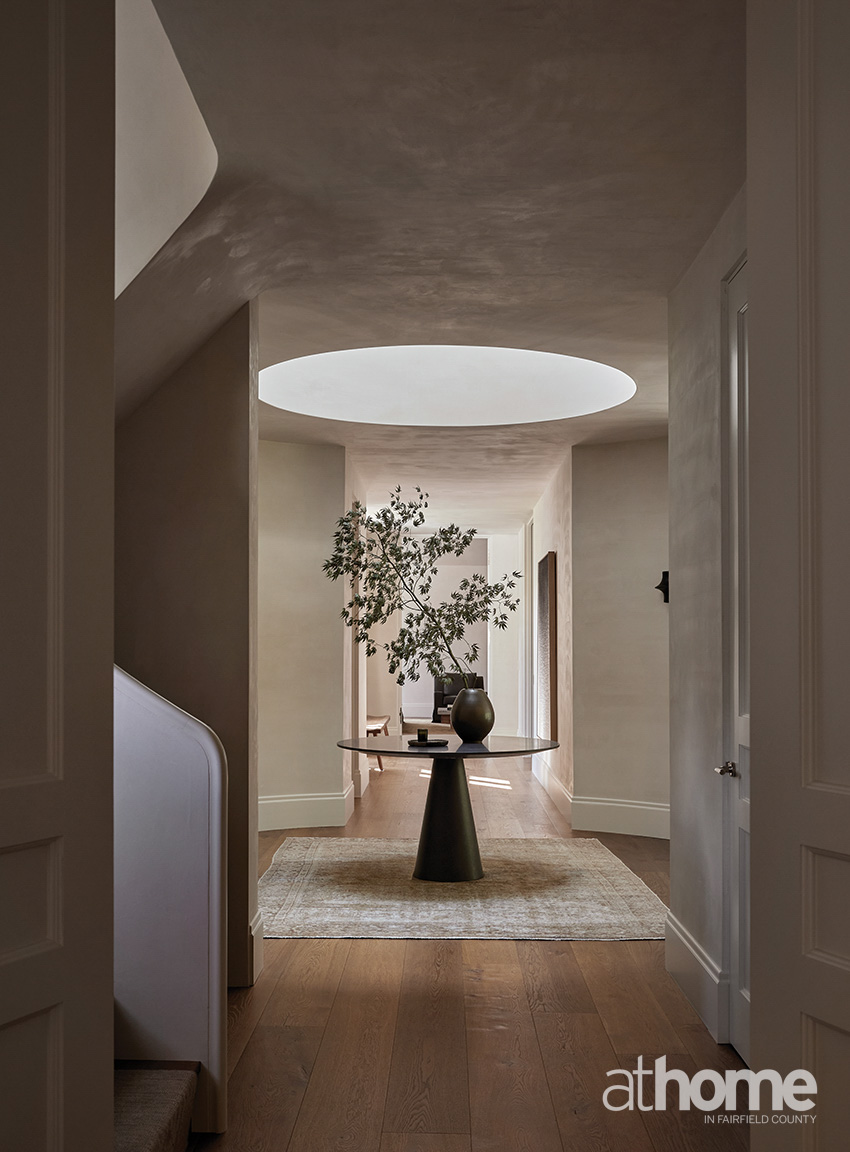
The reimagined entry includes a plaster ceiling, Schotten & Hansen floors, a vintage Mahal rug, a Rose Uniacke Belgian blue marble center table and an Isabelle Sicart Tess sconce from Galerie Carole Decombe.
Can you share a bit about the firm and how your design-build model shapes projects like this one?
Ashley Nath: Marmol Radziner started with restoration projects of classic California mid-century architecture, and we’re really known for our modernist California aesthetic. We’ve since branched out to a lot of different things—as you can see with this project—but it still carries a bit of our core tenet, which is a very deep connection to that outdoor-indoor feeling. We’ve become more of a multi-disciplinary firm where we handle the architecture, interiors, landscapes and construction, and that formed out of this need to be able to create the best kind of possible outcomes and have ownership over the whole project. This was a long-time client of ours, and he understood our philosophy well.
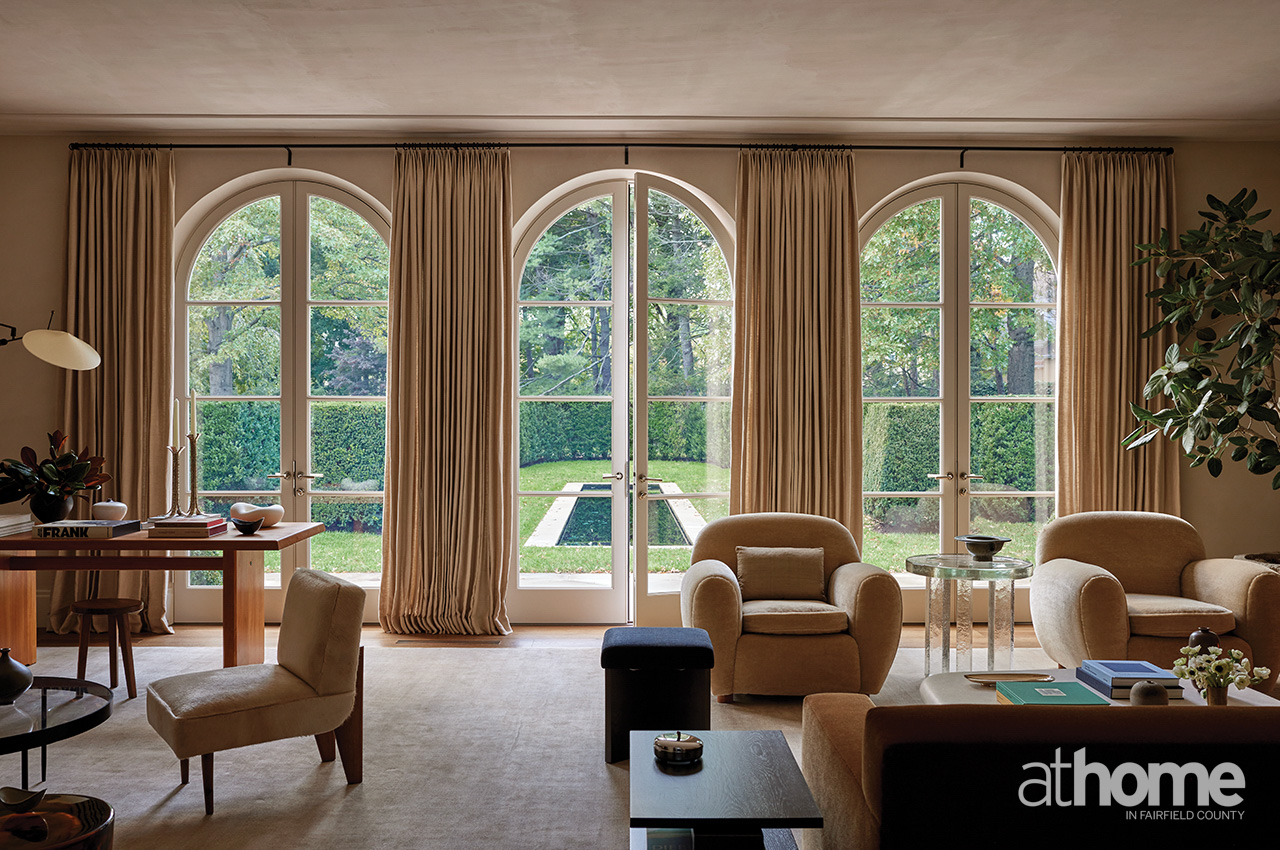
Anchored by vintage Italian mohair chairs, the room layers Jean-Michel Frank lighting with sculptural stone and wood pieces by Pierre Chapo and Axel Vervoordt.
What is the history of this home and your relationship with the client?
AN: We had done an apartment for him in New York. He was in the fashion industry for a long time and we worked with him on some of his stores. This house was really about creating a return to his roots. When he found the property, it was a special piece of land. The house was built in the ’50s and it was originally part of a 60-acre farm estate. Some of the buildings on the property were original; like the little cottage that we used as a guest house, and then there was a little potting shed that became the pool house.
Matt Jackson: We really enjoyed it. It was a fun process, and I guess it’s a slight departure from the core work that the West Coast office is known for. I think as we move into the East Coast, we find there’s a lot of joy in working on these traditional homes and blending in our more modern West Coast sensibilities into the traditional aspects. And I love the site itself, too, just the fact that it used to be part of this very large farm in Connecticut.
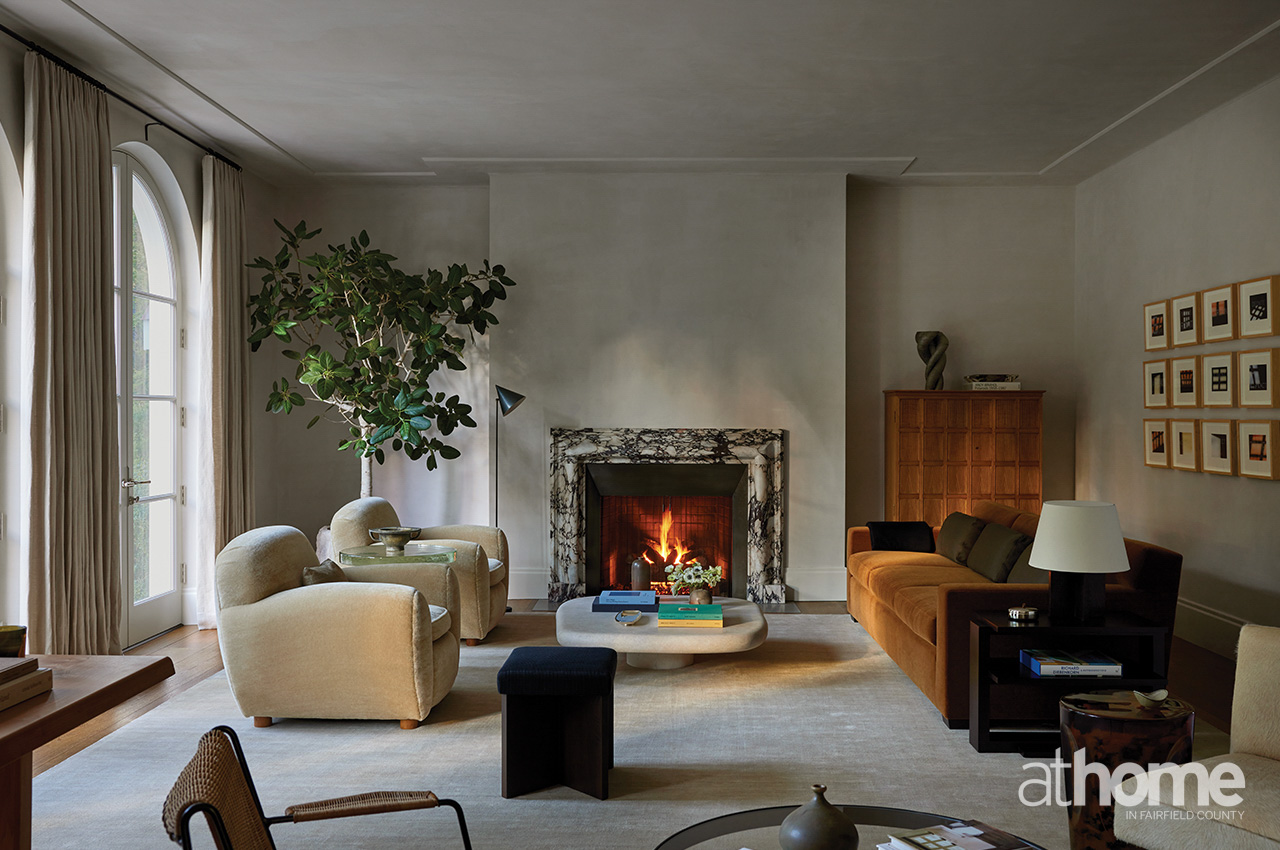
A Calacatta Viola marble surround sets the tone for a collectible mix.
Tell us about the scope and direction for the interiors.
AN: It was a complete gut renovation of the entire thing. I don’t think anything was left untouched. It really had a lot to do with the client’s aesthetic. He was very meticulous and detail-oriented, so there was a lot of attention spent on every element.
It was important to him that each space have its own moment. He and his long-time partner have family in the area, and they wanted to create a place that could host them for events. At the end of the day, I think a lot of what was driving him was creating these intentionally beautiful spaces for what they were. The living room is a true formal living room that would be for entertaining. The family room is a place that’s a little bit more casual and relaxing for normal day-to-day living.
MJ: The floors were also a big deal. They’re wide plank Dinesen floors that were put in throughout the whole house. We really focused on doing that in a very modern way, and the alignments of the floors are perfect in every room. We did meticulous layouts for each room, which I think really added to the overall intentional feeling, which I love.
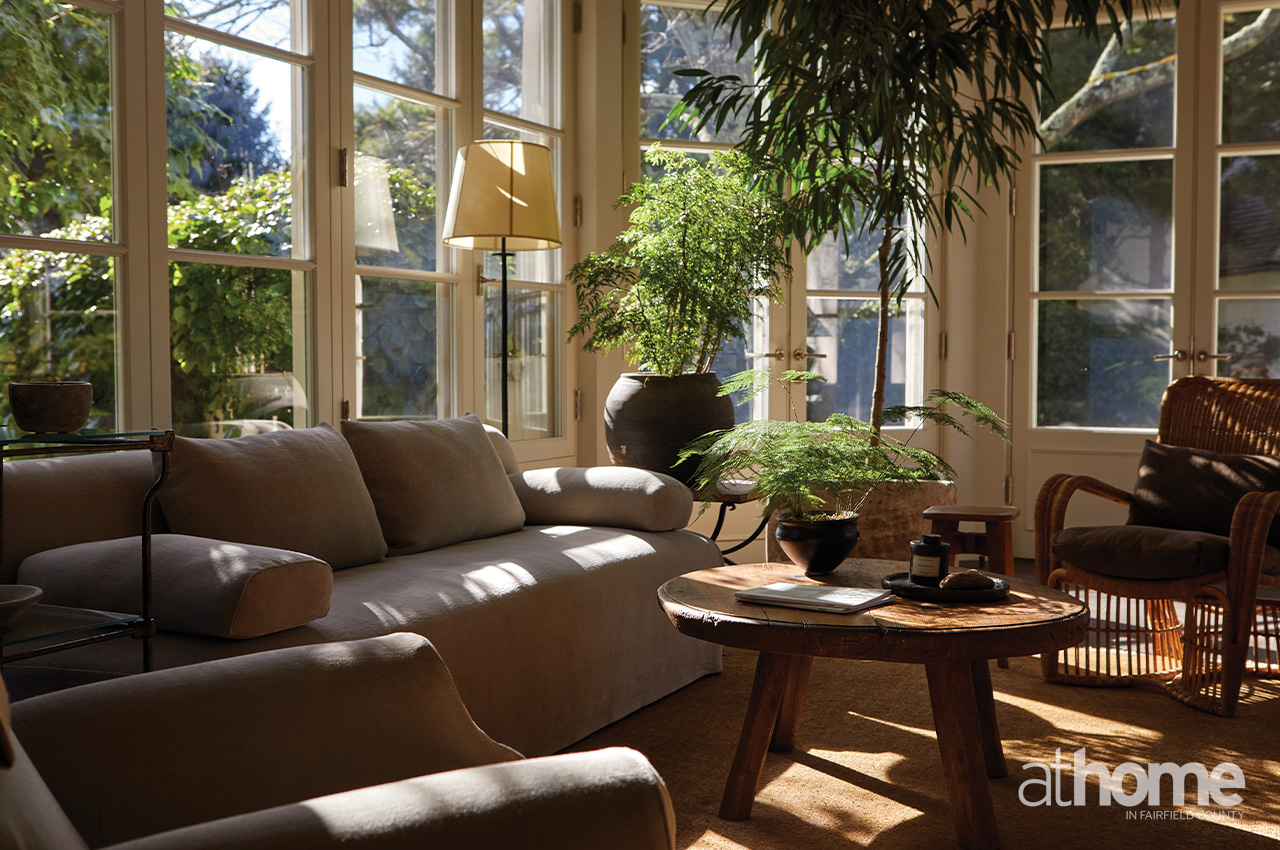
Sunlight pours into this casual seating area, where a Monte Allen slipcover sofa and vintage rattan chairs are grounded by antique French stone and iron pieces.
How did the home’s traditional architectural aesthetic influence your approach to the interiors?
AN: The interior spaces married that idea of a contemporary design with a relaxed California vibe that has a connection to the indoor and outdoor experiences. I think there’s a certain symmetry and formality that comes with the traditional architecture that we tried to stay true to, and then we layered in some more contemporary elements.
MJ: Being a long and linear main house, it lent itself to a modern take on the floor plan. Even though the architecture itself was very traditional, the floor plan allowed it to be more open. I think you feel that when you come into the house.
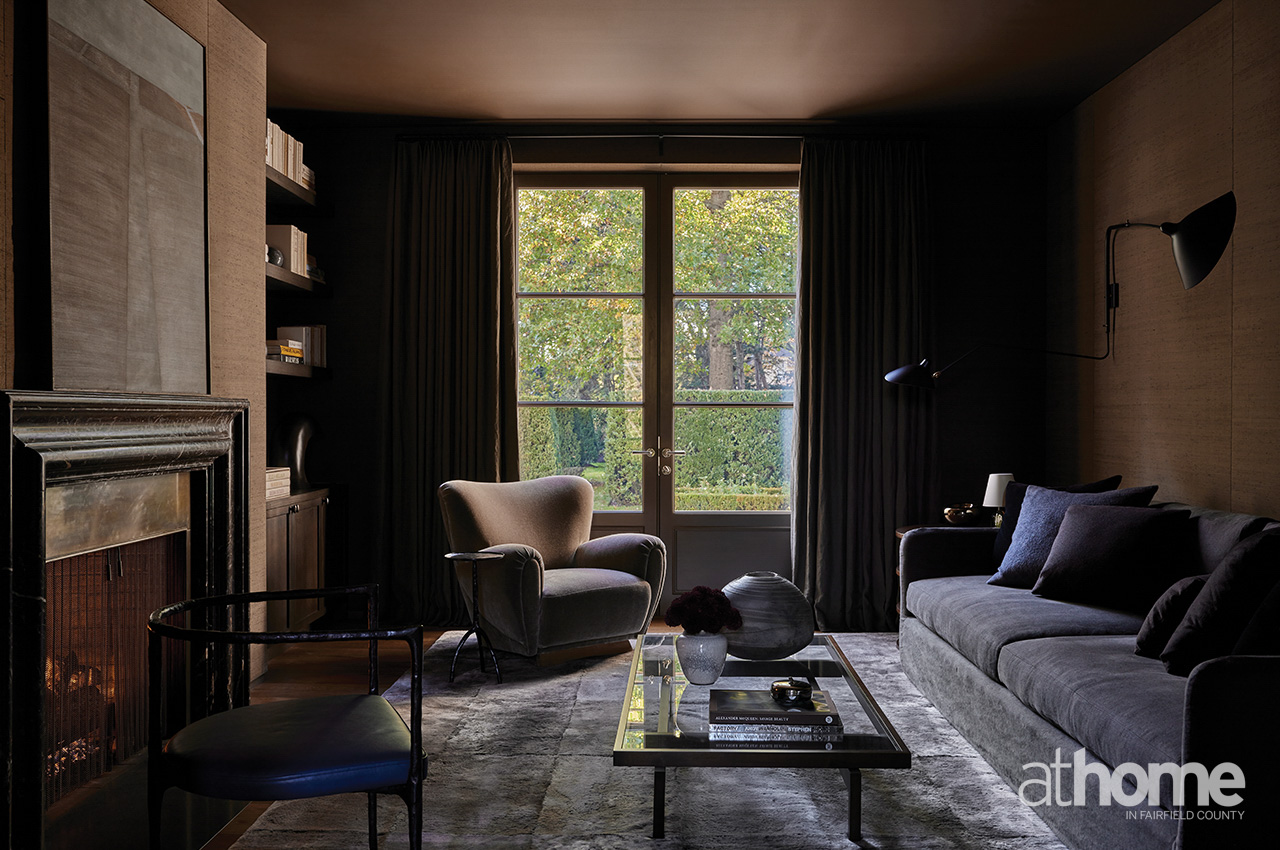
Upholstered walls in Jim Thompson fabric set a cocooning backdrop for a shearling rug, sculptural Brazilian modern tables and a softly tailored slipcovered sofa.
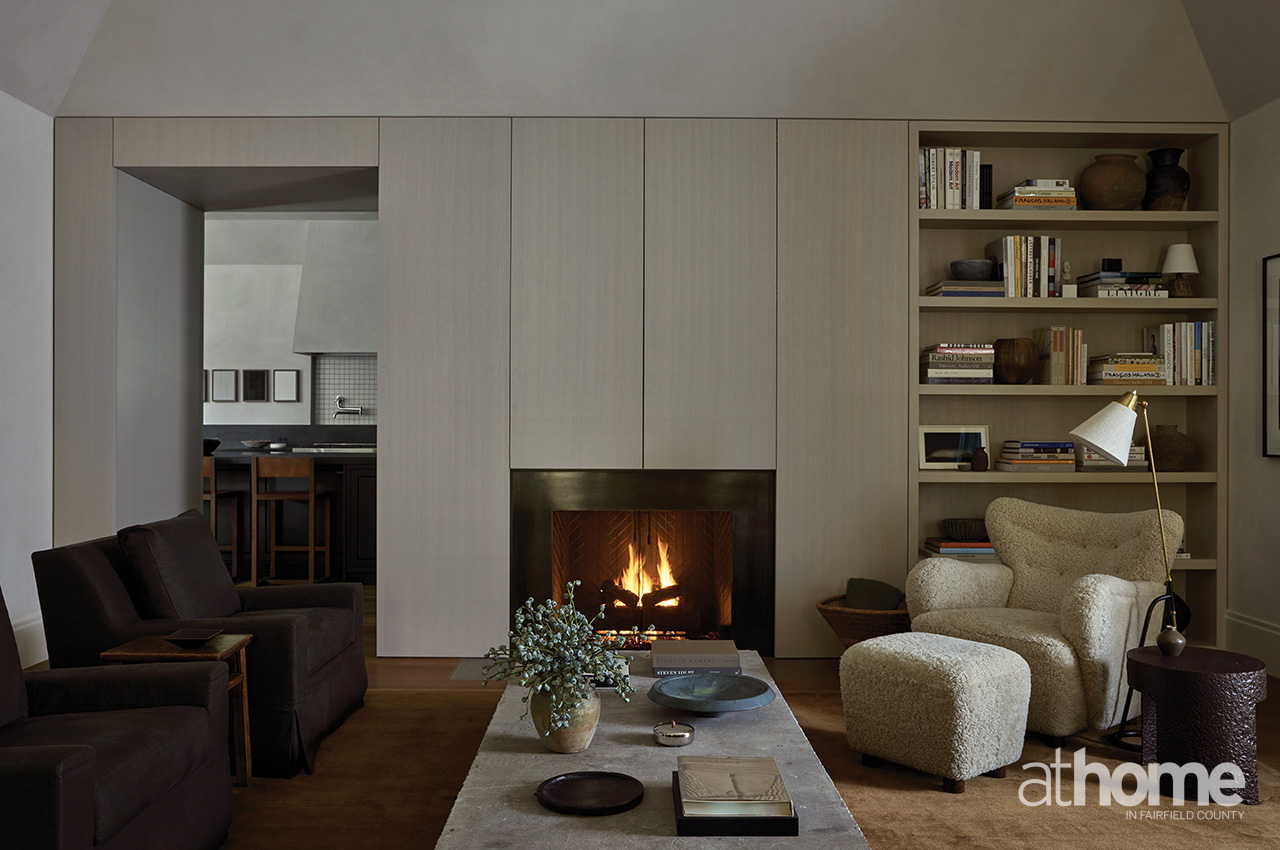
Layered materials—mohair, bronze, stone—frame Flemming Lassen seating and Liaigre chairs, punctuated by a Marienbad floor lamp for reading light.
There is an abundance of natural light throughout the home. How did light guide your layout and design decisions?
MJ: I think the sunroom is probably the easiest example of embracing the light; a room that was really conceived of almost like an outdoor space.
We brought in brick for the floor but really wrestled with what that brick was going to look like. We went through many mock-ups to make sure it felt like it was part of the outside world but refined enough to exist on the inside.
And the furniture selections in that room, the number of plants, it almost feels like this little California oasis. I love that room, and the client did as well.
Certainly, the big skylight in the entryway was a big driver to bring light down into the center of house, which it lacked on that front side.
AN: It’s a little darker once you enter the primary wings and with the drapery, it gets a little bit darker and moodier. The den—which we considered part of their primary wings—and was naturally one of the darkest rooms in the house, but we felt that it should feel like an intentionally different space.
MJ: That room is kind of like the yin to the yang of the rest of the house, right?
It’s this dark retreat that was intentionally created to recede into the rest of the house. I think it’s nice to have spaces where there’s not a lot of reflected light. It just changes your mood, your tone. You just know when you go into them.
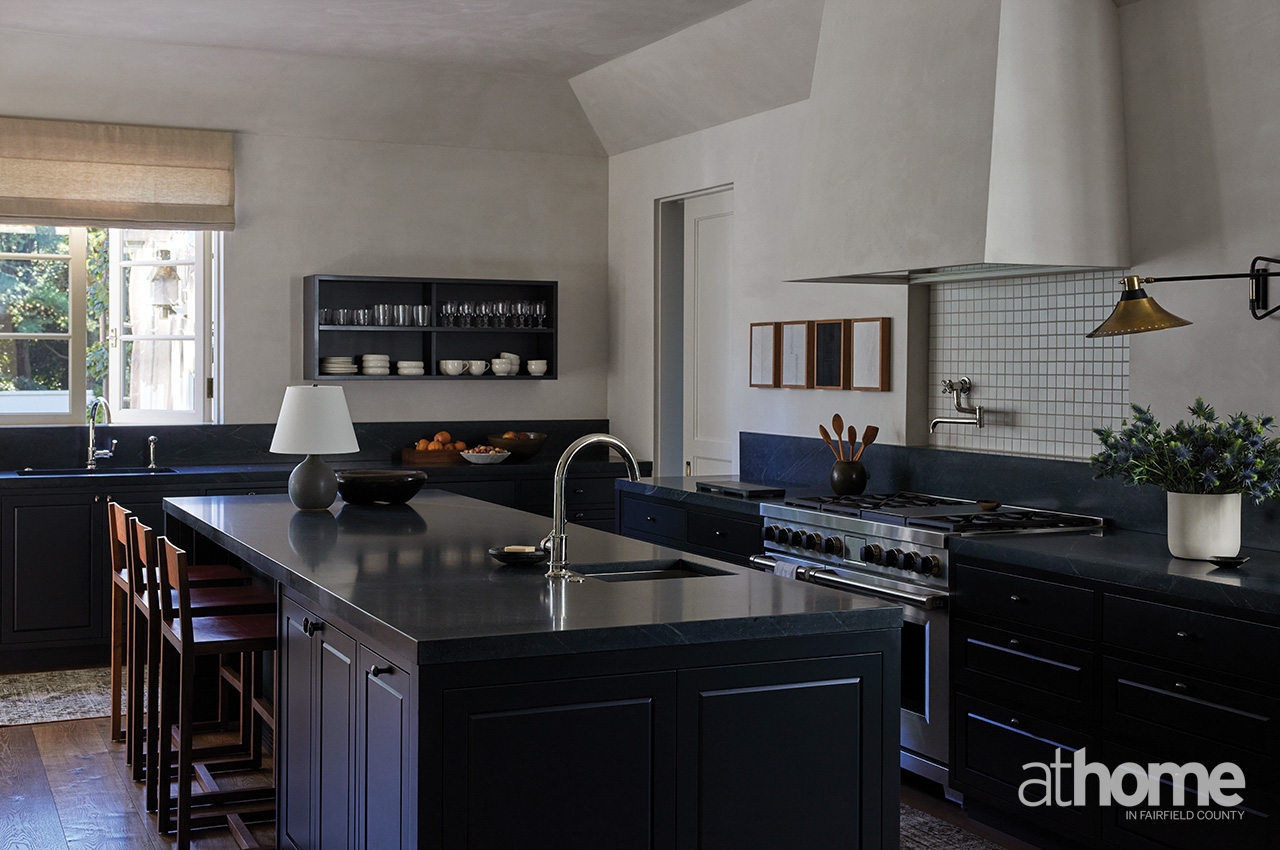
Clean lines and thoughtful details define the kitchen: Wolf range, walnut BDDW seating, Waterworks plumbing and Ponce Berga wall light.
Tell us about the kitchen.
AN: There was a formality with the entry and then the living room space, and then as you go to the outer ends of the house, it gets less formal. There’s a bit more casualness in the family room, and that also repeats in the kitchen. I think he wanted the vibe in there to feel a little bit more welcoming, but he also wanted it to look pretty. The counters are soapstone—which is very high-maintenance—and the walls are plaster. They don’t really cook; it was all more aesthetically driven.
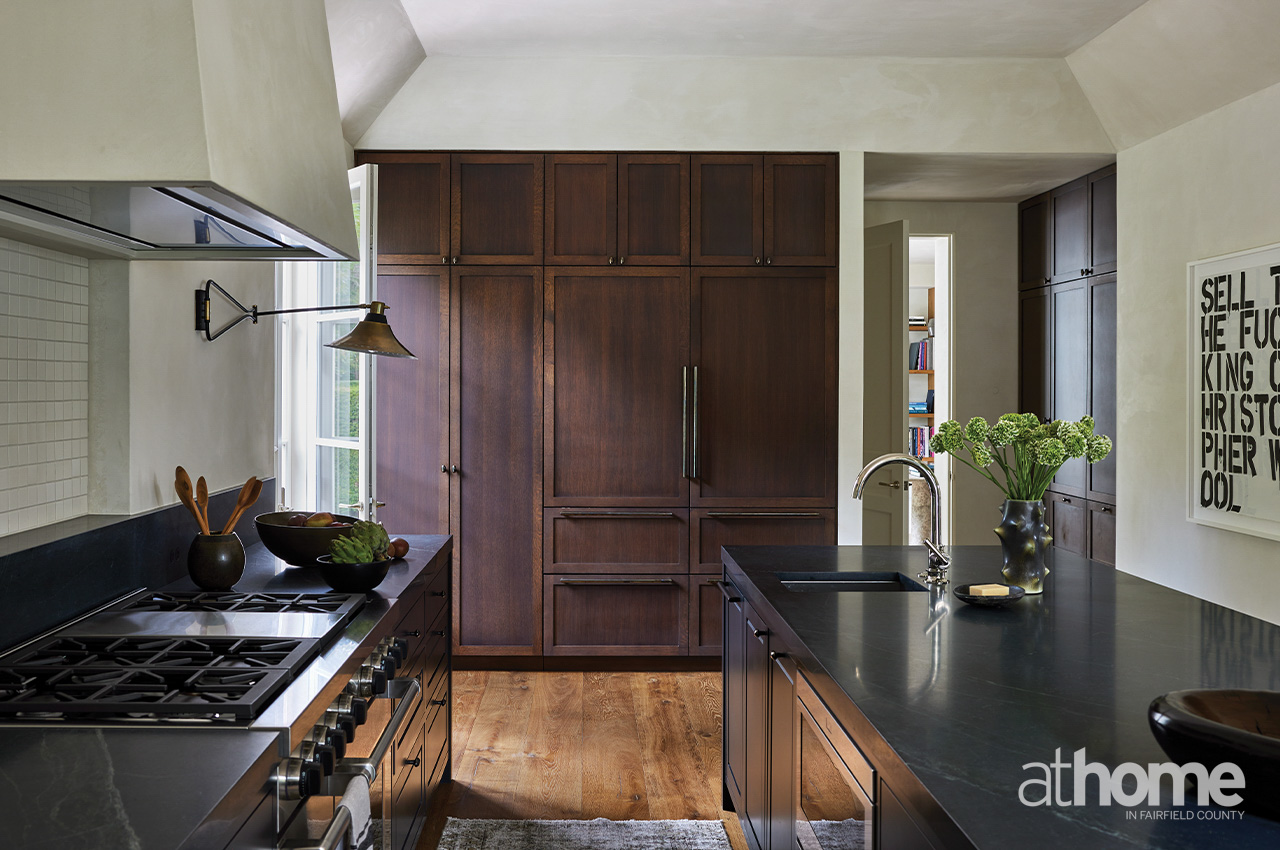
Neutral plaster walls and ceilings meet high-function appliances and striking art by Jim Kempner.
What was the plan for the primary bedroom?
MJ: He was looking for this space that was very open to the adjacent fireplace room.
We went through many iterations, but I think where we landed was this beautiful space that included this very tailored bed and then kept the bathroom and the closets very separate from that room. The idea of having individual rooms that can be maintained for their purpose was important for him.
The closets all have doors. A lot of folks don’t do that and will keep everything open, but I think he had this desire for this perfect serene place.
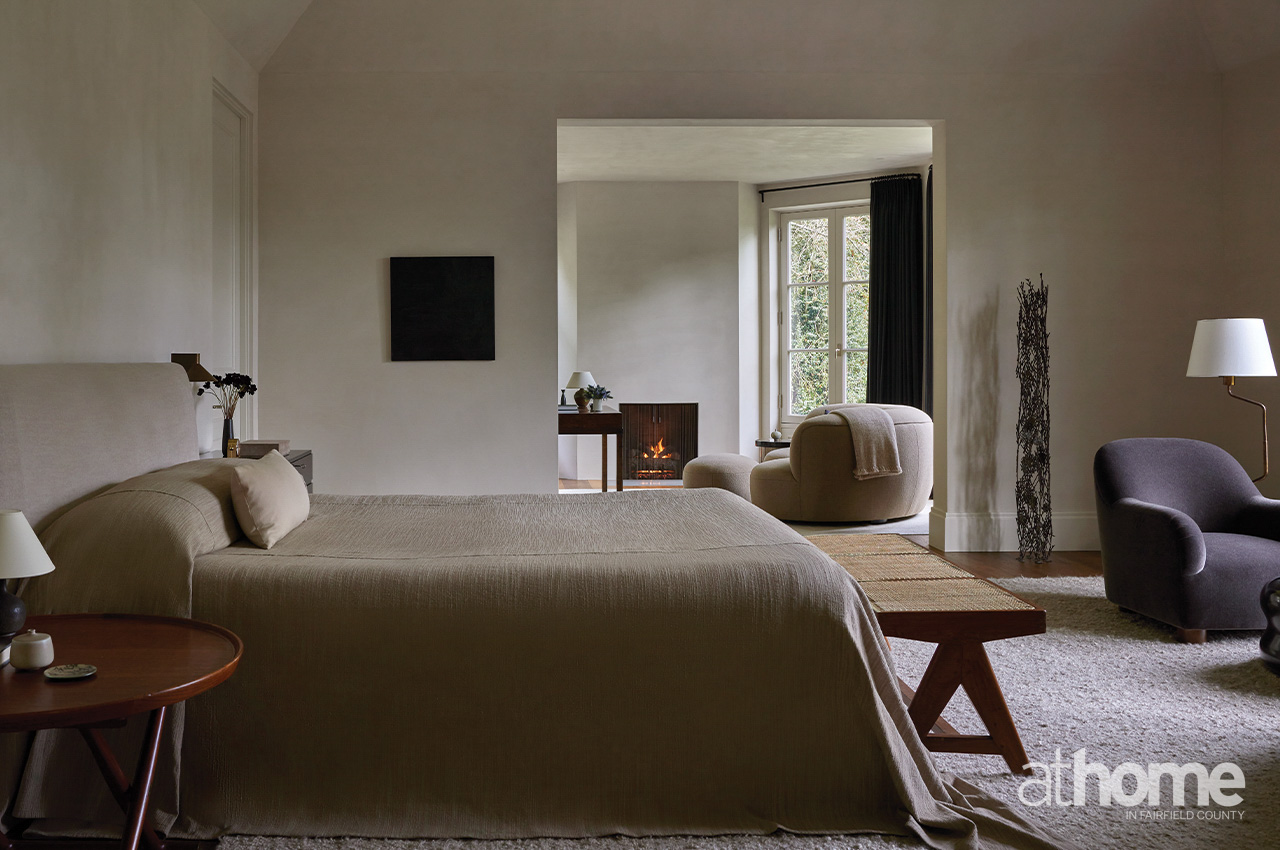
A Marc Phillips mohair rug, a custom Marmol Radziner bed and sculptural seating and tables set the tone in this calm bedroom.
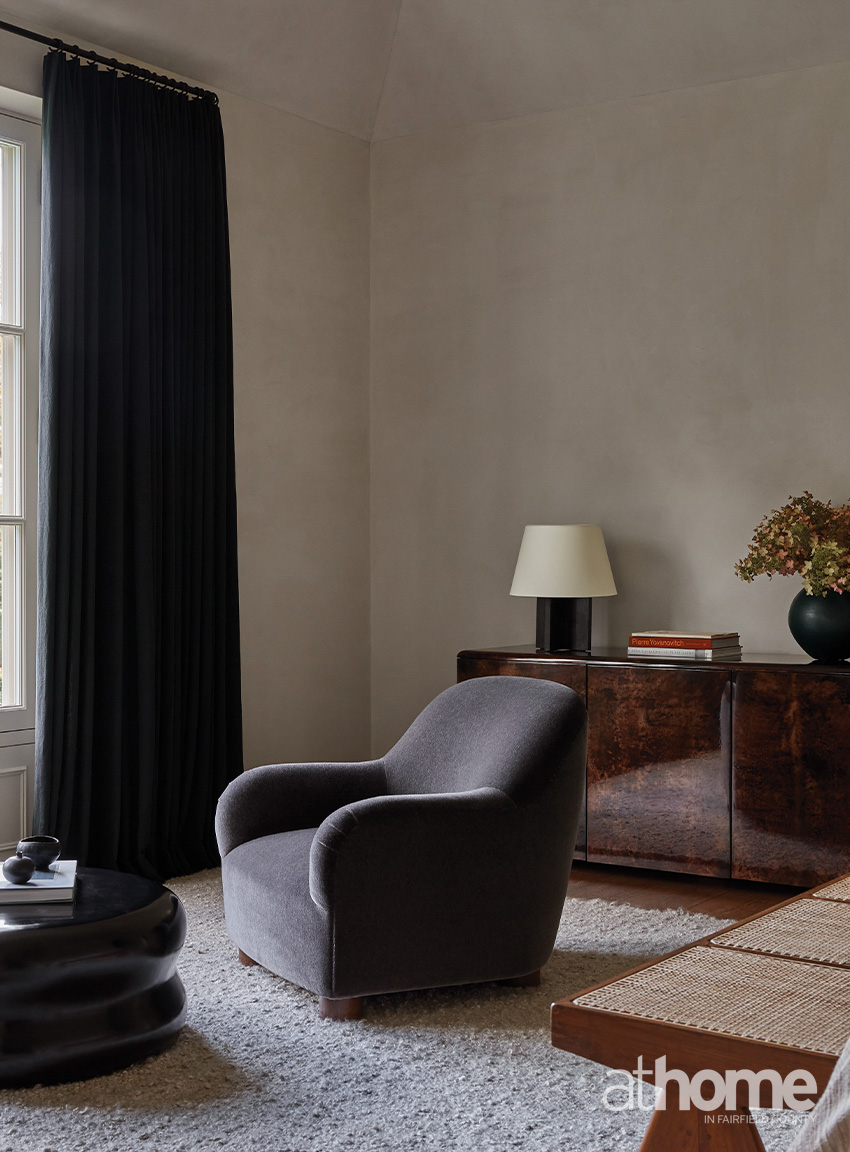
The bedroom’s additional lounge area pairs a Roman Thomas Orcas chair with a Liaigre Pulpe coffee table.
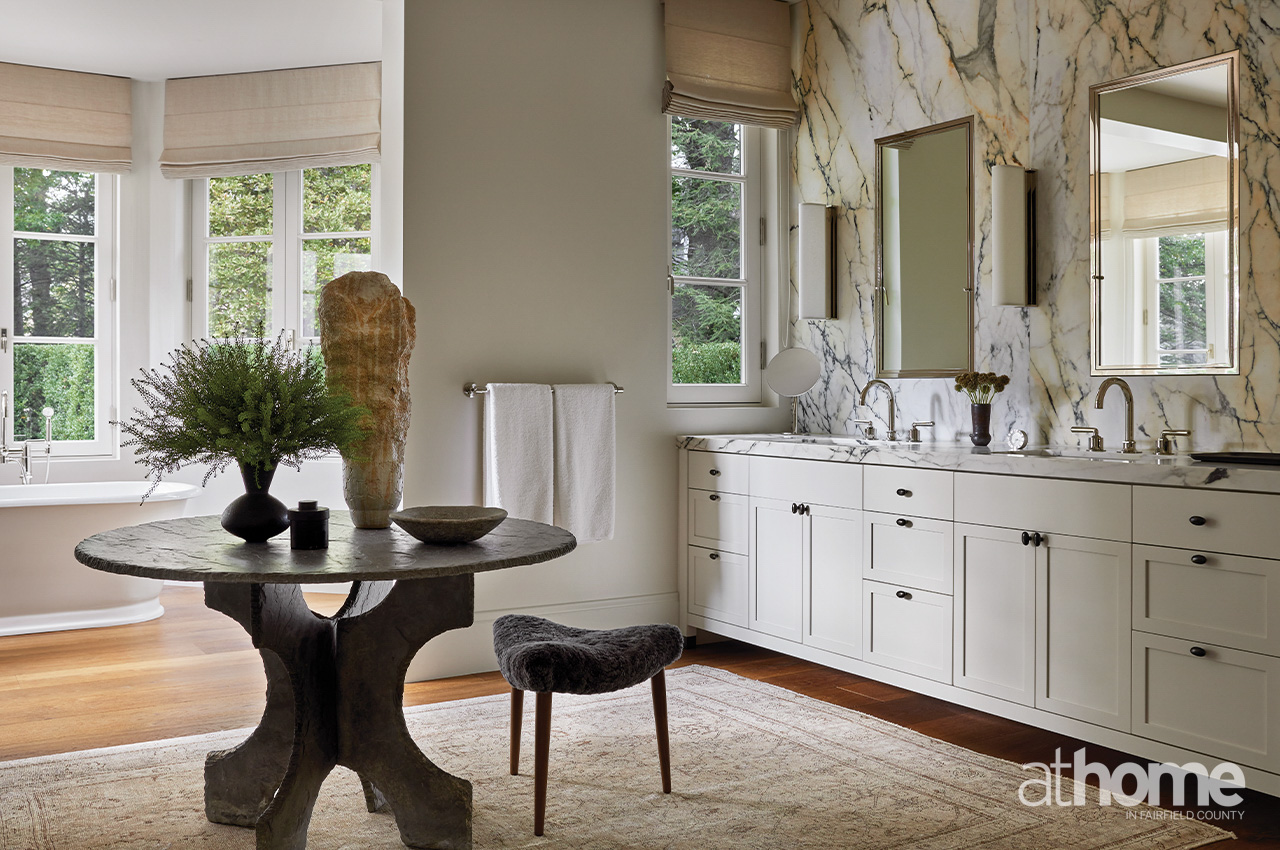
Vintage finds, luxe Waterworks fixtures and Paonazzo marble come together in this bedroom-adjacent retreat.
What were the biggest challenges?
AN: I would say it was the highly detailed and deliberate design process, in close collaboration with the client. Every element of the home was just very carefully selected and meticulous. We don’t view it as a negative type of challenge as much as it is just a different level of intimacy.
MJ: That entrance stair. You have this old existing house, and you’re trying to build a beautiful sculptural stair from one level to the next in a tight space.
It took a lot of tenacity to get that done, and it was built off-site and brought in sections. It took months to sand everything before it was finally painted.
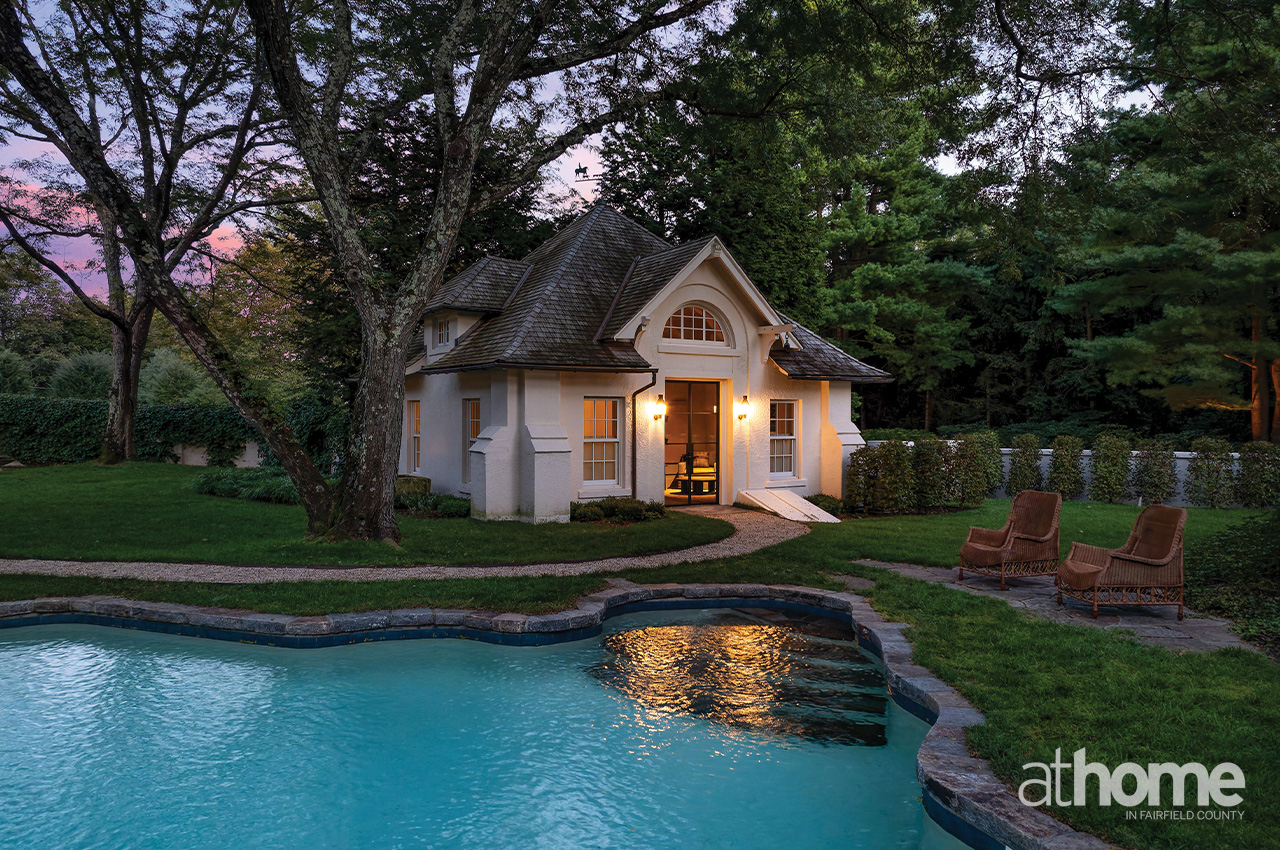
The pool house exterior includes refinished sconces and a bold Arcadia door. Photo by Daniel Milstein
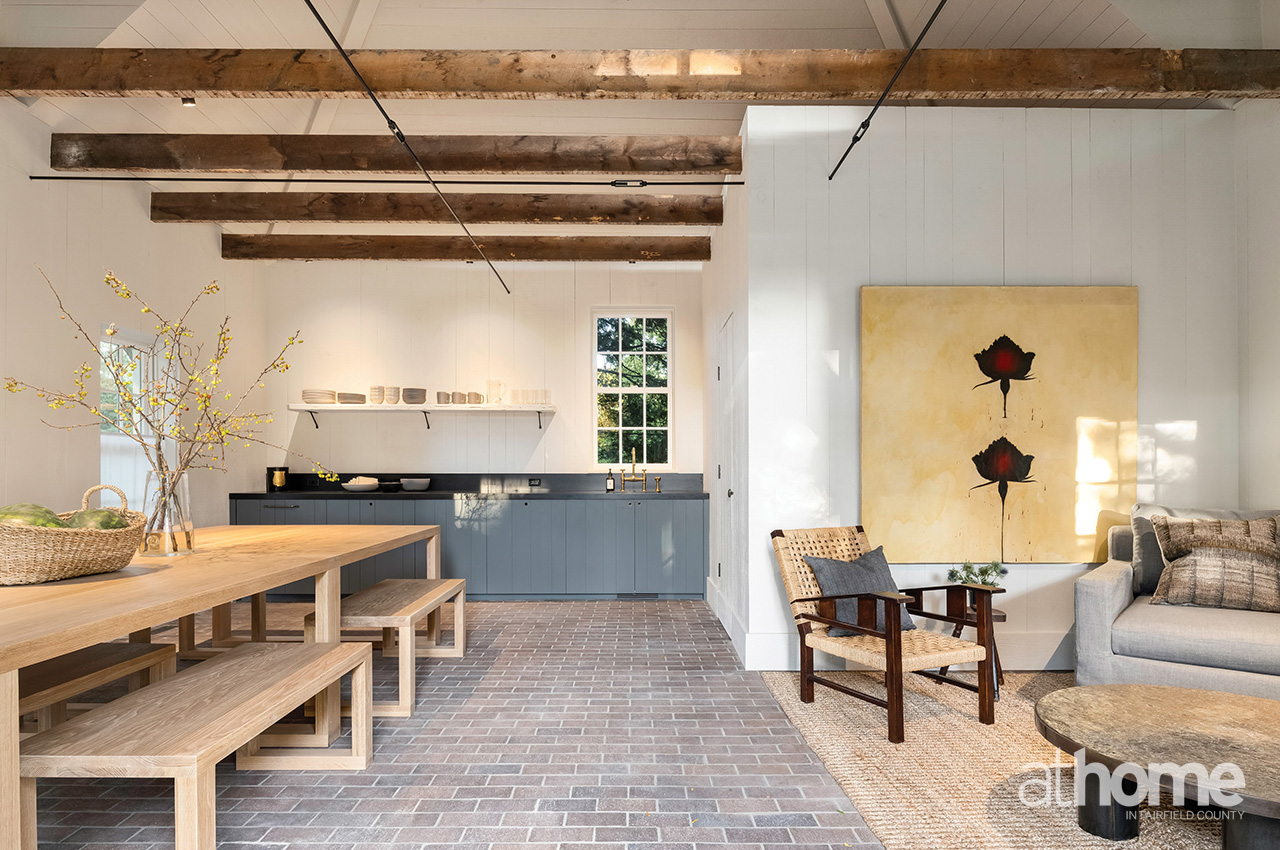
Vaulted wood beams, an open-plan layout and a kitchenette modernize the 1920s potting shed-turned pool house. Photo by Daniel Milstein
How did you approach the relationship among the main house, guest cottage and pool house to create a cohesive sense of place?
AN: Each has their own initial identity, but I think there’s a sense of cohesiveness with the palette. We actually did the cottage first and leaned into letting it be a cottage versus trying to make it the same aesthetic as the main house.
Do you have a favorite space?
AN: My favorite moment is that center oculus, because it was something that just changed the experience of that entry space so dramatically. It stands out and sets the tone for the rest of the changes that happen throughout the house.
MJ: Because I’m on the architecture side, I think the work that spoke to me the most happened on the latter part of the project. We’re a design-build firm in California, and we finally started to integrate construction into our practice on the East Coast. After the first couple years, it was just architecture, but then we had the chance to build this pool house renovation ourselves.
Another builder handled the main and guest houses, although our fabrication team in LA did build metal in some elements throughout the main house. But the pool house was something we got to build ourselves. It was really fun.
RESOURCES:
Architecture + Interior Design, Metalwork:
Marmol Radziner, Los Angeles, New York, San Francisco, 212-484-2216;
marmol-radziner.com
Builder:
Tim Hine, Hine Builders LLC, Wilton, 203-255-5508;
timhine.com
Landscape Architecture:
Devore Associates Landscape Architects, Fairfield, 203-256-8950;
devoreassoc.com
Landscape Design:
Kathryn Herman Design, Westport, 203-966-1221;
kathrynhermandesign.com
Landscape Contractor:
Carmine Labriola Contracting
Millwork:
Fairfield County Millwork, Bethany, 203-393-9751;
fcmillwork.com
Stairs:
Walton Stair & Cabinet Company, Walton,NY, 607-865-6636;
waltonstair.com
Paint + Drywall:
Shoreline Painting & Drywall, Fairfield County & Westchester County,
203-285-3479; shorelinepaintingct.com
MEP Engineers:
Encon, Ocean Township, NJ,732-922-1305;
enconmech.com