


Surround Sound
Created in close partnertship with architect and designer, this Greenwich waterfront home balances modern restraint with expansive views tailored for family living
INTERVIEW WITH Maripi Aspillaga, Nima Design and Robert Cardello & David LaPierre, Cardello Architects
PHOTOGRAPHY BY Adam Kane Macchia
STYLING BY Vanessa Vazquez
Who lives here?
Maripi Aspillaga: They’re a young family with two kids in elementary school. They’re just wonderful people, the nicest family.
It was the perfect combination, having a great architect team and the builders, who were great to work with. And then the client kept us all very organized. I kept waiting for the dramatic stressful moment, but it really never happened. It was a dream project.
What were their asks?
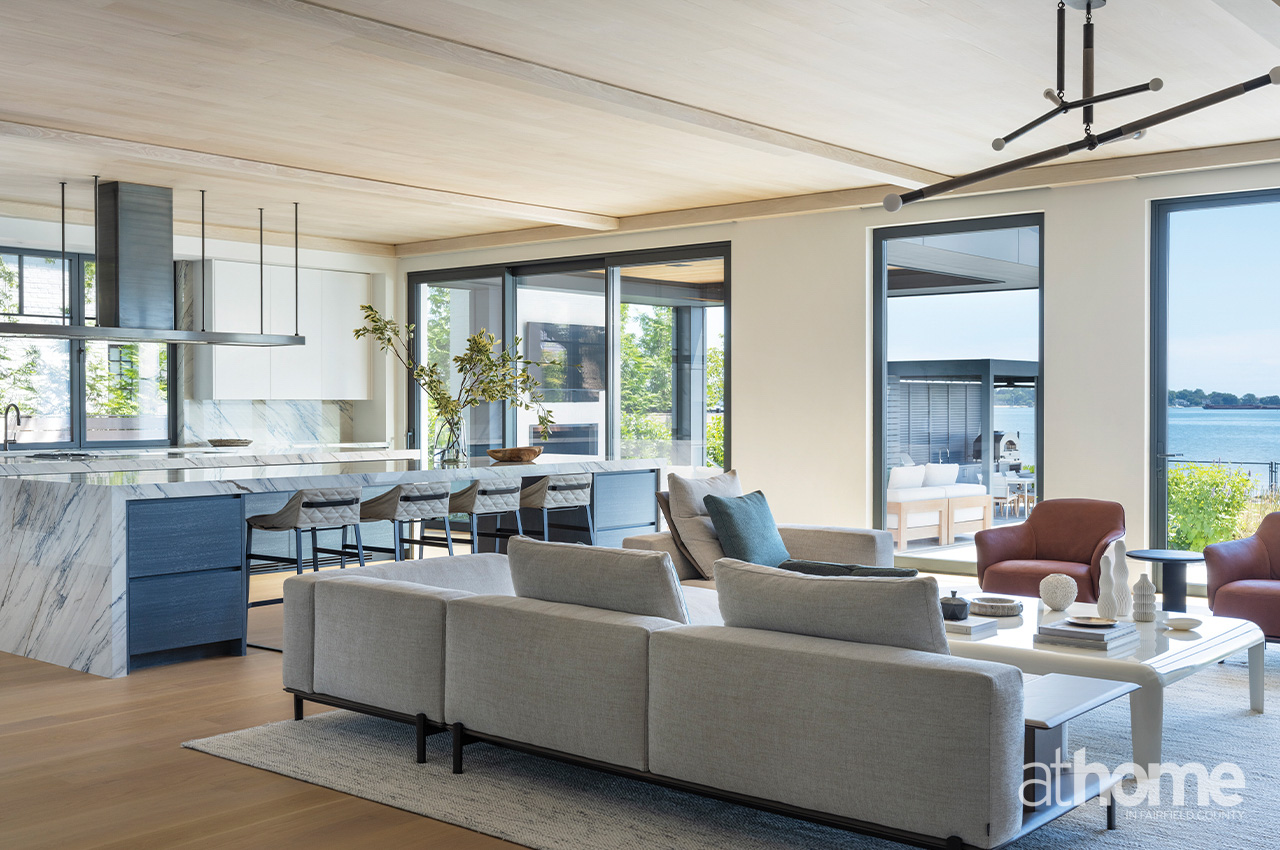
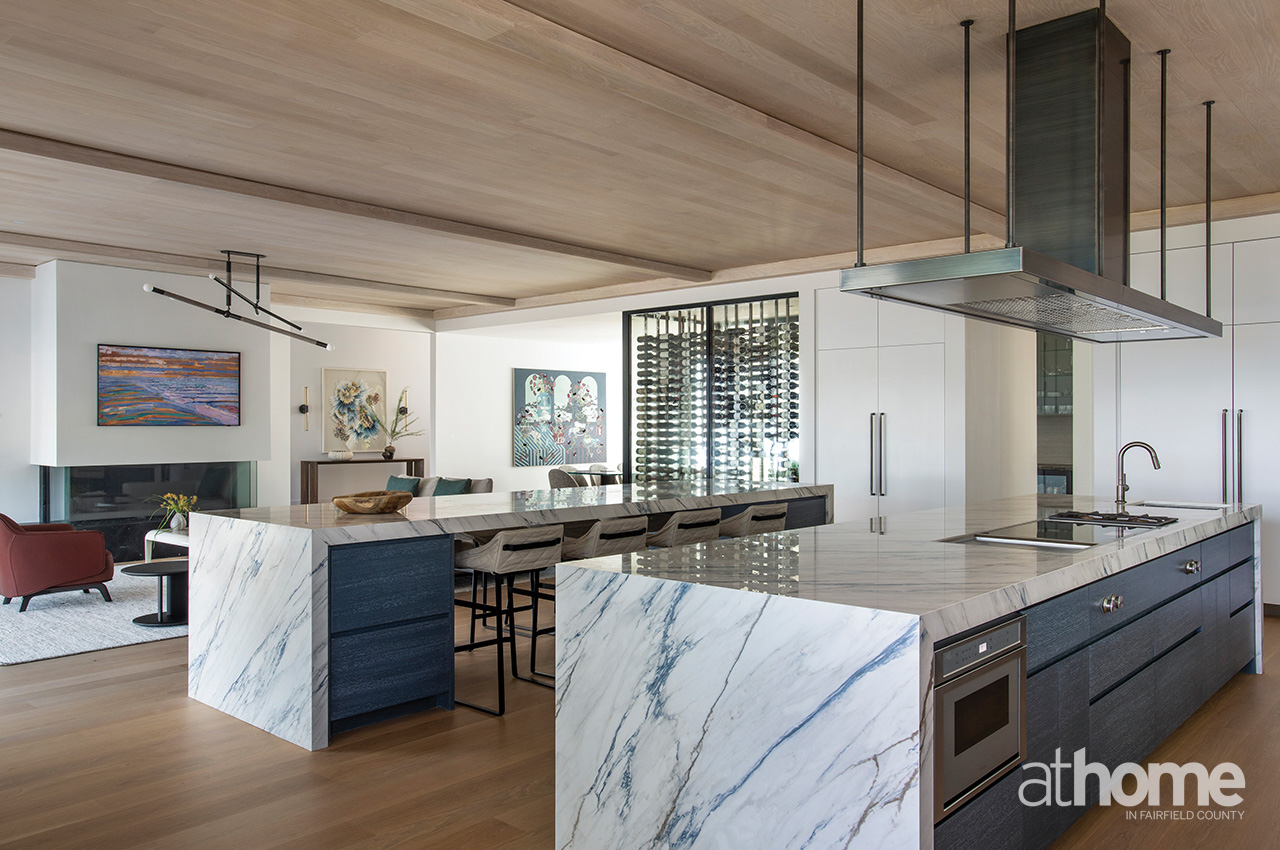
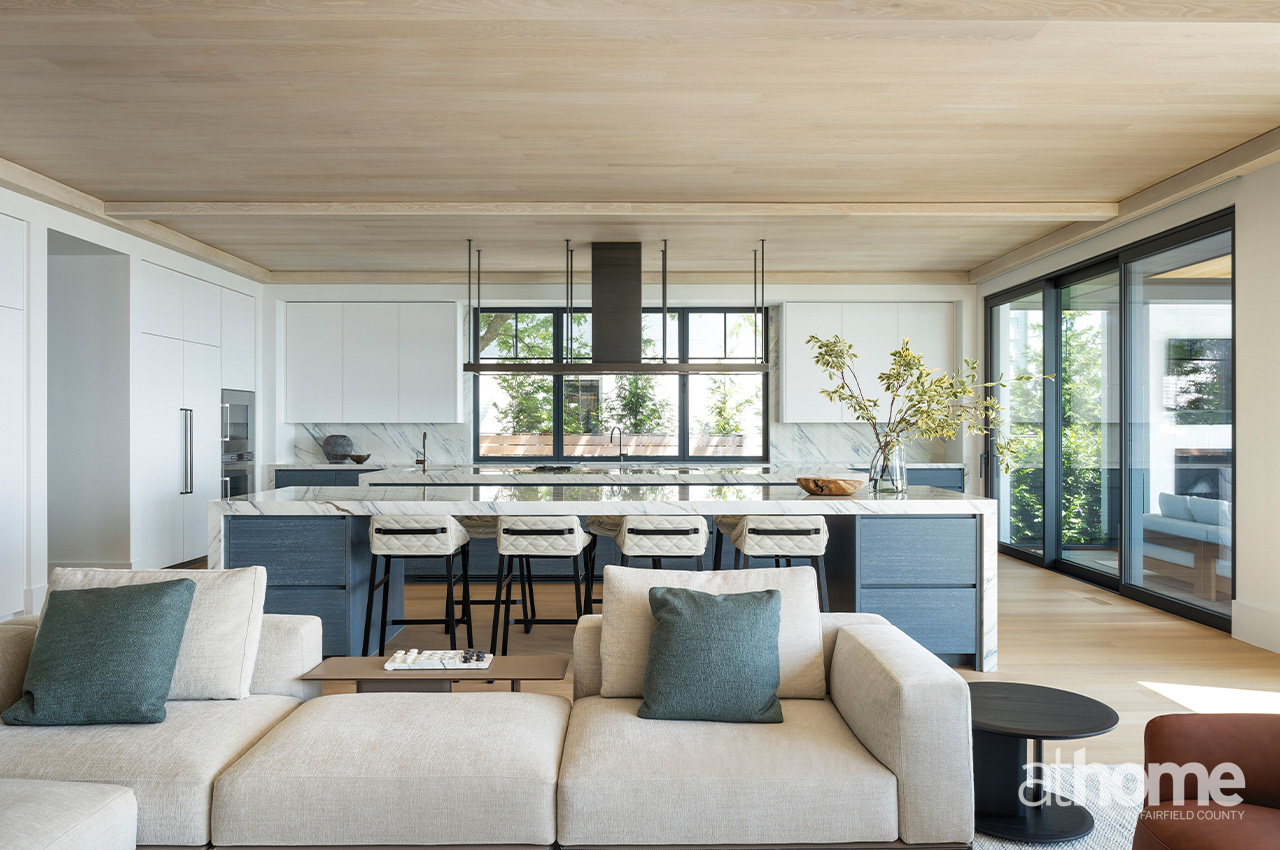
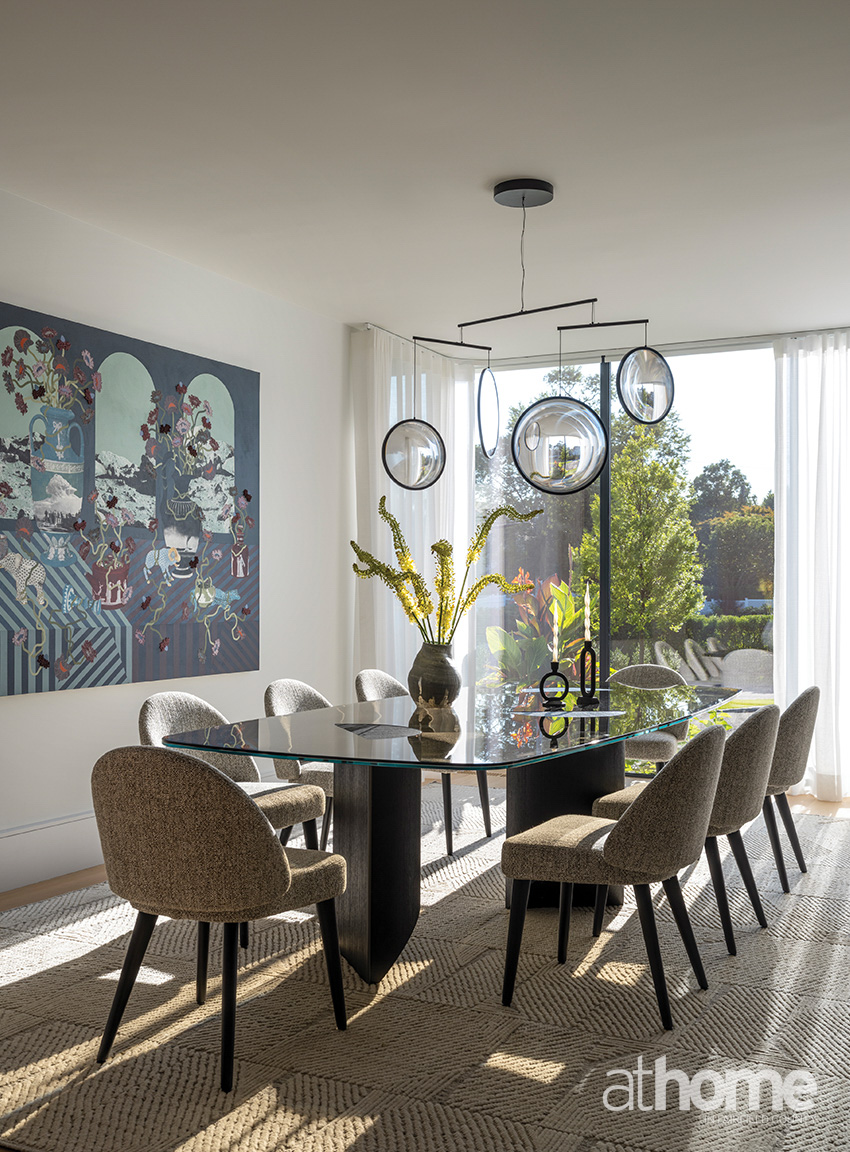
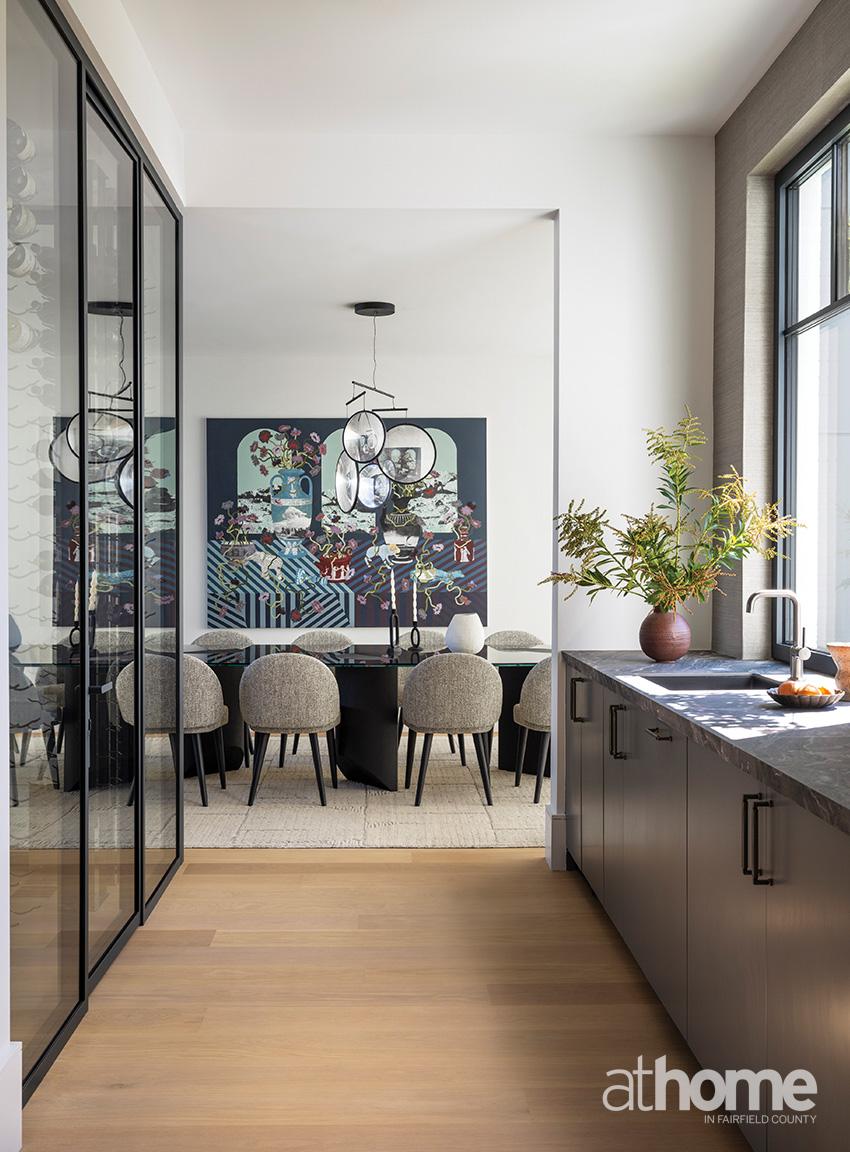
MA:In terms of the layout, I think one of my favorite things is that the client wanted to have the formal living room integrated with the kitchen and the dining room. So, it’s this giant space. They wanted to make this a big entertainment space, with two really large kitchen islands. And then the formal furniture is there, along with the open plan dining room and a wine cellar.
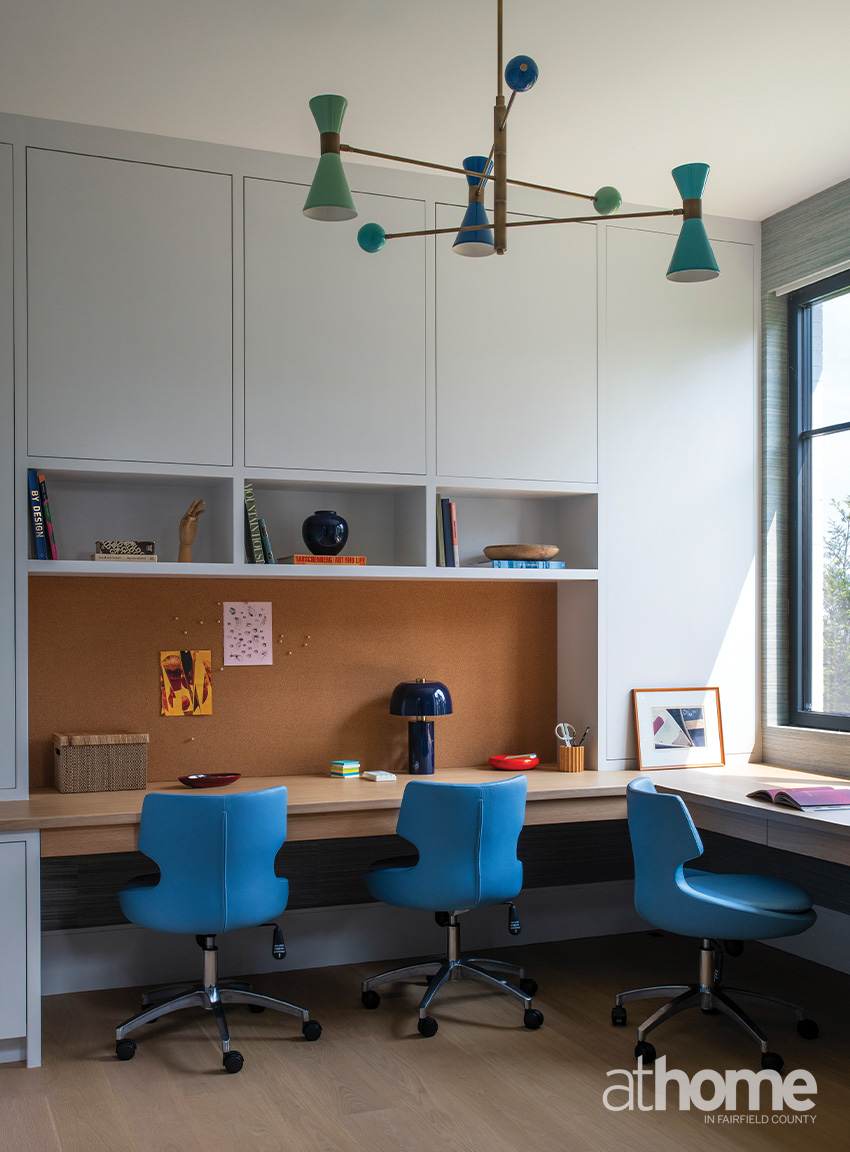
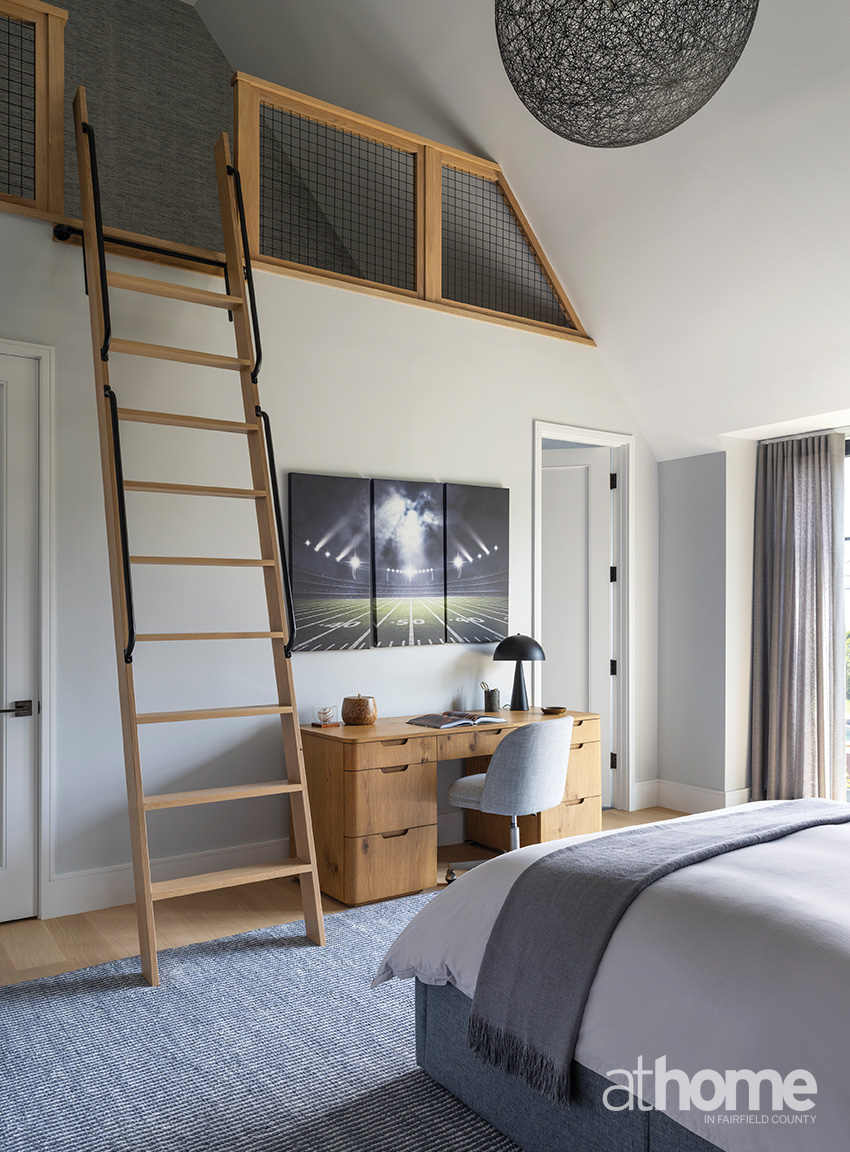
David LaPierre:They spent a lot of time talking to us about how they live and how their family is very interactive. They wanted an open floor plan from the kitchen to the dining spaces to the family room, but each member of the family also has their own little getaway area. They have the den that’s kind of off to the side, the husband has his attic area with the golf room, the kids have little nooks and crannies—like that study room and the lofts in their bedrooms—so it was personalized to their way of living. That was our focus.
MA:It was all guided by the clients, who had a very clear idea of what they wanted the entire time. They wanted something that was modern but also felt homey. Throughout the whole process, they were very involved in every decision.
How did the site affect your approach to the design?
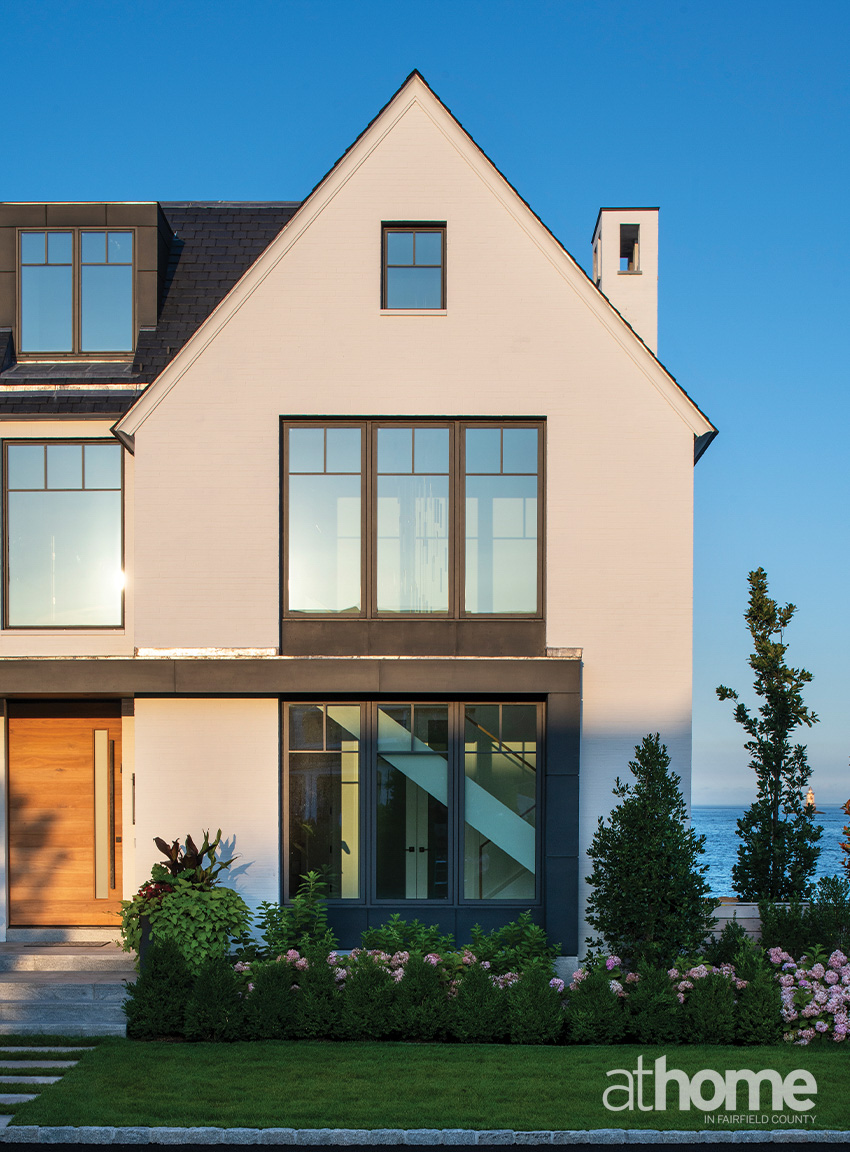
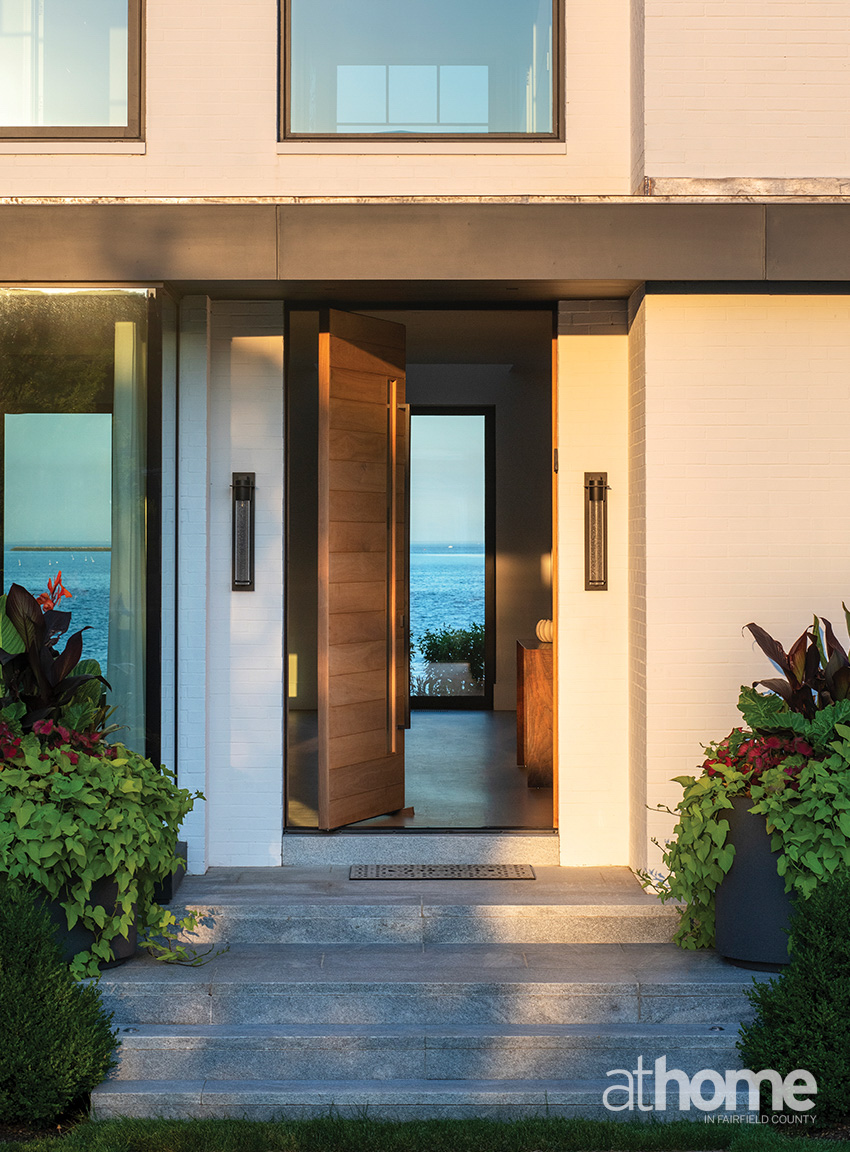
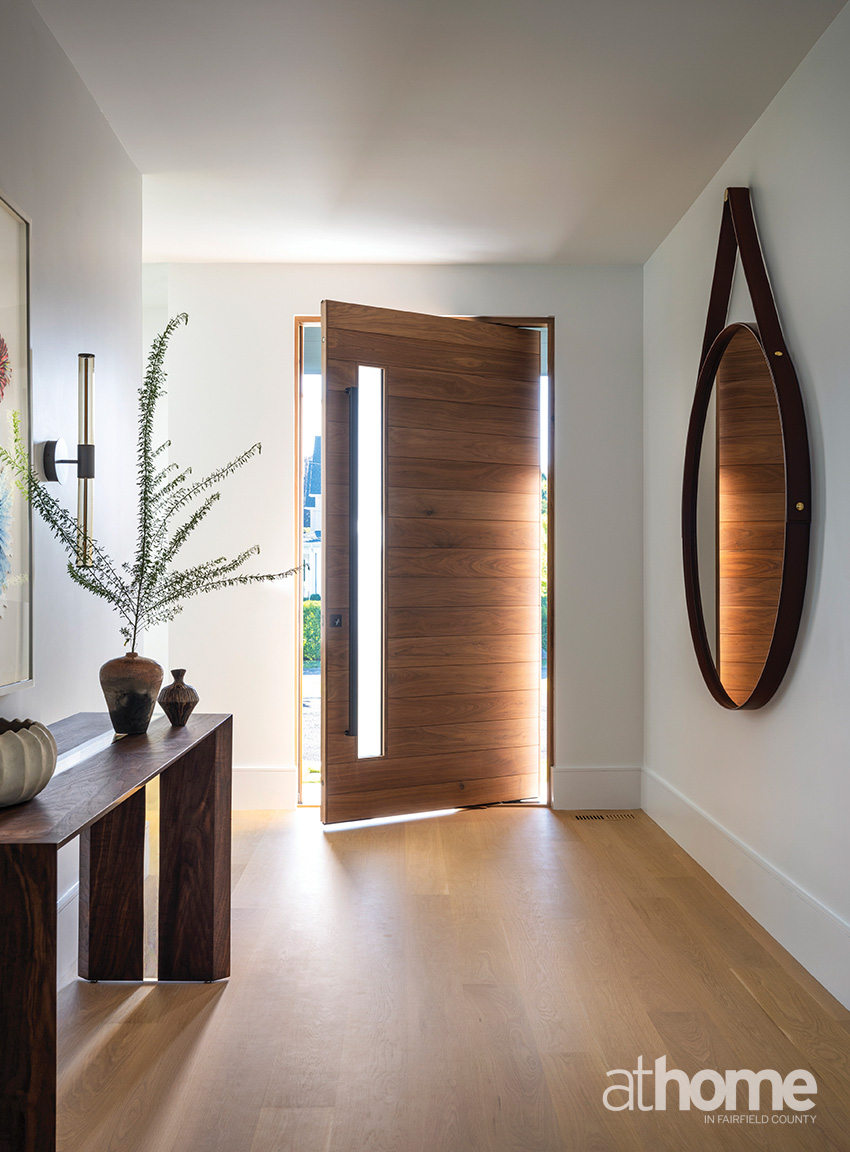
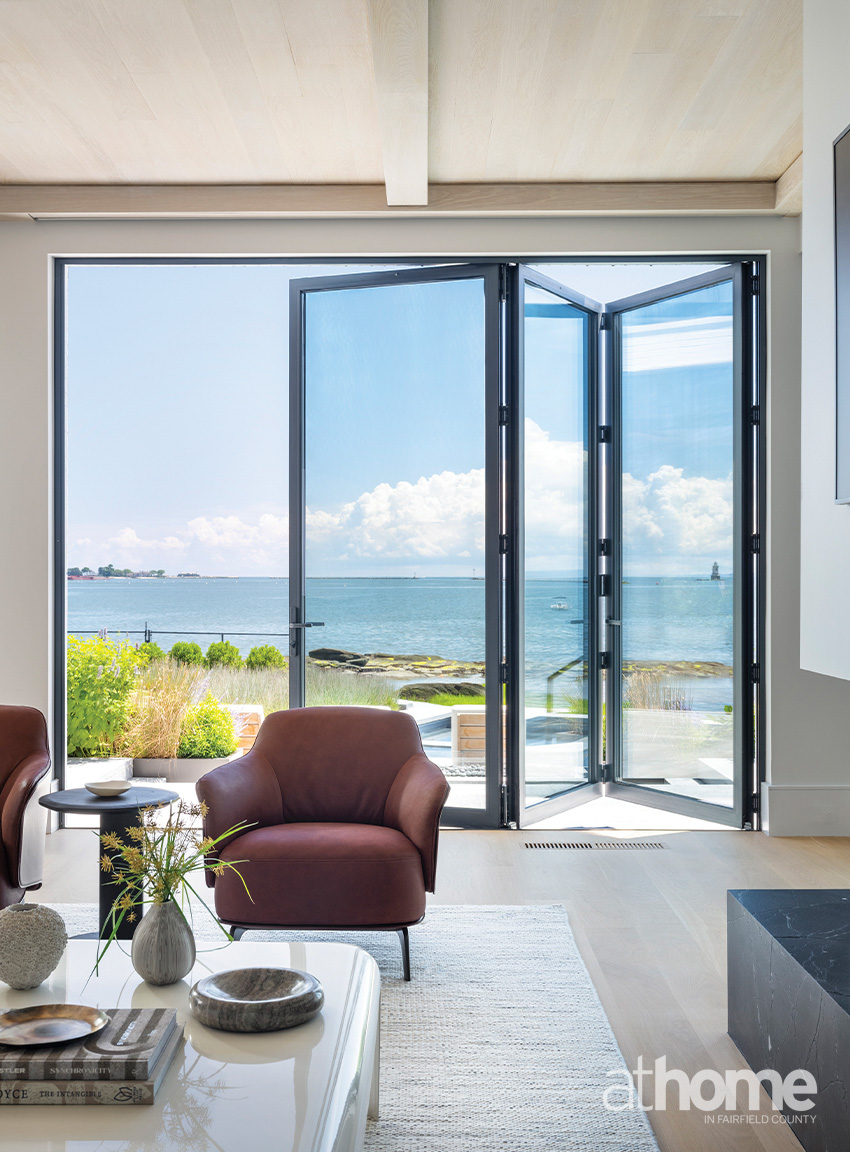
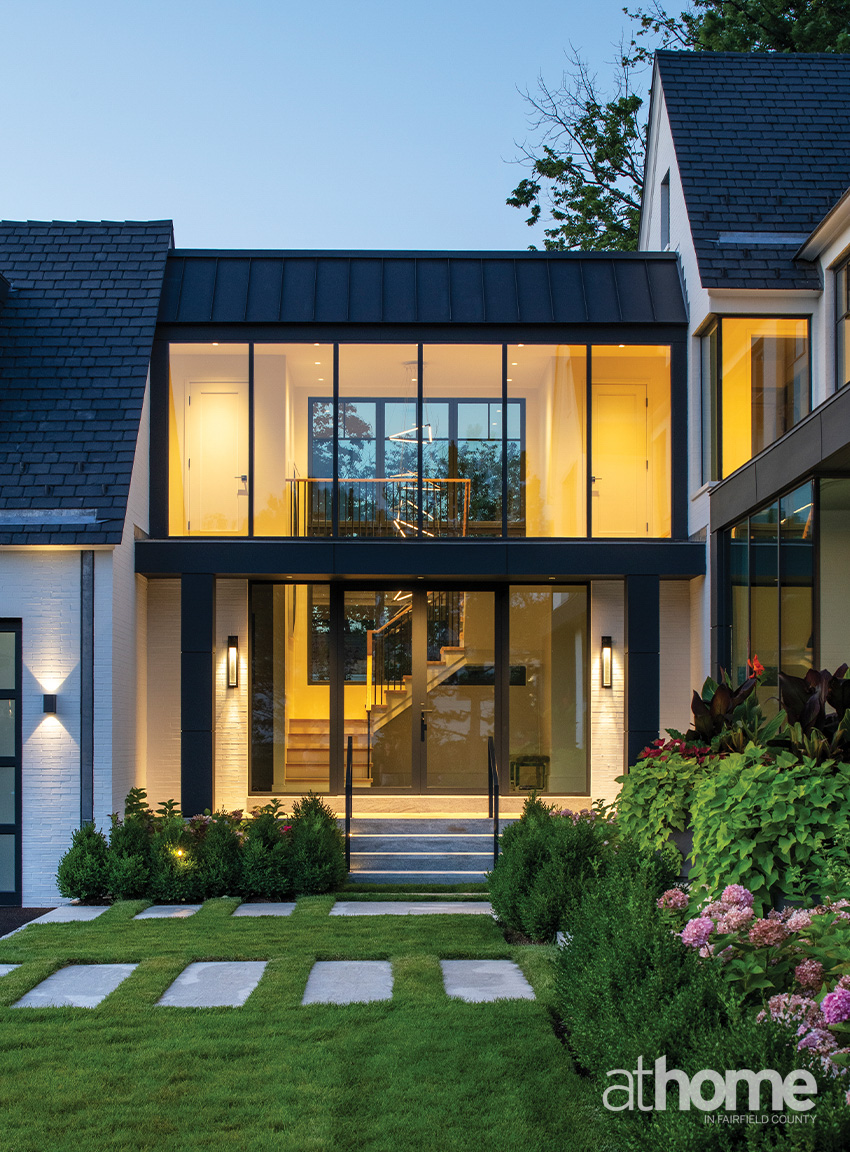
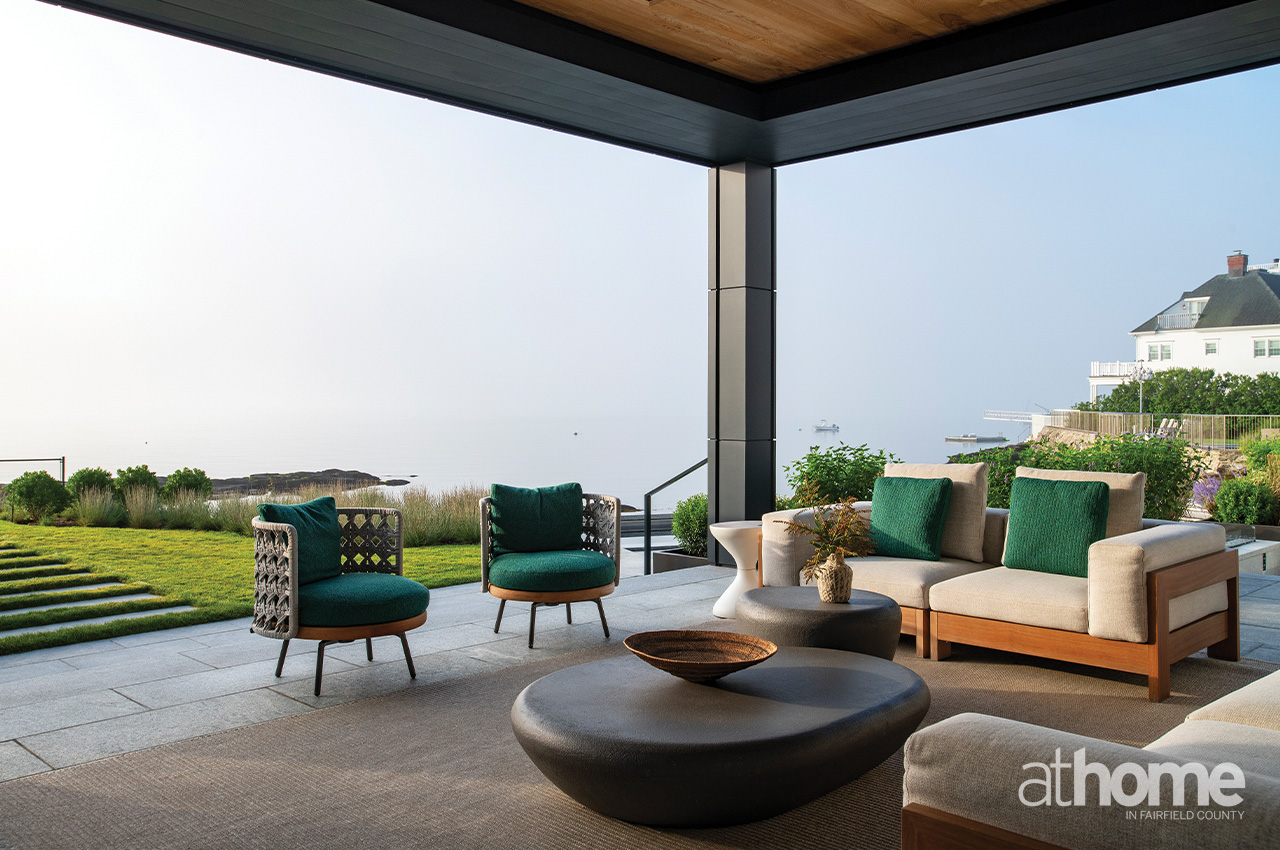
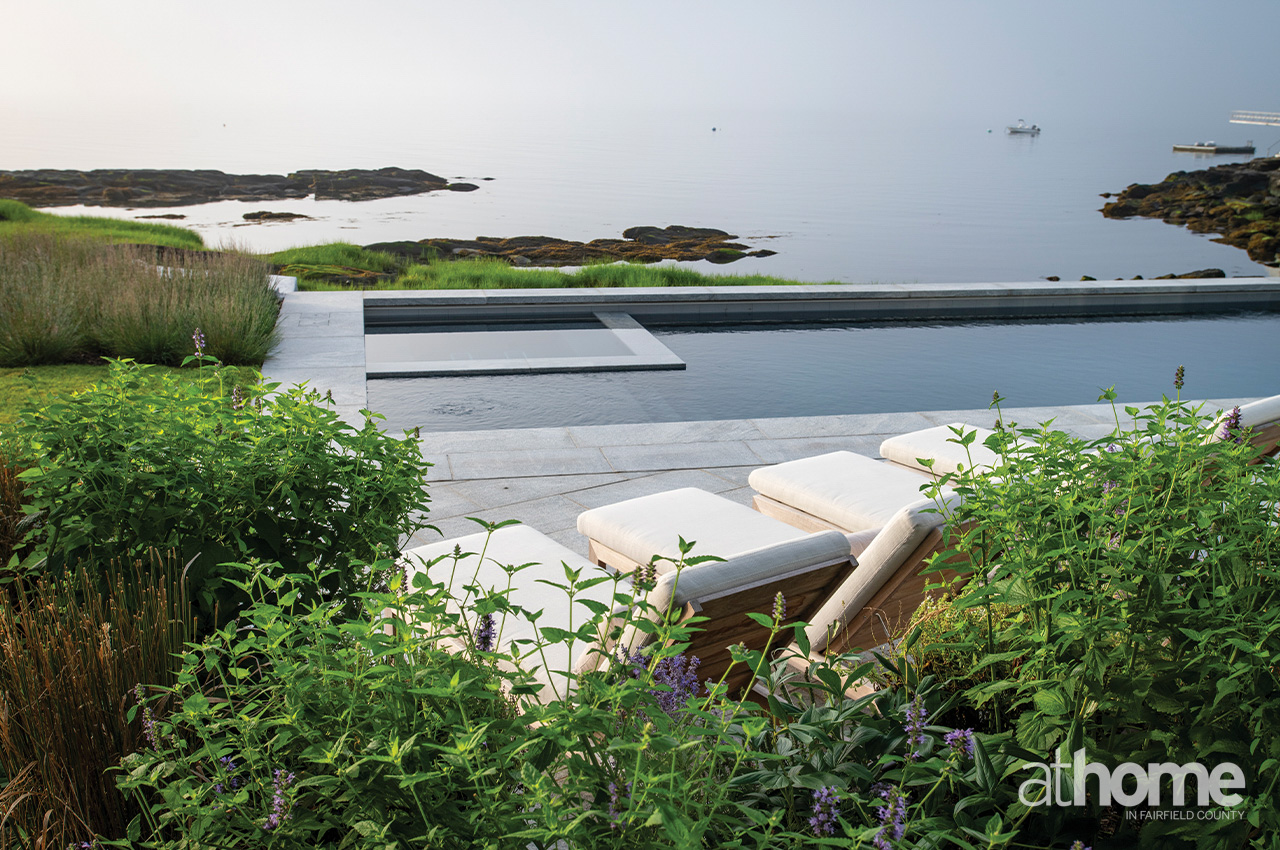
DLP: The rock outcropping is actually really attractive, as far as things to look at and how the water interacts with it. It’s just a very sensory, live type of space. One of the things that I remember being talked about early on was getting that glimpse straight through the house, that framed view through the front door to see out to the water.
It is such a stunning piece of property, and it’s nestled in a pretty heavily developed area. We just had to be cognizant of what was to our left what was to our right, and where we wanted to focus the views from each room.
Robert Cardello: Fortunately, we had a client that was okay doing something unconventional with both the floor plan and the architecture, which allowed us to do the open plan and shared spaces.
Did you have a jumping-off point for the palette?
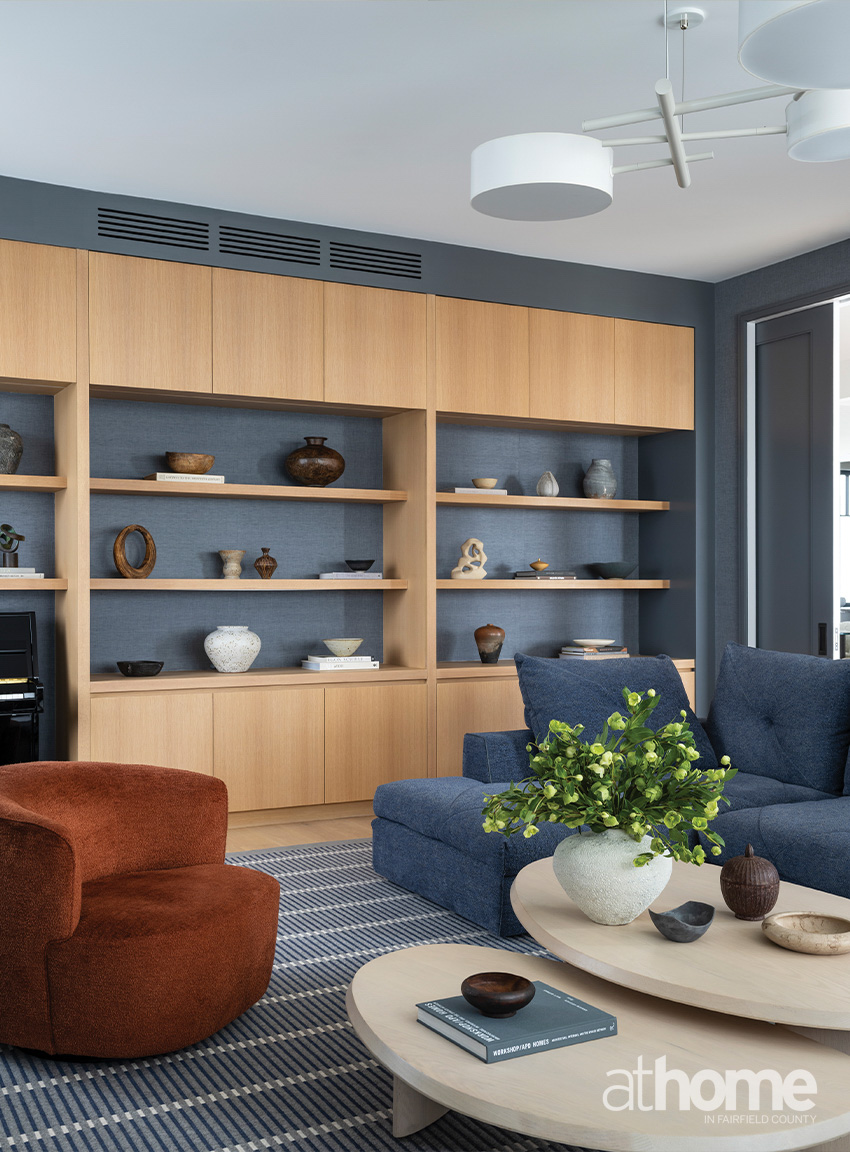
MA: The wife’s favorite color is blue, so that was important.
I’m very into muted colors, but they really wanted to bring color into this house. They liked the idea of bringing in accents and bolder colors.
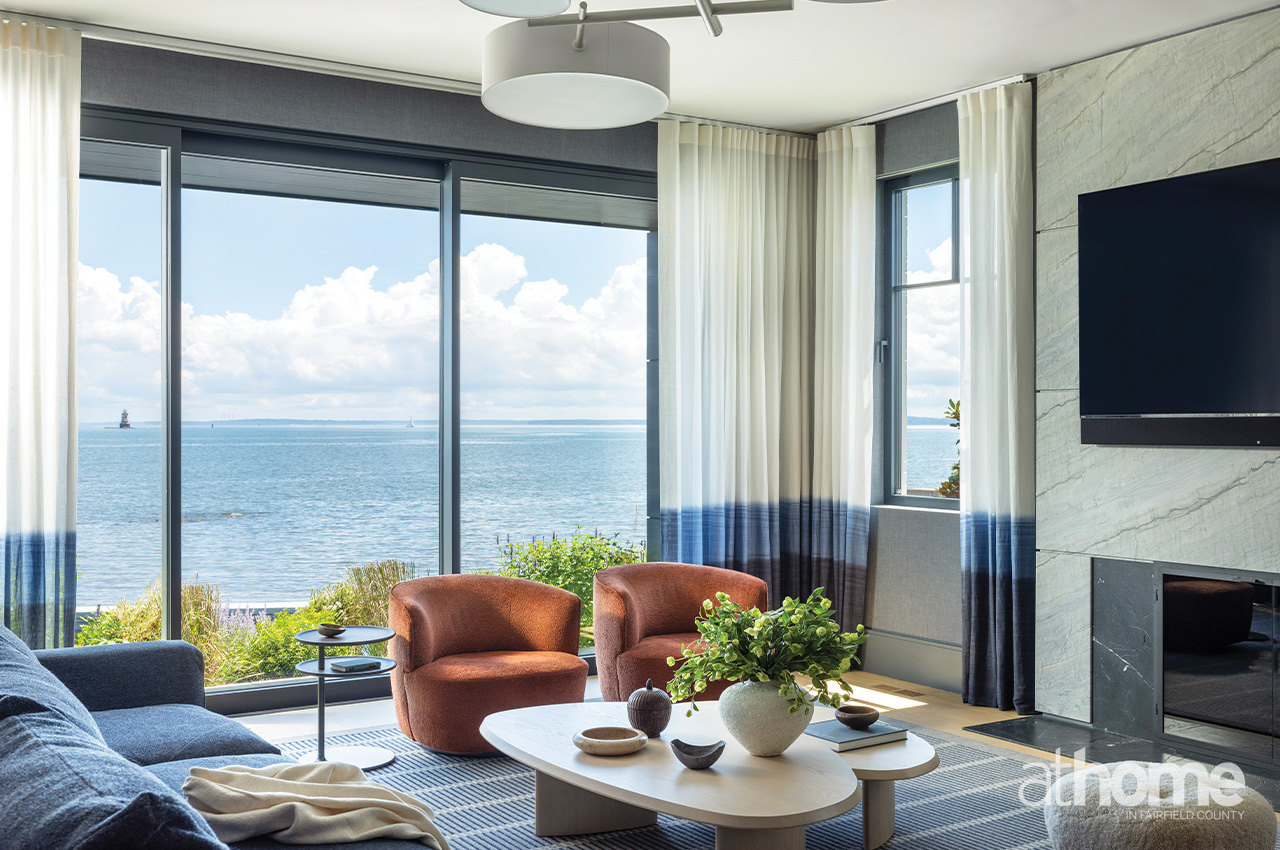
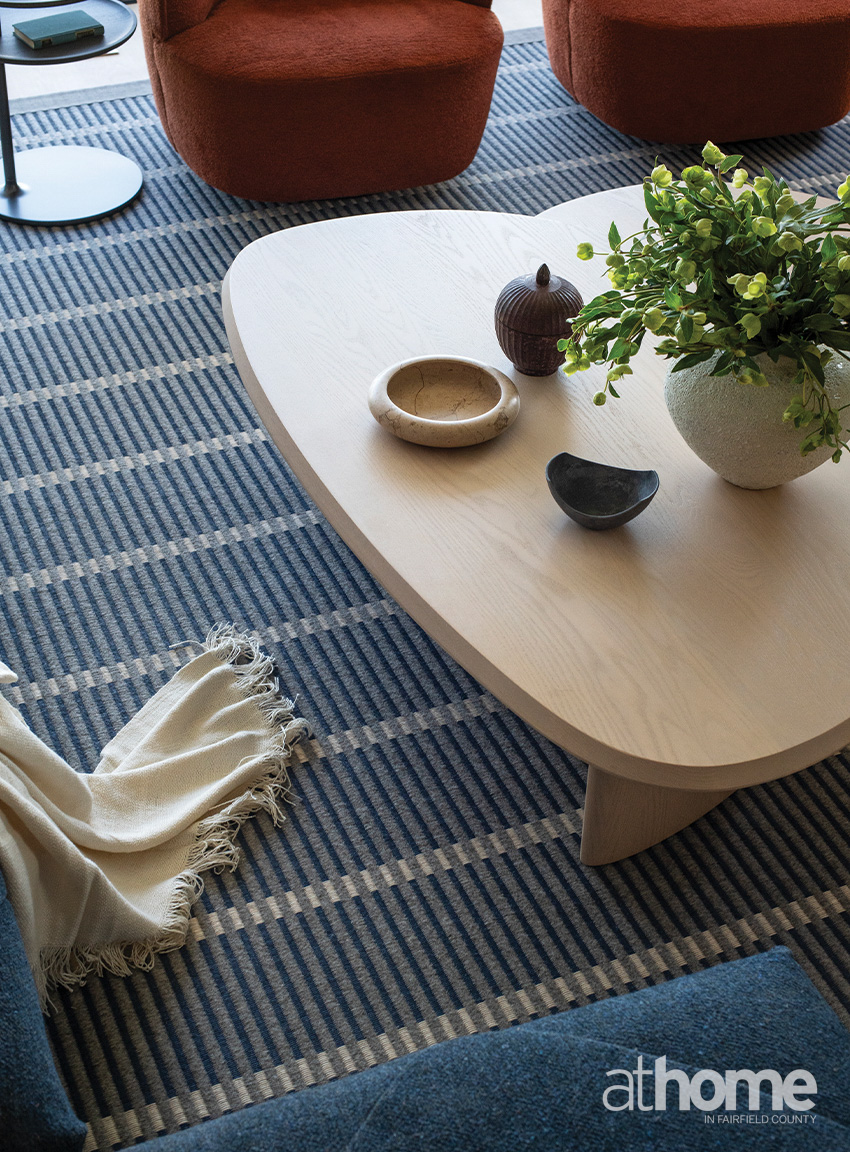
So, I brought burnt oranges and dark blues for the family room. And then for the open space, they really wanted to go bold with the kitchen. We ended up doing this custom blue stain on the oak. It’s almost the same color as the ocean. For the countertop, we went with Dekton by Cosentino, and it has this blue veining, so it matches perfectly with the stained oak.
This is a contemporary home, but the spaces are very warm. How do you feel like you were able to execute that successfully?
MA: It’s almost like a balancing act. If you have a solid material for the island, which took up most of that space, then you balance it with a warm, cozy rug. And then, I added window treatments to make it softer, along with layers of art and accessories. It’s like balancing between soft and warm, texture and smooth.
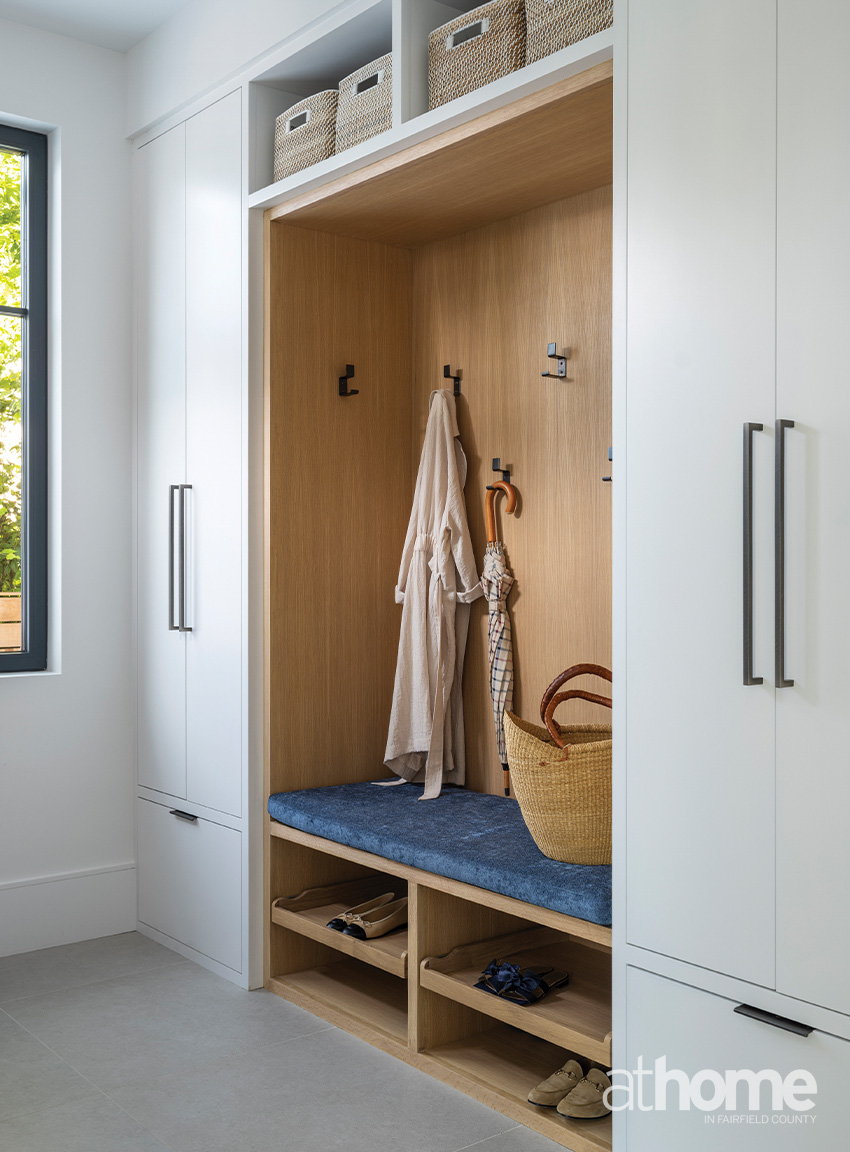
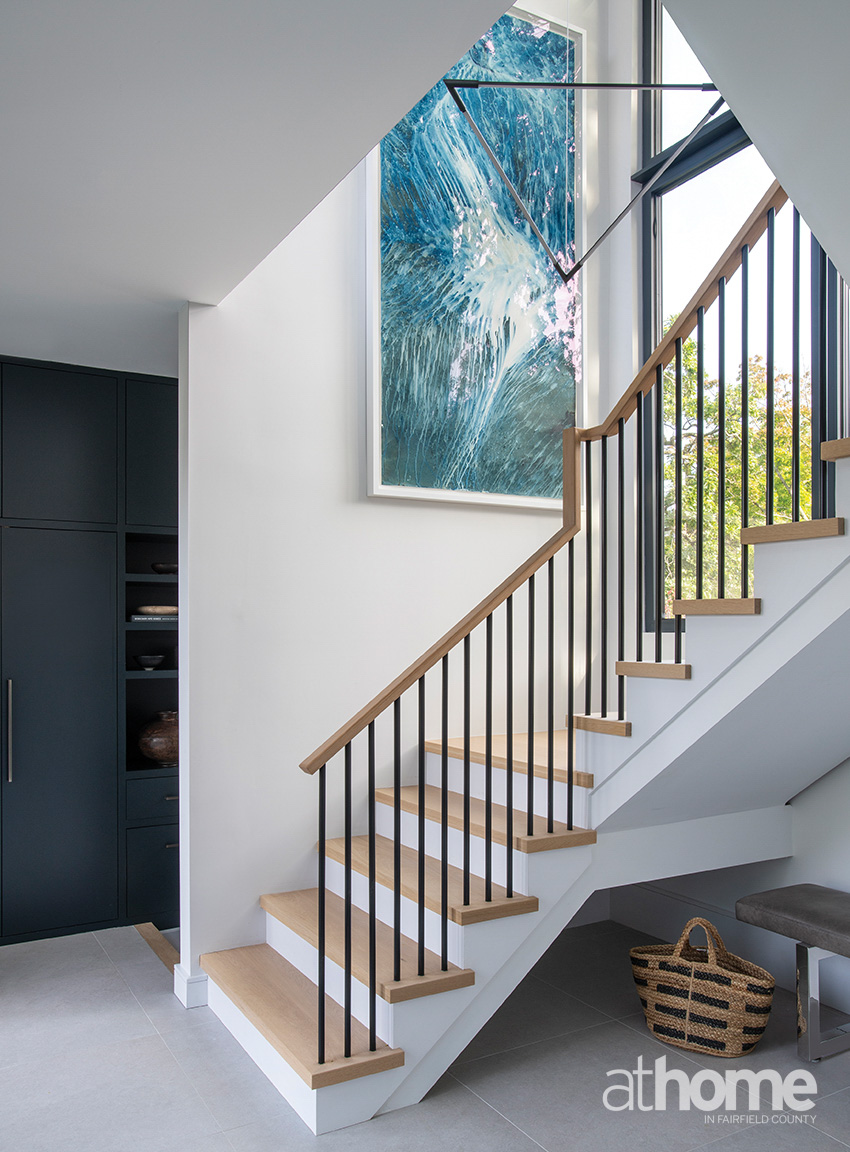
DLP: One of the main focuses for them was that transparency out to the water, which you get right from the front door and then though the large windows, but then also with the architecture of the stairs and the back mudroom area. I think there’s some playful elements to the architecture, but they’re balanced with spaces where you could get away from that, whether in that study room, the den—or being able to go up to the attic or above the garage—just to get away from being so on display. It was important to them that they had both.
RC: The ceiling detail in that open space is also something that I love. The color of the wood just warms up that space. If it were just sheetrock, it would feel completely different. It defines the islands, kitchen and seating area. It’s just one example of how Maripi’s team was able to layer onto the architecture to
create this intimate space.
With all this glass, how does the changing natural light come into play?
RC: We do this all the time, and we were purposeful in putting that stair where we put it, with the glass that is there, because it acts as a kind of a flashlight for the plan. It captures that afternoon light from the southwest and allows it to filter through the plan. It’s another technique to take advantage of a situation where the house had to face a certain direction, but the best light was in a different spot.
Are they big entertainers, or is this more just for them?
MA: No, they love to entertain.
Actually, a month after we were done with the project, they invited the entire team— everybody who worked on the house—for dinner, and they cooked the whole thing in their new kitchen space. It was so thoughtful.
RC: As someone who was there for that dinner party, I just love those moments, and it doesn’t happen all the time. We got to see this house function live; to see the indoor spaces flow so naturally to the outdoor spaces, which is paramount for people on properties like this. The house performs well.
When the water views are such a central character, how do you decide when to let them speak for themselves and when to lean into more furnishings and accessories?
MA: I think in general, I wouldn’t say my design is minimal, but I do believe in ‘Less is more.’ When you have a view like that, you don’t need to fill the room with colors and patterns and lights and fixtures.
You have to make sure that your eye can see the whole space. It’s very intuitive to me. I always try to do less. And if I have to layer more later, I rather do that.
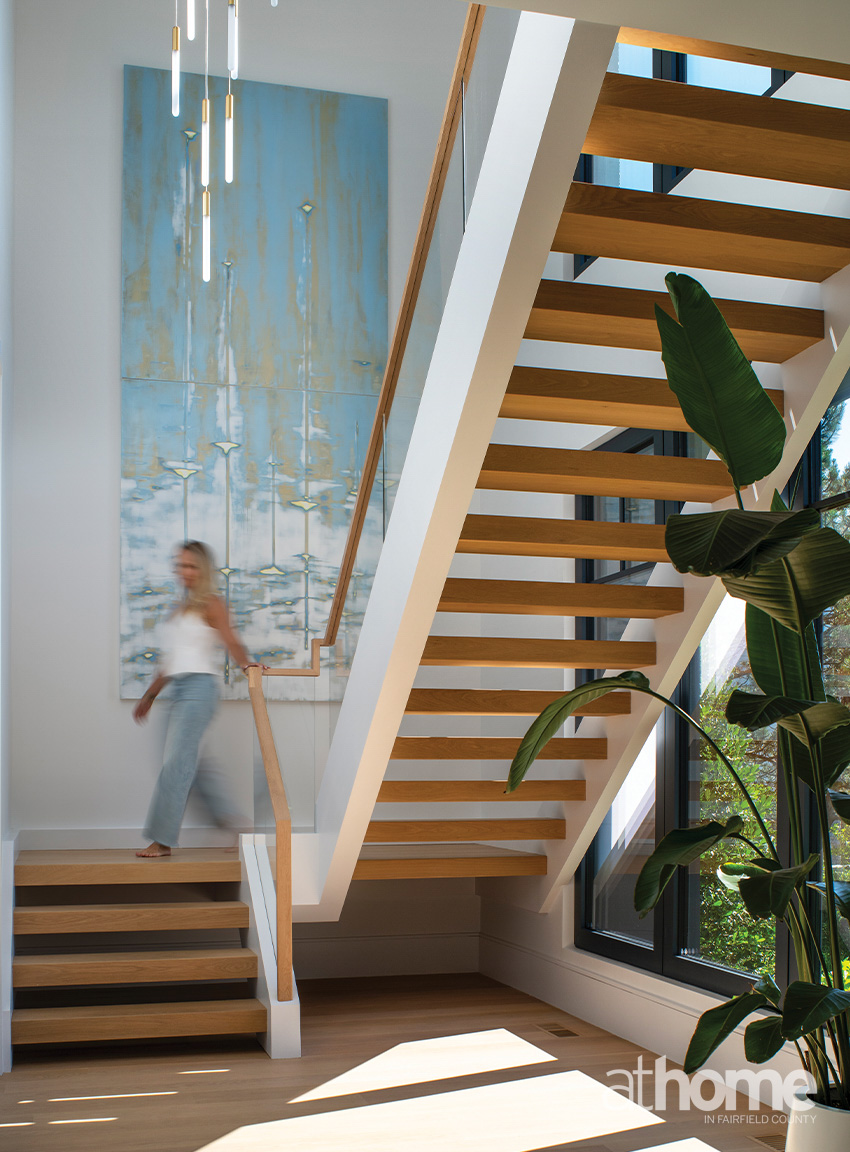
You worked with Mason Lane Art Advisory. Tell us about that.
MA: Katharine Earnhardt (founder of Mason Lane) is amazing. She has an incredible eye, and throughout this process, we became friends. She just has an amazing vision.
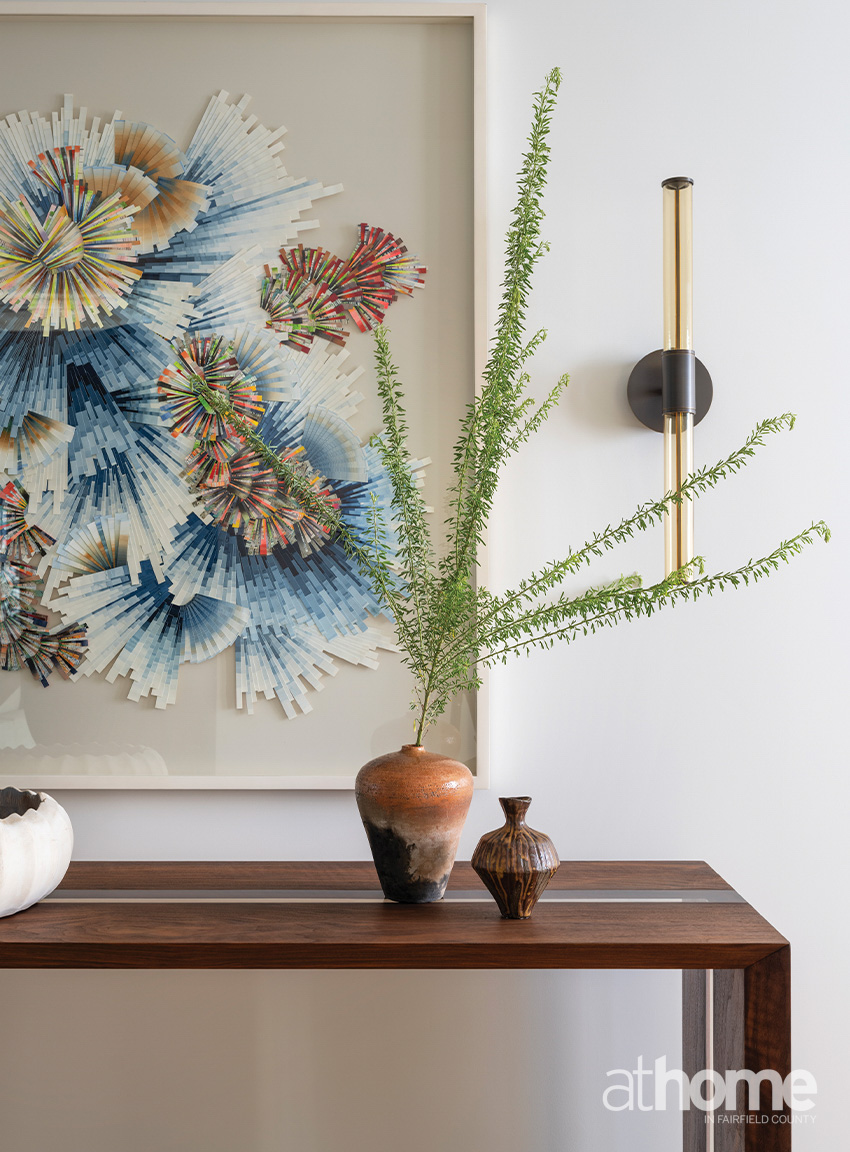
I brought her in because I was very drawn to her approach to clients, which is very similar to mine. It’s very personable. I introduced Katharine to the clients, and they were very involved. They wanted unique pieces that spoke to them. I was involved, but the final decision was between Katharine and them. But I think it complements perfectly with the design.
Tell us about this primary suite.
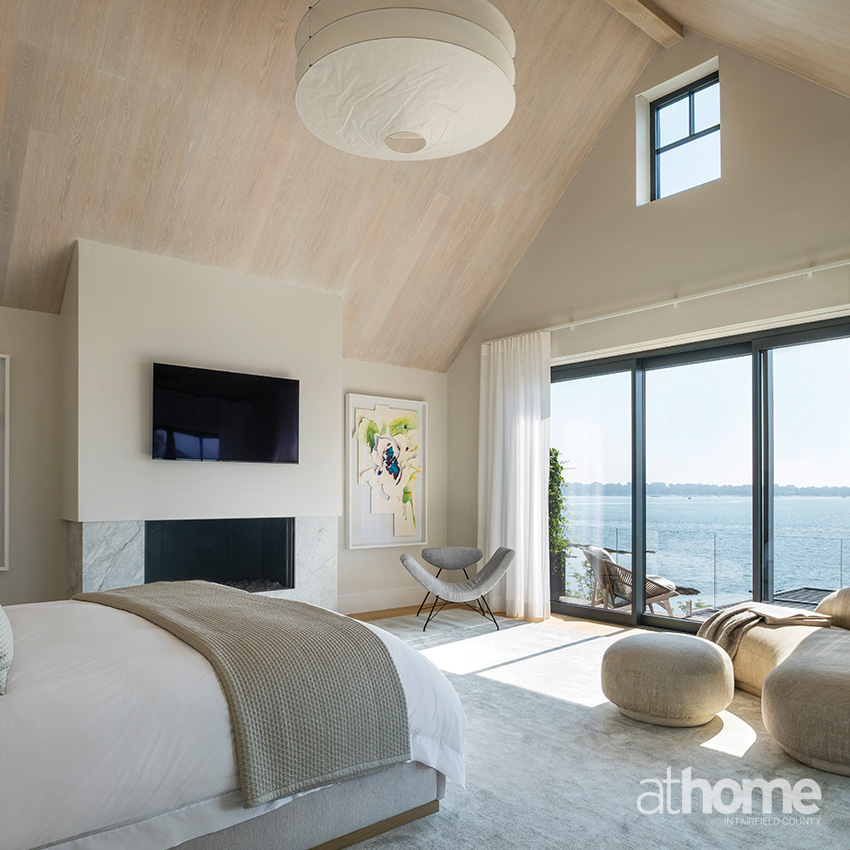
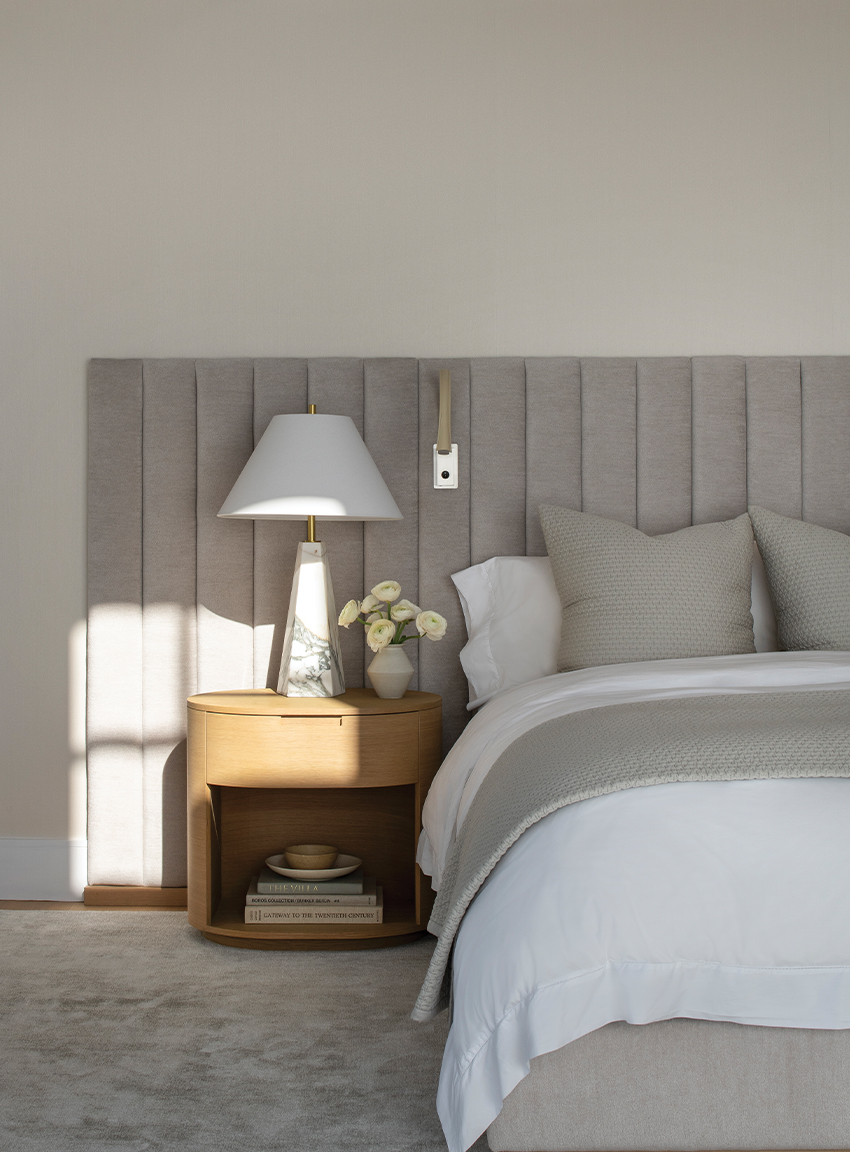
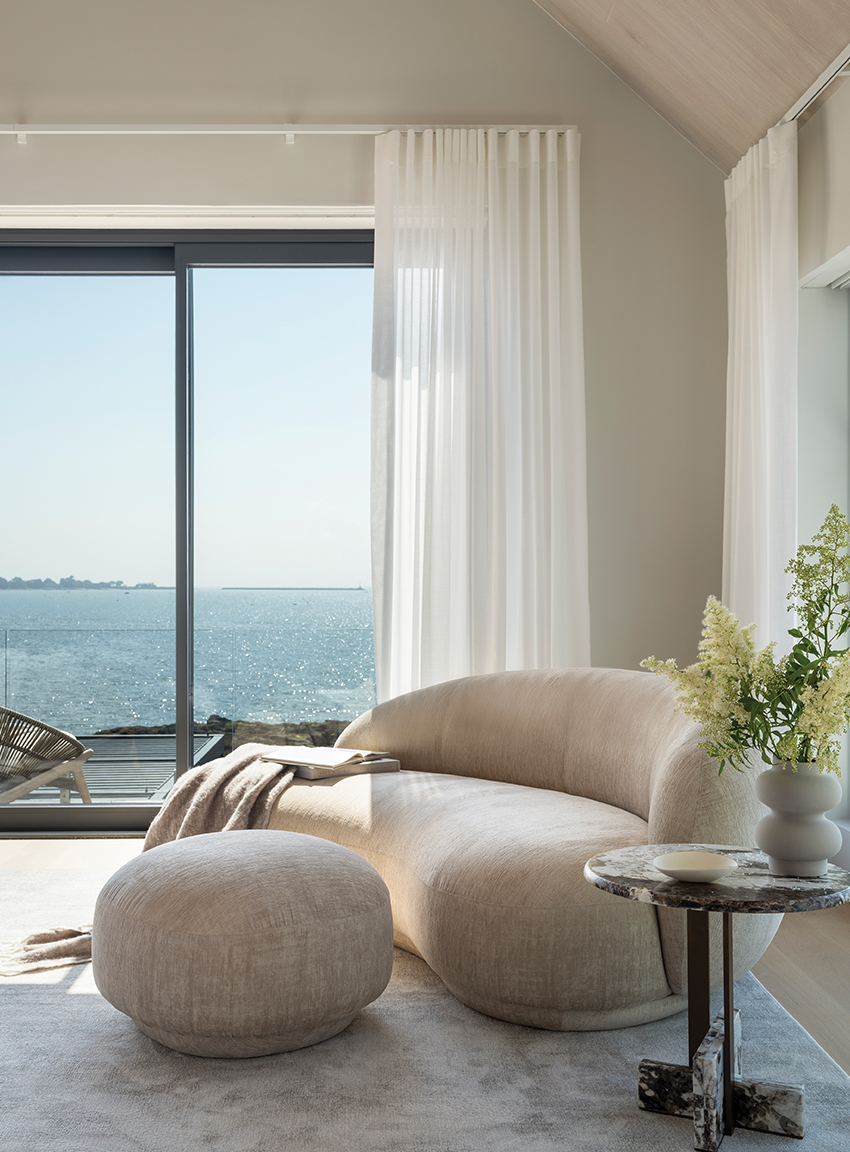
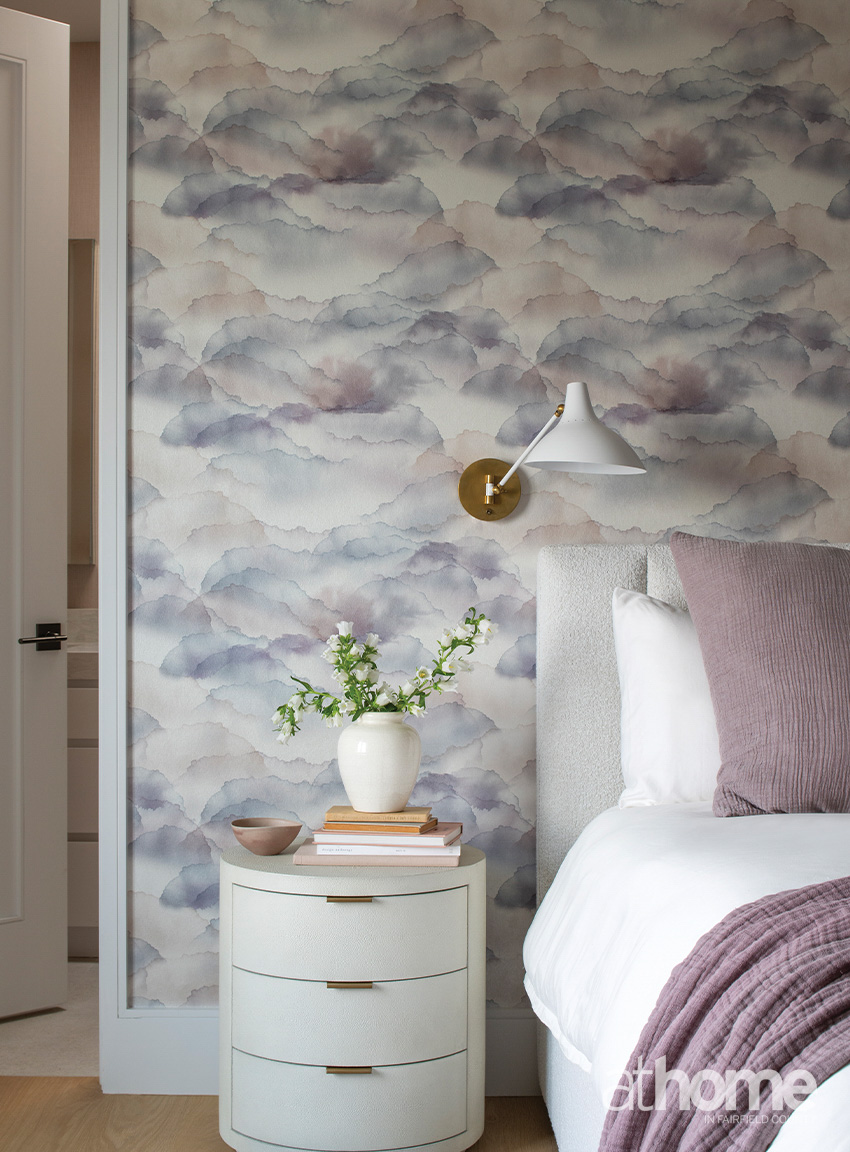
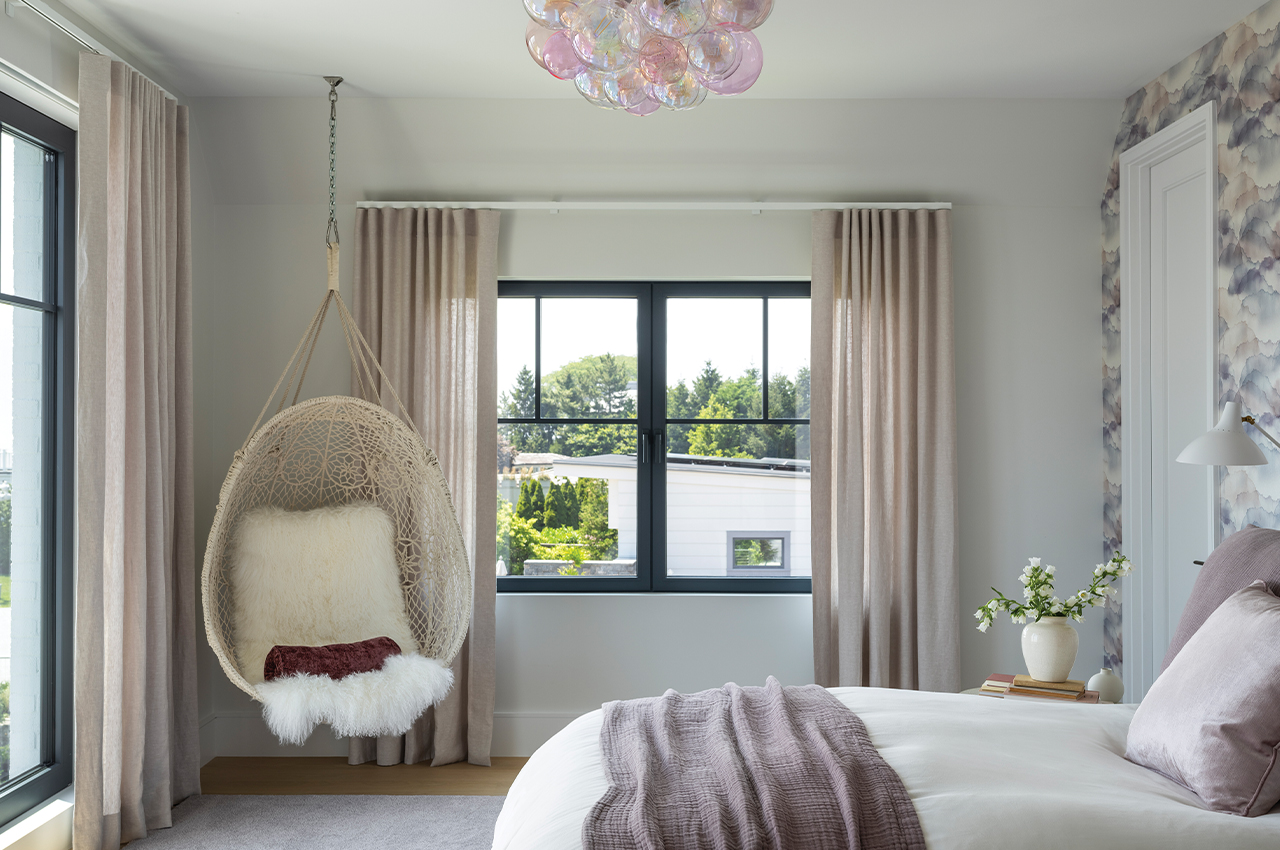
MA: They wanted something very relaxing, so we kept the colors light with that silvery blue and then very neutral, soft materials. The view is really the feature of this room, so we did the bed facing the water and then the high ceilings. The wood on the ceiling was something we had debated, but it looks amazing and gives a lot of warmth to the space.
The bed was custom made. I really like to mix a lot of custom handmade American-made pieces with more organically shaped European pieces. I love that combination. The Tacchini couches have that beautiful shell-like shape.
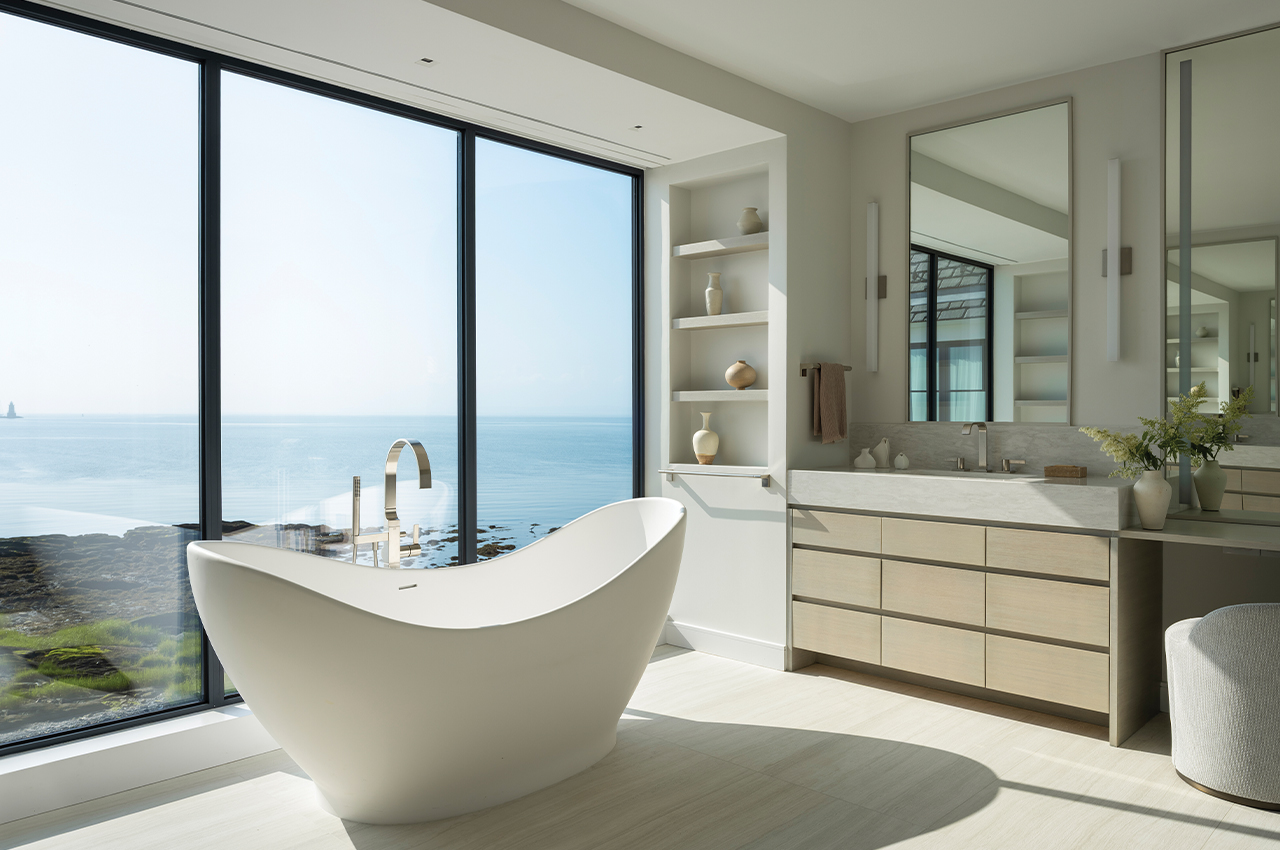
In the bath, the centerpiece, again, is that view. And the tub’s shape also feels like a shell.
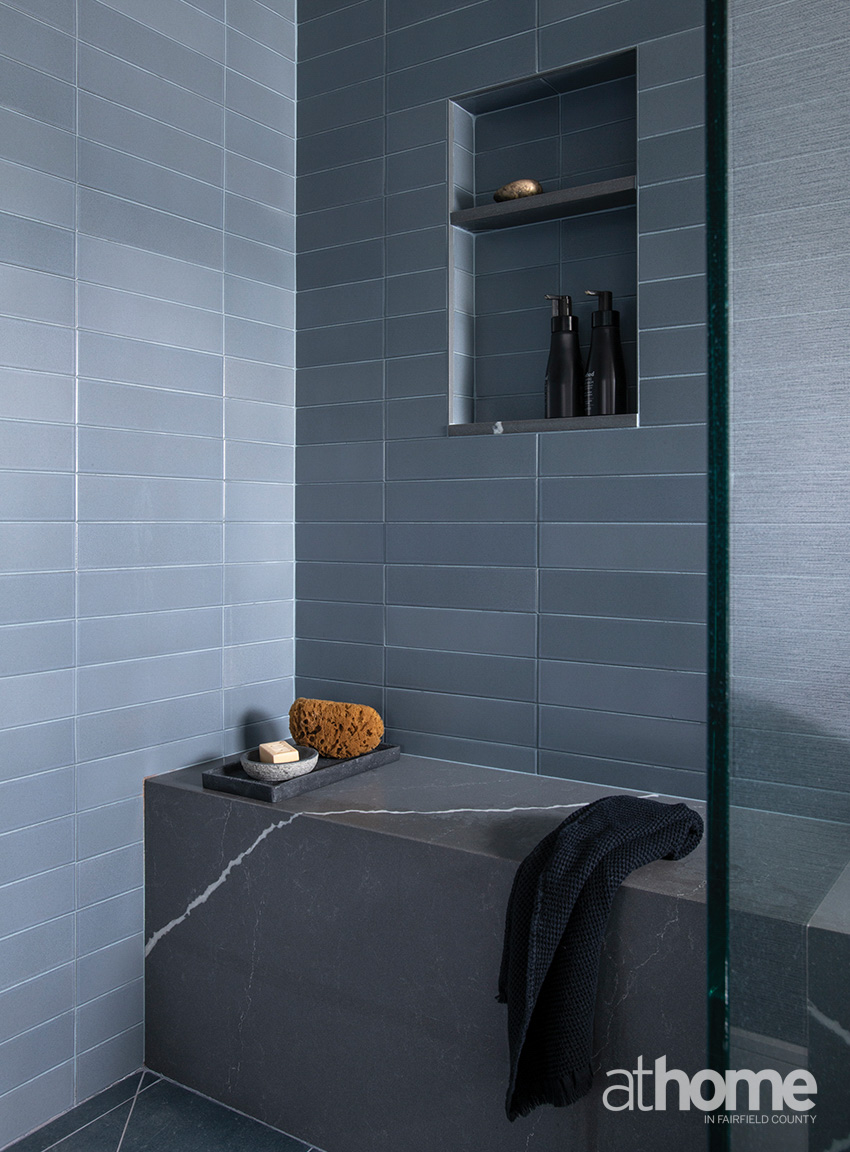
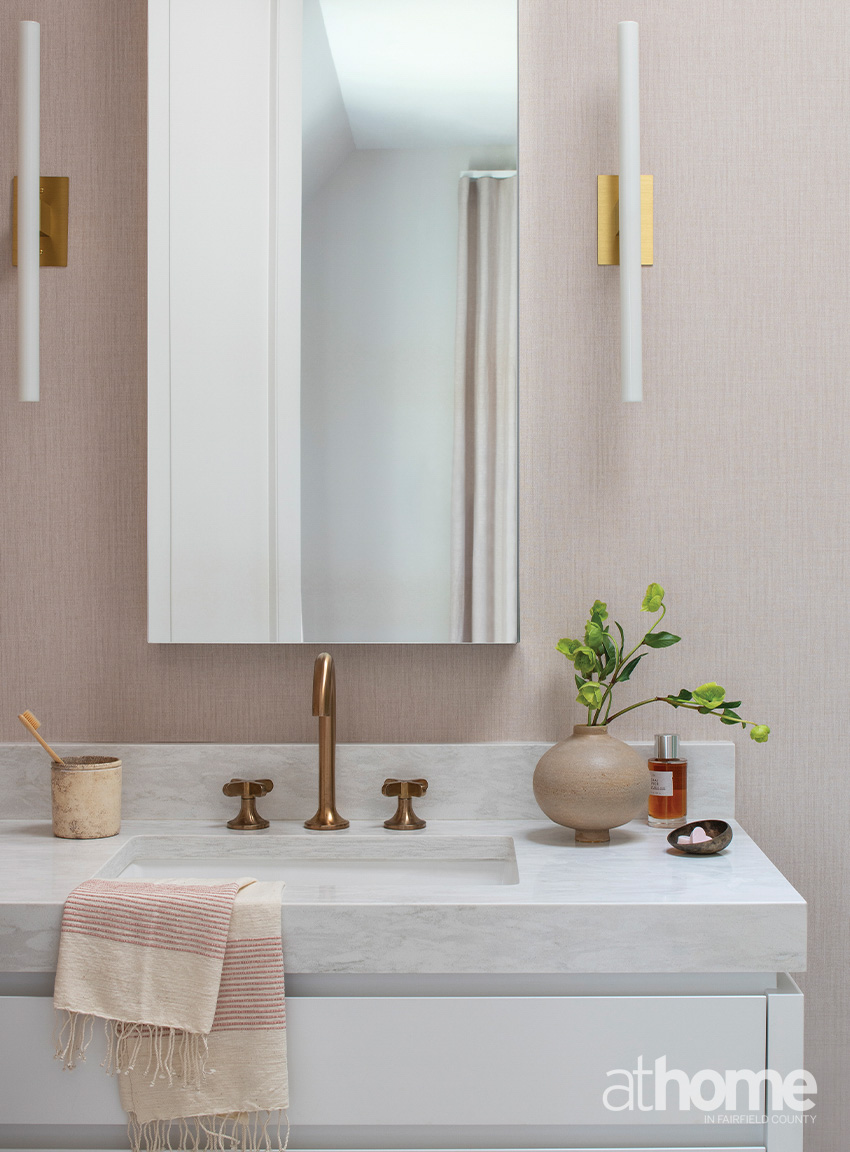
We did his and hers vanities. He has a sauna, and there’s a giant double shower, more like a shower room. We kept the colors to one large format tile that goes throughout the whole bathroom. It’s very functional, and it works really well.
Do you have a favorite space in the house?
MA: I mean, I love the primary bedroom. I just love it. Every time I go in there, it really takes my breath away.
But I also love the whole open living, kitchen, dining room space. I think it works so well and all the colors speak to each other.
How important to you is it that you have that working relationship with the architect and design teams throughout the whole process?
MA: For me, it’s essential. There are many points where it’s not clear if it’s the architect or the designer’s job, so there’s a fine middle line that you both have to walk. Sometimes it’s hard.
In this case, it was very clear what my task was and what the architect’s task was. I was more in charge of the finishes and the feel, and they were more in charge of the functionality or how the overall space was going to look. It was a true collaboration.
DLP: I think there was just an early alignment on thought process there, and I think her team respected the architecture, and we respected the interiors. Giving each other the space to develop each of those things independently, while respecting each other’s directions, was a very easy process.
RC: We’ve been beat up by interior designers where we design a house, and then they don’t come into the fold until the house is essentially designed. In some cases, they come in and start making suggestions and changes to the plan and architecture, and it disrupts the flow. Successful projects, as Dave alluded to, are the ones where we support each other and understand the lanes that each of us are assigned to. They just did such a wonderful job to take a house that could have been pretty simple and cold, and it made it a warm, family-forward home. I think they just did such a special job.
RESOURCES:
Interior Design: Nima Design, Old Greenwich;
nimadesigninteriors.com
Architect: Cardello Architects, Westport, 203-853-2524;
cardelloarchitects.com
Builder: Quinndico, Old Greenwich, 203-990-3224;
quinndico.com
Landscape Architect: Wesley Stout Associates, New Canaan 203-966-3100;
wesleystout.com
Art Advisory: Mason Lane Art Advisory, New York;
masonlaneart.com