

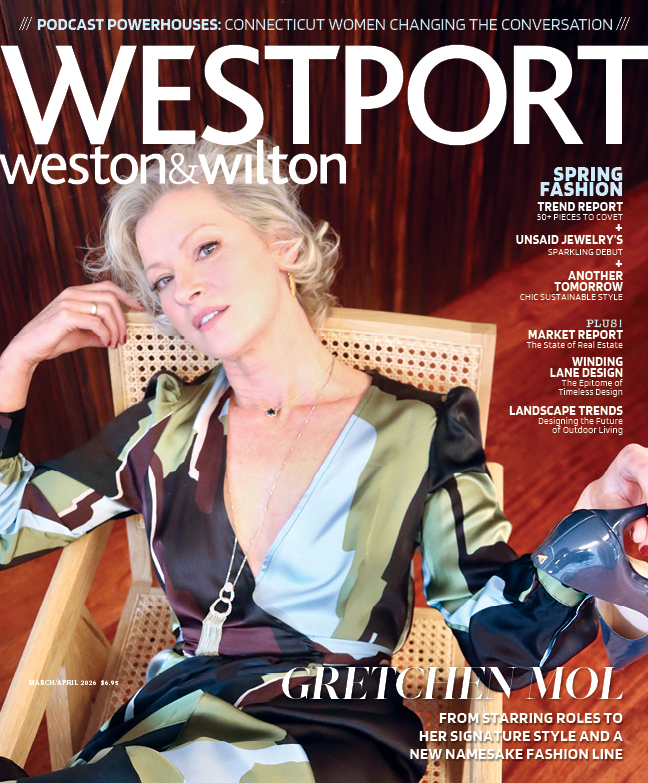


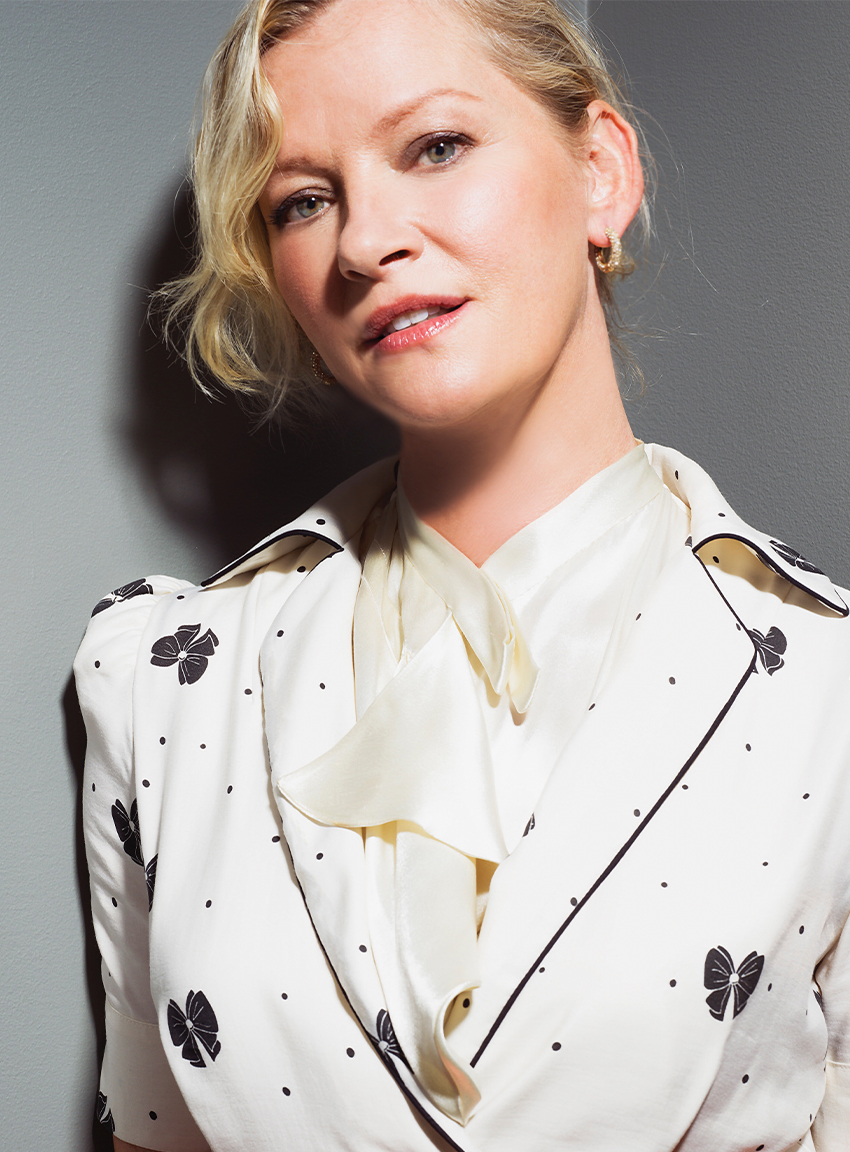
Gretchen in The Muse dress
Samantha Yanks: Your early breakout roles introduced you as a very specific screen presence: luminous, restrained and quietly powerful. When you look back at that period, what were you still discovering about yourself as an actress?
Gretchen Mol: Honestly, everything. It was such a time of discovery. It’s one thing to study and do what feels like amazing breakthrough work in a classroom, but taking it out to the workplace was another ball of wax. Most of the time that meant getting out of my own way. All of the elements that the job would bring, the nerves, the excitement, the stakes, the pressure that I put on myself … it was often hard to hold on to the fundamentals for me. I can remember one of my first film roles on an Abel Ferrara set, and I had to walk down the hall, hit the mark and speak to a piece of tape. Chris Penn was sitting in the room feeding me his lines, but I couldn’t see him, and I remember feeling my head shaking and my eyes crossing because I was speaking to the piece of tape on the camera, and I could also see myself in the lens. It was totally disconcerting, and I didn’t want anyone to know how green I was … I didn’t want them to think they made a mistake! It was so frightening. But I guess it was thrilling too, because I kept going back for more. No acting class could’ve prepared me for it. You learned by doing. Just keep showing up, getting experience. It was the only way. It’s time under tension.
SY: As your career evolved, you often gravitated toward complex women who revealed more in silence than in dialogue. Was that an instinct you consciously followed, or something that revealed itself over time?
GM: I grew up in a household where the ethos was very rooted in Less is More. Across the board. Maybe because we didn’t have more, it was a way of making it dignified. In any case, we were abundant with love. But I have always loved this Emily Dickinson poem about being hungry, and then once inside, drawing the table near, having a taste, she realized she didn’t want the meal after all. It was the wanting that held so much power. I always related to that. Understood the difference between need and want, as it were. I think the power of many of the films I loved and appreciated didn’t lie in the words, but the imagery, the music. One of my favorite films was The Black Stallion growing up. The entire sequence on the beach with the horse, no dialogue. As a child that really resonated. It was so striking when he finally did come back to civilization. An actor has many tools to express themselves, including their clothing, their movements, and how and when they speak.
SY: There were moments in the middle of your career that felt more intimate, more internal. How did those roles reshape your relationship to ambition and success?
GM: I think you may be asking about family, children and balancing it with the desire to work. It’s a rare and funny job where I taste both lives. There have been large chunks of time when I stayed at home as a parent. In fact, it was the best thing about not being employed! And then there have been intense times of work which took me away from my family. There have been moments when I couldn’t wait for the job to end, it wasn’t rewarding, but the money was good and necessary. It’s all case by case. I love being with my family; I love the intimacy. I have tried to strike a balance that works for us all. I have an amazing partner in Kip, my husband. He is the best father and husband I could have dreamed of, and we work it all out together.
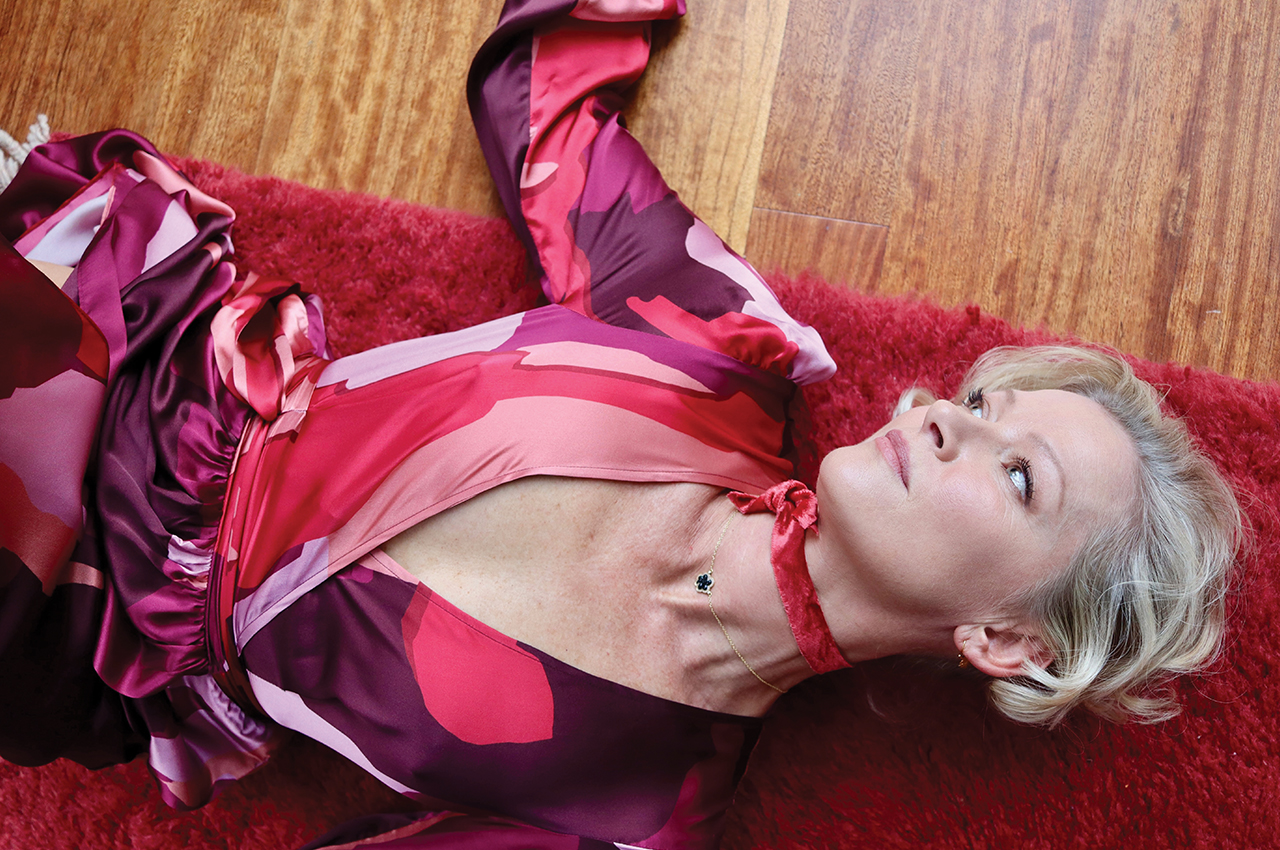
Gretchen in The Berry dress
SY: When Boardwalk Empire came along, it marked a shift into a woman who commanded space in a new way. What did that role unlock for you creatively?
GM: That was one of the lovely times when there was balance. My kids were young, we lived in New York City, the job was in Brooklyn, and it was probably one of the best roles of my career. The writing was so strong it was like having the wind beneath my wings. It was a wonderful foundation to be able to explore and go deeper creatively because I felt very supported by the environment, and I was grounded in my family life. Prior to playing Gillian Darmody, I had never played someone as morally questionable and complex. She was a tough one. She was a survivor. I decided that about her early on, because I personally wanted to survive on the show. I wanted as many seasons as I could get! So every opportunity I had to instill that part of her character, I doubled down on it. I felt they began writing to that idea. It was very good for me at that time in my life to express anger. It was not something I had been asked to do in my career. Women often default to pain and tears before they can reach that deeper well. It was scary for me to go there.But ultimately an opportunity to grow as an actor and grow in my understanding of myself.
SY: Looking back now, how do you see Boardwalk Empire as a defining chapter of your career and the kind of stories you want to tell moving forward?
GM: My time on that show shaped many things for me. It set the bar high….and honestly, it’s a difficult truth that they won’t all be as glorious as that one. As an actor, you want these moments when you feel the thing you put your blood, sweat and tears into reaches an audience, and they connect with it. That’s the point. And in that case, I liked it too. I believed in it. And I really have always tried to find those projects to believe in. They don’t always work out. The beauty of the collaborative nature of this business is that sometimes it surprises and surpasses your expectations. Then there are the times it doesn’t. But I do know that I am not interested in doing work that is not going to expand and challenge me in some way.
SY: Fashion has always been distinct in your story. You’ve worn so many unforgettable looks on-screen, and now you’ve launched your own clothing line.
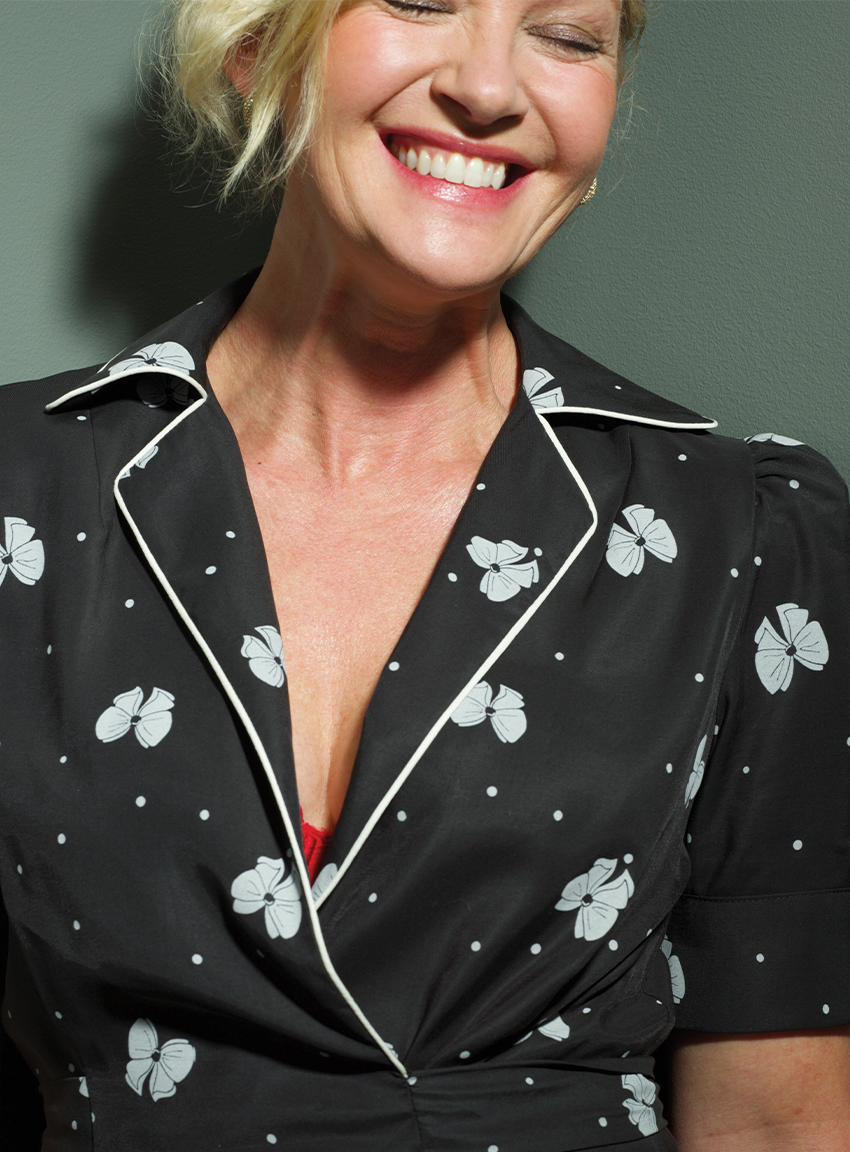
GM: I did a movie many moons ago directed by Jason Alexander, and I remember him saying that as an actor, you absolutely must have other things that you are thinking about and pursuing. It is simply too maddening and dissatisfying to wait to be called on for work. The older I got, the more I felt the urge to discover what other creative endeavors might challenge me and keep my creative juices flowing in between jobs. Some actors long to write or direct, but I knew that I wanted something away from the business. I had had the idea for a kind of housedress for women, an item of clothing that was easy to throw on and had glamour but also felt a bit practical. I wanted it to have a vintage feel, because I love for clothes to transport. I love clothes as a means of expression. I also know that I want to be able to function and go about my day as if I am in sweats, but I don’t want to feel like I haven’t gotten dressed. That was the problem I gave myself. To make a garment for that.
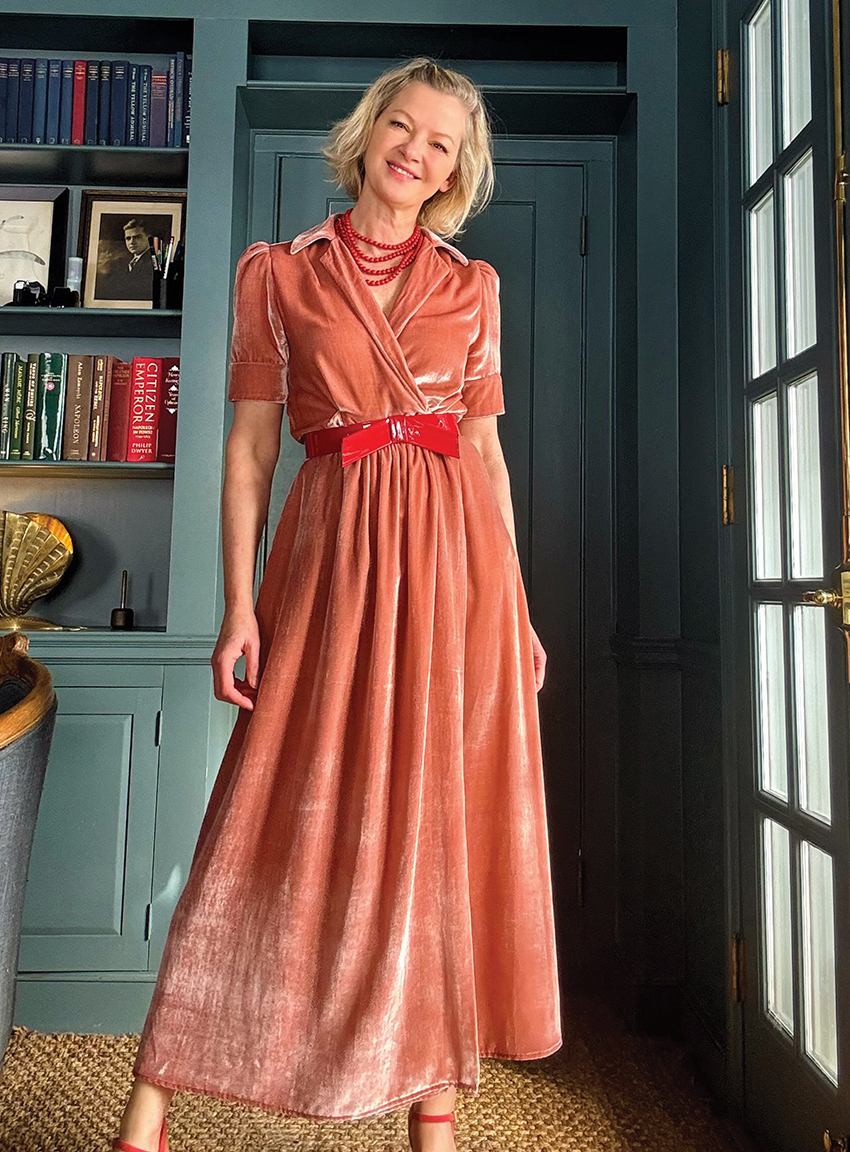
Gretchen in The Greta Velvet Dress
SY: Looking back, can you trace an arc in your relationship with fashion through your work?
GM: Absolutely. It all goes back to childhood. Playing pretend and playing dress-up. I got lost for hours doing that. I even played store as a kid, beyond what I would have wanted anyone to know!! I had a girlfriend, and we would hang clothes from our closet around the room and stack little neat piles and put price tags, etc. And we would name the store, and that was how we had fun!
But as I began to work as an actress, I was very fascinated with the costume fitting process. The transformation. Why one item worked and another wasn’t right. How much the clothing informs the character.
SY: That idea of intention feels very present. How did your acting background shape the design process?
GM: The best designers I have had the honor of working with, understood the details of a garment and its place in history. They took such care over those details being correct. And you could see and feel the difference. I have played characters from many different eras, and I always loved the detailing in clothing from another time. Specifically the ’30s and ’40s. They had a femininity and also a quiet power. I think of Katharine Hepburn. Effortless elegance. I was aiming for that.
SY: How would you describe the woman you designed this line for?
GM: She has a full life and doesn’t want it to be interrupted by her appearance, but enhanced. She is drawn to bringing romance into her everyday life. Taking daily tasks out of the mundane. I think of her as being sensual, assured, self-possessed.
SY: Tell us a bit about a few of your favorite pieces.
GM: The dresses are derived from the silhouette of a classic 1940s housedress, but each detail and fabric choice changes them wildly. Our silk collection, which we just released, has the coolest almost-camouflage pattern, which is such a wonderful juxtaposition with the soft silhouette of the design. I love it for its sexiness, as it is actually quite a lot of coverage with its midi length and long sleeves, but the weightlessness of the material and the easy wrap style make it a dress by women for women.
I’m also a huge fan of the Terry cloth version. Perfect for vacation, poolside, the beach, etc. but I have worn it in the summer on the subway and there’s something a little subversive about it.
SY: As the line expands, what do you see as it evolves?
GM: I am really enjoying this time in the process. It is truly slow fashion, everything manufactured in New York City. Just as it evolved very organically from an idea I had over 10 years ago, I hope to keep growing it, bringing it to the awareness of more women. It is so exciting for me to see women try it on and feel good in it and be delighted by it!
SY: You’re also returning to the screen with Horsegirls, which explores interior worlds in such a haunting way. Did working on that project influence your creative mindset?
GM: Any time you are tasked with a role that asks you to go into your own personal repertoire of experience, which I did for Sandy, it connects you to this deeper part of self, if only for that time you have on the project. But something stays beyond it. You carry it with you. I was able to call up my mother, who passed in 2021, on a daily basis while working on this film. I so appreciated that.
SY: Sandy, a mother facing an uncertain health diagnosis while watching her daughter, Margarita, step into adulthood. How did you approach portraying that tension between letting go and holding on?
GM: I think that is the challenge of parenting, or one of the many, but maybe the ultimate one. And in the case of this particular relationship, there is, for the mother, I great deal of fear around letting go and trusting that her daughter will be OK with out her, because in many ways it has been a co-dependent relationship. But I think that parents with children with disabilities know, and frankly parents in general know, that balancing the vise grip with the benign neglect is one of the things we will likely never do perfectly. In my portrayal of Sandy, I didn’t want to shy away from the truth: that as much as we love, we still make mistakes.
SY: The film explores independence, family and finding identity through the unexpected world of competitive hobby-horse dance. What drew you to this story?
GM: Horsegirls is primarily from the perspective of young woman who has autism. I play her mother. The film captures her inner world with such wonderful nuance. I have yet to see another film that manages this.
SY: Finally, when you look ahead, what excites you most?
GM: Truly, the journey of all of it. The unknown. There can be no plan. Of course, I have learned the art of agency…if you have something you want to do, do it! Start! Let life come along and slow you down and interrupt you. I try not to worry too much about the results. They will be what they will be. Put in the effort, try and enjoy it along the way. Surround yourself with people you love. It really is the journey.
The Gretchen M. fashion line is available online at GretchenM.com. On Instagram visit,
@gretchenmnewyork to explore the brand further. Join us on Instagram
@westportmagazine for Gretchen Mol’s Spring debut of Gretchen M.