





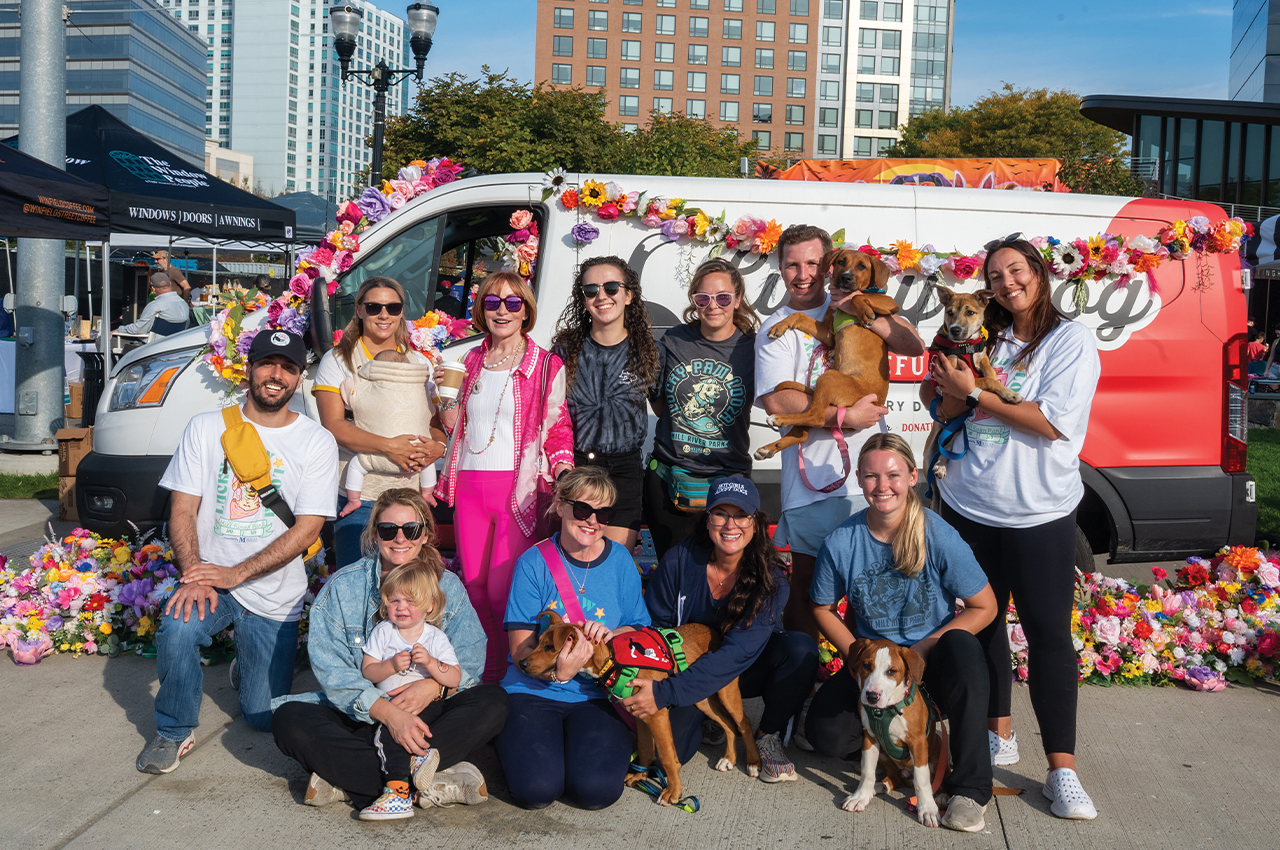
Lucky Dog Refuge co-founders Kirstin Mende and her mother Maria at a recent fundraiser
In 2019, Kirstin Mende’s parents, Maria and Hans, adopted a 10-week-old puppy named Lucky who had suffered catastrophic injuries, having been split open from chin to belly. A vet suggested the dog be put down, as it would never survive. But the family made a commitment to Lucky’s care. “Against all odds, he survived, and in doing so, showed us how many dogs are written off simply because their cases are hard or expensive,” says Kirstin. “He inspired our mission to give dogs a real chance at life, even when the odds are against them. ”
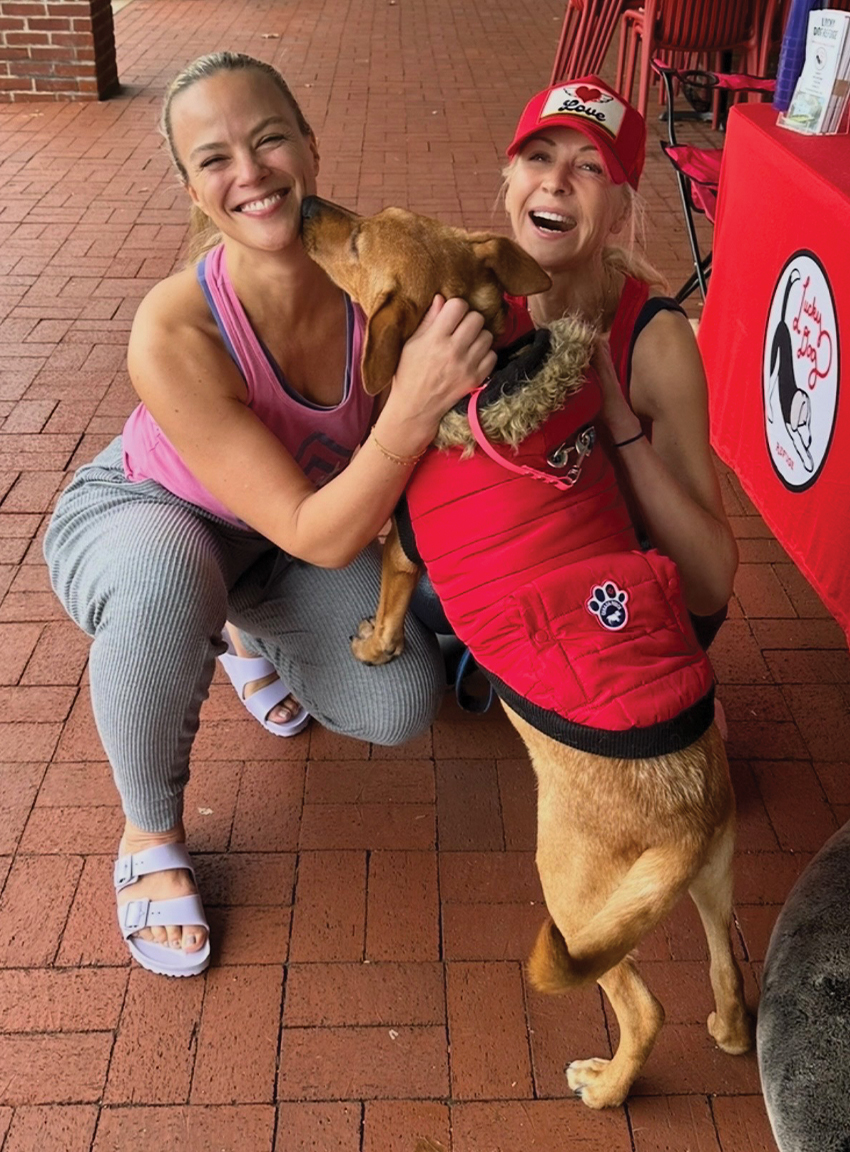
Lucky’s adoption led to others for the Mende family, and each dog connected them to rescuers in underserved regions. Those connections ultimately shaped the vision for Lucky Dog Refuge, a nonprofit cofounded by Kirstin and Maria during the pandemic. Based in Stamford, Lucky Dog re-homes roughly 150 pups a year and has found loving families for more than 1,000 pets since opening its doors.
“One thing we’re deeply proud of is we always take our dogs back if an adoption doesn’t work out,” says Kirstin. “Returns do not happen that often, but still, we will always be a safety net for our dogs.”
The organization is distinctive for its efforts to help dogs with complex medical needs.
“We take on dogs that require heartworm treatment, orthopedic care and amputations, emergency and lifesaving surgeries, and intensive treatment for severe mange and neglect. We also specialize in helping vulnerable pregnant and whelping mothers, neonatal puppies, and dogs battling parvovirus and other critical illnesses,” says Kirstin. “These are the dogs most often at risk of being euthanized simply because they need more than basic care. Our mission is to give them the time, the treatment and the chance they deserve to heal and thrive,” she adds.
Medical cases can be very expensive. According to the Lucky Dog Refuge website, the organization spends an average of $2,500 per animal. Donations, grants, partnerships and sponsors are crucial to its ability to cover the medical costs.
A legacy fund was recently created in memory of Chris Collins—a dedicated volunteer for Lucky Dog Refuge who died in 2025. It helps ensure that dogs aren’t turned away because of costly medical needs. “It’s a promise that every life is worth saving,” says Kirstin. “And the fund serves as a lasting tribute to Chris’s kindness.”
Lucky Dog shelters up to 38 dogs at a time and strives to give each animal the attention and care it needs. Dogs are treated to multiple walks per day and given opportunities to socialize, thanks to the efforts of volunteers and staff members. There are eight to ten staffers on-site per shift.
“I grew up with dogs—lots of them. We always had at least five, and for a long time I thought that was completely normal,” says Chantal Erensen, a volunteer. “My mom rescued dogs from the street, the pound, wherever she could. Today, I have four rescue dogs of my own.” Erensen’s interest in rescue dogs began about 15 years ago, when she began to recognize the difference between rescuing a dog and buying one from a breeder or store. “I became aware of the implications for mother dogs, the animals that never get sold, and the widespread issues of neglect and abandonment. The reality is heartbreaking.”
The adoption process is open to applicants who are 25 or older. They can apply through the organization’s website. Applicants are asked to provide home photos, references and veterinary history. A meet-and-greet for the applicant and dog follows. Once a solid match has been made, contracts are signed, fees are paid, and the dogs are sent home with their forever families.
“But adoption is not the end of the relationship,” says Kirstin, who lives in Darien. “We support our adopters for the life of the dog, through alumni events, pack walks and even boarding, so our dogs always have a safe place to land.”
Kirstin says many aspects of her work at Lucky Dog Refuge are rewarding, but one of the most satisfying things to observe is the transformation. “Seeing a dog arrive frightened, injured or shut down, and then slowly realize it is safe and loved. That’s incredibly powerful.”
The Lucky Dog Refuge facility at 36 Pulaski Street was built to look and feel like a regular home, and there’s a large play space on the lower level that’s along the Mill River, where dogs can run, play and get fresh air. There are dedicated places for nursing puppies, quarantined dogs and new rescues. “The facility is a true refuge,” says Kirstin, where dogs are given compassion, medical care, training, emotional safety and the second chance they all deserve.