

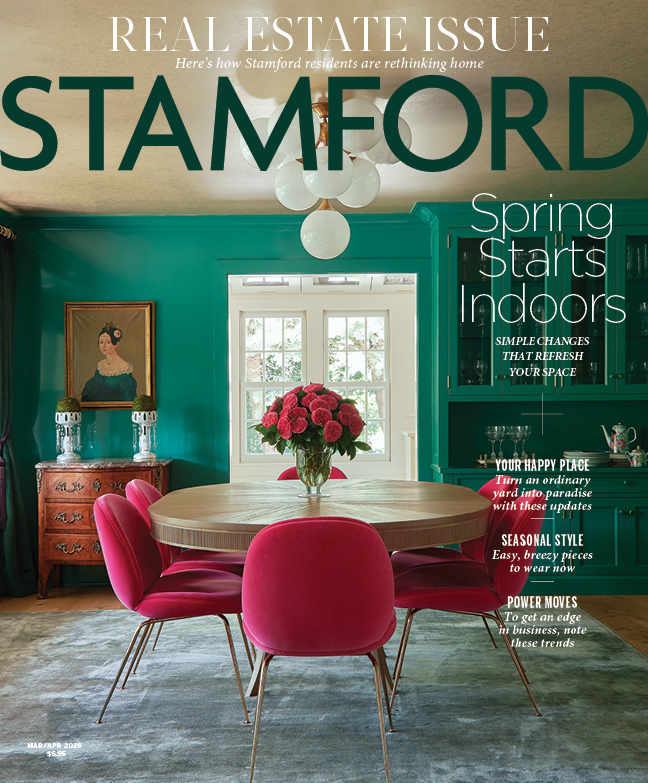

photo credit: Modern Angles/Staci Zampa, Compass

Over the past two decades, Stamford has seen nearly everything in its real estate market, including downturns, upward movement, a long-running steady transactional equilibrium, a post-Covid demand surge and a swift increase in population. The city is now the second largest in the state, with nearly 18,000 new residents in the past 15 years.
The past year saw the continuation of a trend that has defined the real estate landscape: Inventory has been tight, as residents with low interest rates on homes they purchased or refinanced years ago have found financial contentment and hesitate to sell. When a single-family home does hit the market, buyers move swiftly, frequently resulting in multiple offers for the seller.
In addition, more apartments have hit the Stamford market in the past few years. As a result, some people have discovered the dream of home ownership is not so high on their priority list. It all adds up to a complicated, large-scale real estate jigsaw puzzle that continues to evolve. These trends, and others, are shaping Stamford’s residential property landscape for the next generation.
HOUSING DEMAND
Demand for housing in Stamford remains unusually strong. The city’s population grew by 10 percent from 2010 to 2020 and surged to more than 140,000 residents in 2024. According to the city’s master plan, the population is expected to rise to 152,000 by 2035.
The increased demand for housing has created an inventory bottleneck. Homes that come to market are snapped up quickly, and sellers often see multiple offers. Buyers need to move lickety-split, but even then, there is no guarantee their offers will be accepted. Some sellers prefer cash offers; others are unwilling to negotiate on contingencies. This unusual dynamic has been in place for the past few years and is likely to continue.
“Demand remains very high against very low supply,’’ says Barbara Hickey of William Pitt. “Nothing has changed in that regard. Sellers are in the driver’s seat, provided they don’t reach for the stars.”
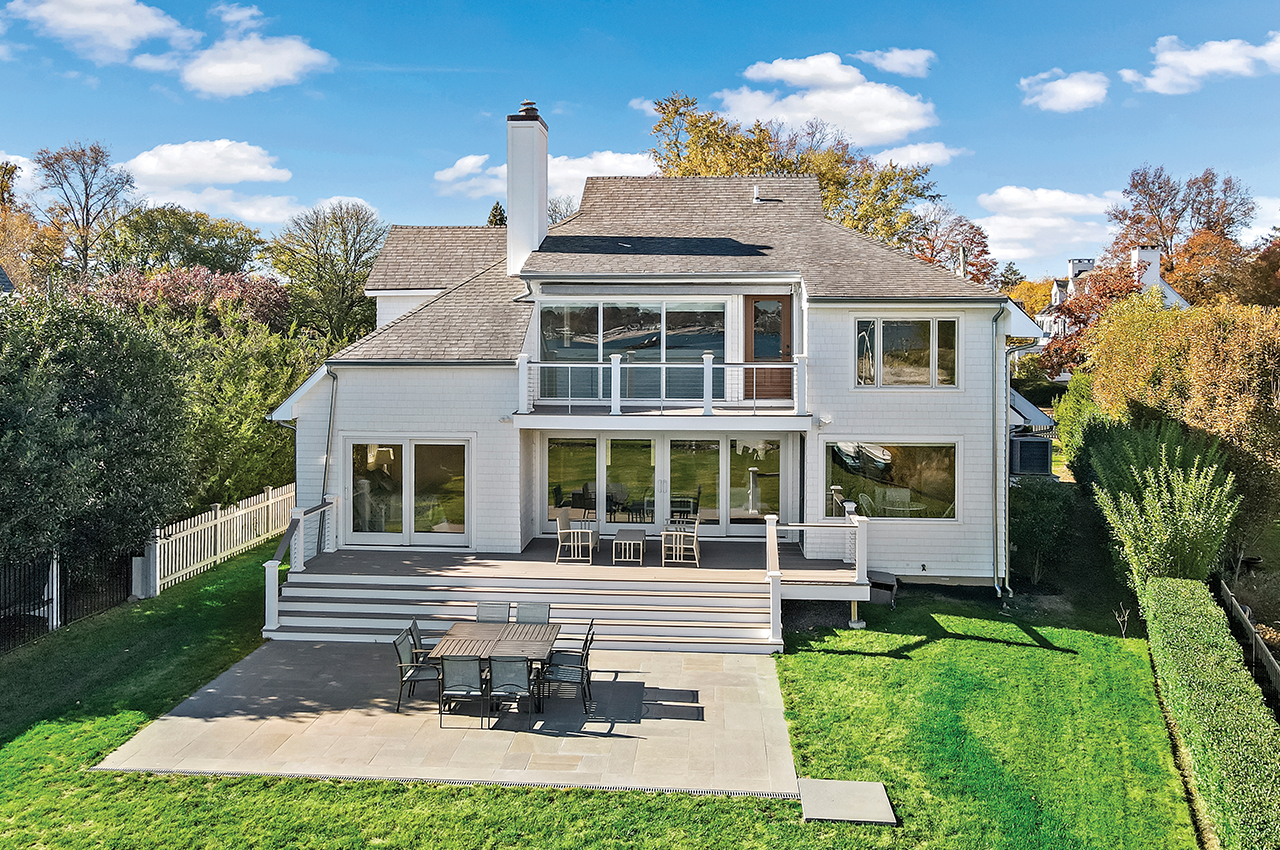
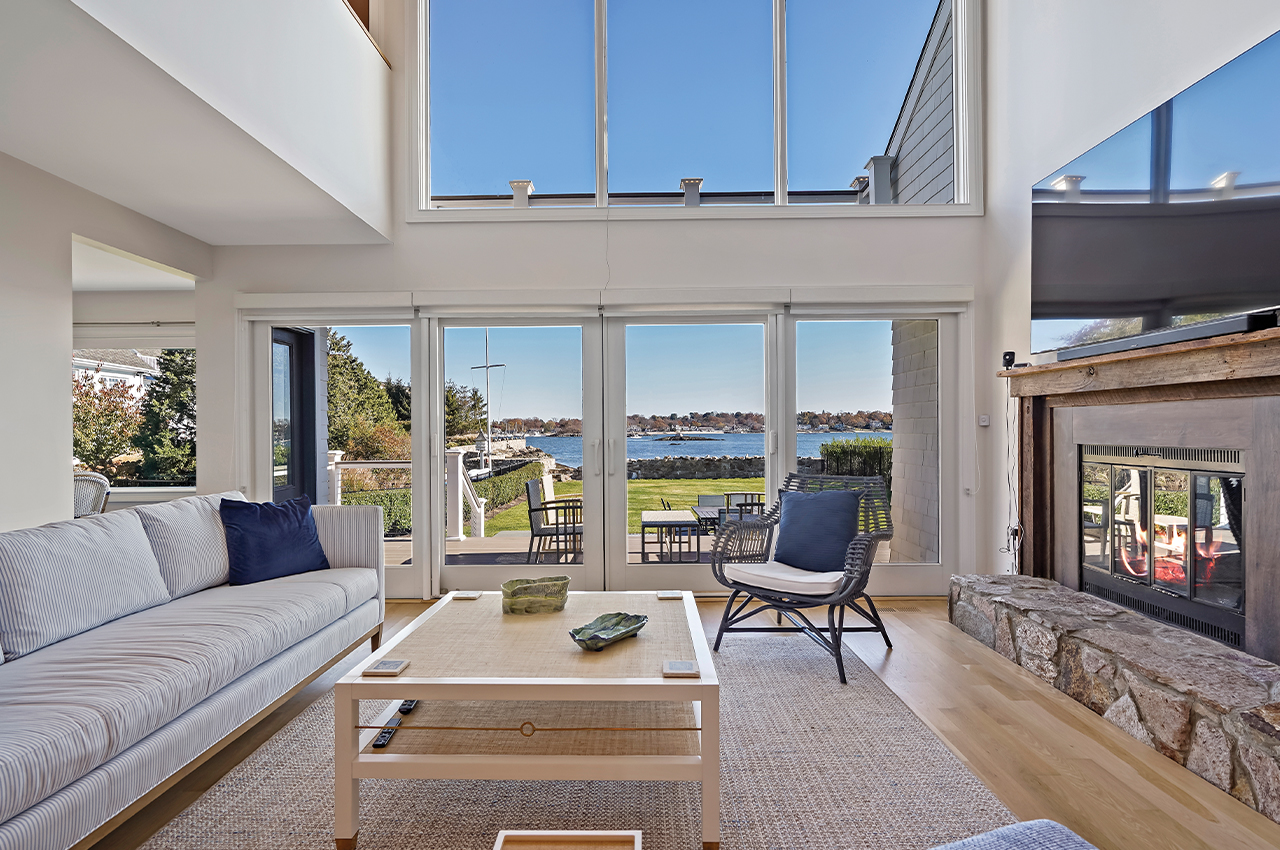
Inventory in Stamford declined by 15 percent through the third quarter of 2025 compared to 2024, according to a market report by William Pitt. And the median selling price increased by 8 percent to $871,000, the report said. At the same time, buyers have become more astute, according to Staci Zampa of Compass. “There are fewer buyers for each house, but the those who are out there are much savvier,’’ she says. “They know the market; they’ve done their homework, and they’re making smart, thoughtful decisions. The segment between $850,000 to $1.2 million is still incredibly active. That part of the market has been just crazy.”
LAND CONUNDRUM
While many people still covet single-family homes, the scarcity of land has prevented developers from building houses. The result is more rental units, with more on the short-term horizon. In December 2025, for instance, the Stamford Zoning Board discussed a proposal for 261 units (201 apartments, 60 townhouses) on nine acres at the former site of Conair. Neighbors in the Waterside area have expressed concern about the number of rentals to be built.
“There has been a trend toward more rental units for years, and I don’t believe it’s a great thing,’’ Zampa says. “Developers and the city make more money building rentals than condos. At the same time, there’s not a lot of land left for single-family homes, and what’s available is usually used for senior living or more rental projects.”
The demand for more rental units is a nationwide trend. A Census Bureau report found that almost 592,000 apartments were finished in 2024, a 50-year high. The growth represents a trend among younger residents, who prefer the flexibility and lower financial commitment of renting. This demographic also shows a preference for urban living, which usually presents more job opportunities and convenience.
“We don’t have a lot of land left,’’ Hickey says. “The Stamford Land Conservation Trust works hard to preserve the chunks of land that are out there. And the homes that are out there, they’re not for the modest wage earner. With rental properties, we’re at 95
percent occupancy. There’s essentially no vacancy. History just keeps repeating itself. But at some point, there will be a glut of rentals, and a developer will convert them.”
MORTGAGE RATES
Stamford’s real estate market has remained gridlocked for the past few years, due to a lack of inventory. Many real estate professionals thought a dip in interest rates would spur some movement. Yet when rates finally started to fall in the third and fourth quarters of 2025, there wasn’t much movement among homeowners. Many chose to stay put.
“In Stamford, interest rates had less impact than people thought,’’ says Penn Johnson, president of Stamford Mortgage. “Yet while many buyers find inventory very limited, it seems to be improving. My pipeline is picking up. We’re seeing accepted offers every week.”
Johnson, with more than 40 years of mortgage experience, was not surprised that the Federal Reserve Board’s rate reduction did not trigger more of a response in mortgage interest rates. “The market sometimes gets ahead of the Fed,’’ he says. “The market expected the Fed would express its intent to continue cutting rates. That’s why mortgage rates didn’t continue to follow through.”
Vikktoria Cooper of Coldwell Banker believes there are additional factors at play that limit the impact of the Fed’s rate reduction.
“First-time homebuyers need a little bit more of a reduction,’’ she says. “They’re unable to get the financing. If we can reach the mid-to-high fives with interest rates, we’ll see some people coming off the fence. On the sellers’ side, their comment is, ‘Where do I go?’ If there is some rate compression, more homeowners might decide to move and take the equity.That would add to the supply. Then we might see a little more movement.”
Johnson said homes that range between $750,000 and $900,000 are Stamford’s sweet spot and attract a lot of interest among potential buyers. “At that price point, it takes some financial strength to be able to afford the home,’’ he says, “especially since many homes are selling for more than their asking price. Rather than finding themselves in repeated multiple offer situations, some buyers decide to look in towns like Trumbull or Stratford. But many people still want to stay in Stamford.”
Many buyers expect rates to continue to decline this year. However, real estate veterans say the return of interest rates in the 3- to 4-percent range, which occurred before and during the pandemic, is likely gone for the foreseeable future.

Single-family homes are in high demand.
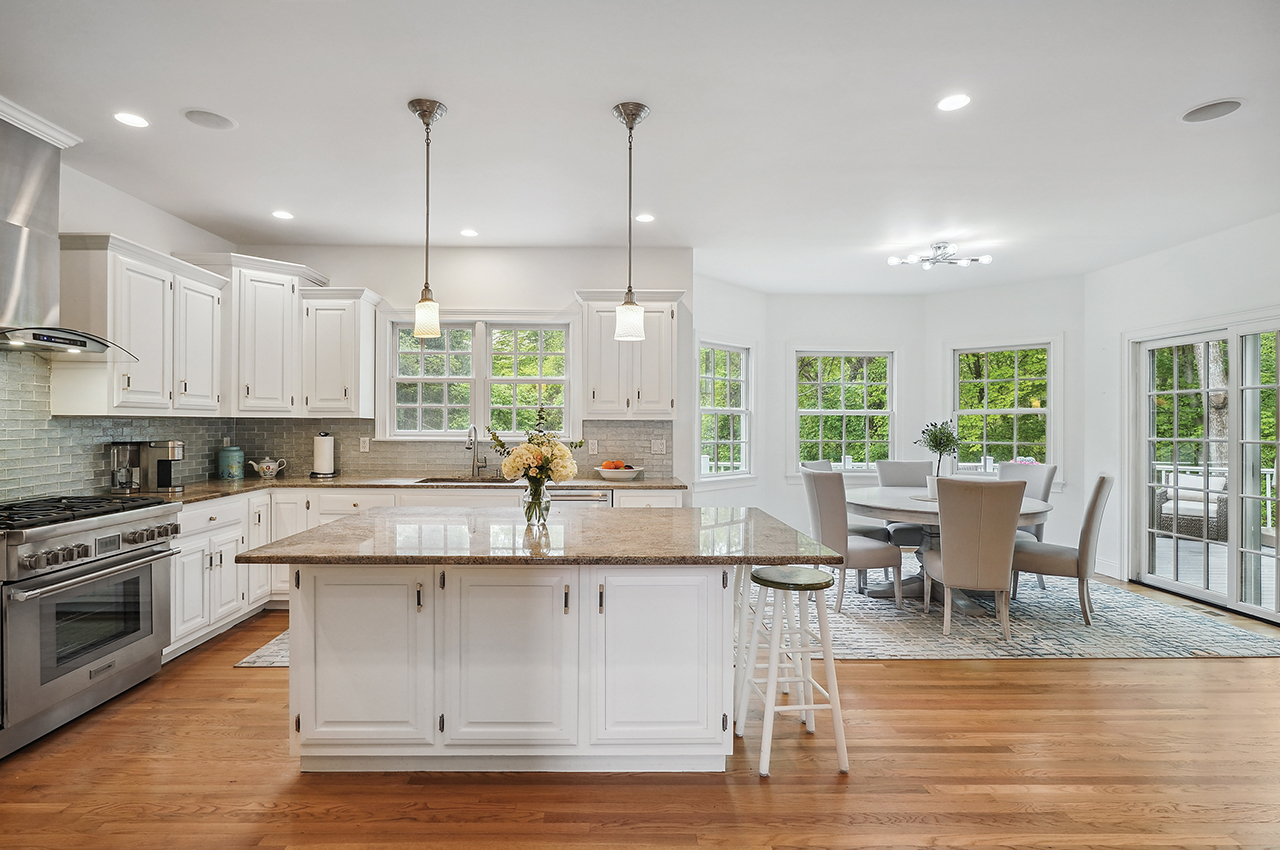
More rentals are planned for the city.
“I’m expecting to see continued gradual rate improvement in 2026,’’ Johnson says. “If interest rates get a little better, I think inventory will continue to improve. It won’t become a buyer’s market, but it will be a better market. It’s a move forward, and eventually we will return to a more balanced market for buyers and sellers.”
THE HYBRID CITY
When historians document the first quarter of the 21st century, they will almost certainly use the term “hybrid.” Almost everything, it seems, can be linked with the word, including cars, heating appliances, golf clubs, mattresses and employment. The term is now also applied to real estate. As the city has grown and evolved, some real estate experts now classify Stamford as a hybrid community.
“For me, it means it’s a place that has urban living but also the advantages of suburban living,’’ says Kimberly Tapscott of Keller Williams, a Stamford native who recently concluded a two-year term as the president of the Stamford Board of Realtors. “We look at the area closer to Interstate 95, where you have the train station, theaters, restaurants and the walkability of the city. If you want city living, you can have it downtown. If you want a suburban setting, you can have it in Glenbrook, Springdale or North Stamford.”
In the five years since the pandemic, the most enduring change to Stamford’s real estate landscape is the mushrooming of the hybridity of the city. While it always had urban and suburban appeal, the influx of more rental units and exceedingly tight single-family inventory has helped create a unique situation that has transformed Stamford. More than ever, Stamford has something for everyone, from long-time residents to newcomers who have embraced the city’s cultural complexity and vast amenities.
Remote work has contributed to Stamford’s growth as a hybrid city. “Stamford is uniquely positioned to capitalize on this model on several fronts,’’ says Vikktoria Cooper of Coldwell Banker. “On a micro level, Stamford residents fully appreciate their backyard amenities. They fluidly visit all neighborhoods and form social groups. A renewed sense of community has emerged. On a macro level, Stamford affords its working residents the luxury of being relatively close to their New York offices, increasing their productive time by approximately two hours. Stamford offers a truly unique combination.”
ENTRY-LEVEL BUYERS
The American Dream has many definitions, but for some people, the prospect of single-family home ownership is still the gold standard. There is, however, a bit of a shift. It has become substantially harder for younger potential buyers to enter the market. Consequently, many people are not buying their first homes until they are well into their 30s.
“In the past, people felt you go to school, get married, buy a house and have a family,’’ says Johnson. “The younger generation is now saying, not so fast. Buying a home is not their only priority. There is more student debt, the home prices are higher, and it takes more of a commitment to get into the market.” Some young buyers are finding a creative workaround, according to Tapscott. Some purchased homes with their parents, a model that allows young people to own a home and enjoy the benefit of childcare.
“There are creative paths to homeownership today that didn’t exist 10 years ago—from down-payment assistance programs and grants to starting with a condo or two-family home as a stepping stone,’’ Tapscott says. “I encourage people to shift the mindset from ‘forever home’ to ‘first home.’ Your first property is often your launch pad. You build equity, you learn the process, and you move strategically as your life grows. My job is to help young buyers see possibilities, not barriers.”
Many potential young buyers have expressed frustration with their inability to break into the real estate market. Consequently, more rental properties have been established in recent years. Johnson believes the abundance of rental units creates a pool of people looking to buy an entry-level home.
“It is good that there is a growing supply of rental properties, so that employees can move to this area and in some cases, prepare to buy a new home,’’ he says. “All of the workers who move to our area and start out renting become potential home buyers in the coming years. It’s enabling people to move here to be closer to work and see the benefits of living in the Stamford area. Business growth creates a need for places where employees can live. These are future buyers who will support the housing market.”
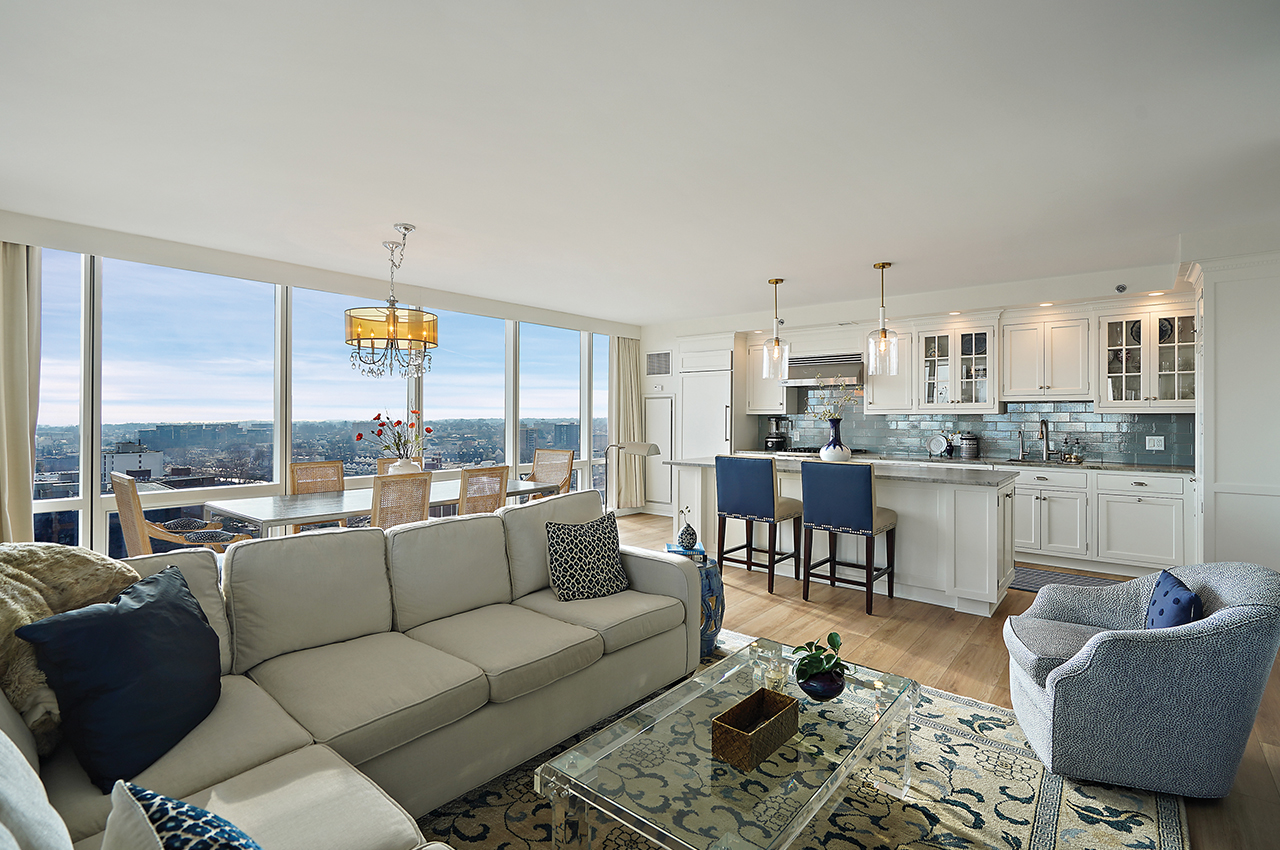
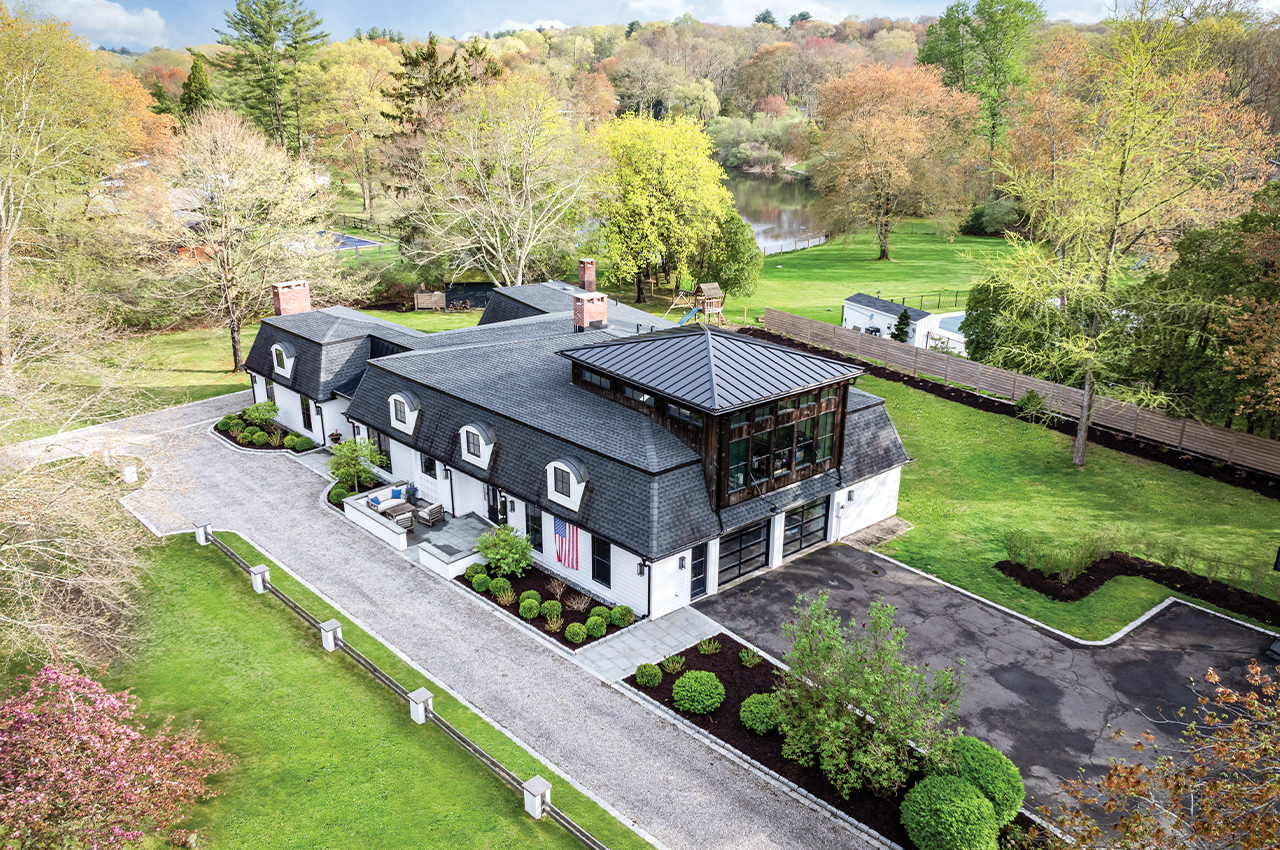
As a hybrid city, Stamford offers the benefits of suburban and urban lifestyles.
There is also a trend among younger residents to seek out rental units or homes that require limited upkeep. But for people who are serious about getting into the market, it’s important to make lifestyle adjustments.
“I tell younger buyers to put themselves on a budget,’’ says Hickey. “Start by cutting all the frivolous things. Drive an older car; don’t trade in the old car because you want a lease. Say no to the overseas trip. If you sacrifice upfront and you’re conscientious, little by little, it adds up so quickly. It takes work, but it can be done.”
FUTURE FORECAST
It’s always hard to predict how the real estate market will react. Interest rates could fall and usher in a wave of activity. It’s also important to remember that prior to the pandemic, low interest rates and solid inventory helped Stamford maintain a steady flow of transactions.
“When we talk with lenders, they tell us they are getting a lot of applications,’’ Cooper says. “The volume has increased, they have an influx coming in, and they’re getting ready for the spring market. Buyers are getting prepared to run and grab the house they want.”
The National Association of Realtors predicts existing home sales to increase by 14 percent in 2026 and new home sales to increase by 5 percent. The group expects mortgage rates nationwide to level off around 6 percent and most of all, job gains to increase. The organization also expects strong employment growth, which should benefit the housing industry.
There are no signs that demand to reside in Stamford will abate any time soon. If anything, Stamford’s real estate momentum is surging. Hybrids, as we’ve learned over the past two decades, are hot. People are discovering what Tapscott has known her entire life.
“Stamford was a major beneficiary of the shift after the pandemic,’’ Tapscott says. “Remote and hybrid work opened doors for buyers who once felt tied to New York City. Families began prioritizing space, community and access to nature—qualities Stamford offers in every neighborhood. Even now, five years later, those preferences haven’t faded. During the pandemic, Stamford’s appeal became clearer than
ever, and that momentum has not reversed. If
anything, it has strengthened Stamford’s identity as a city that offers the ideal balance between urban convenience and suburban comfort.”