




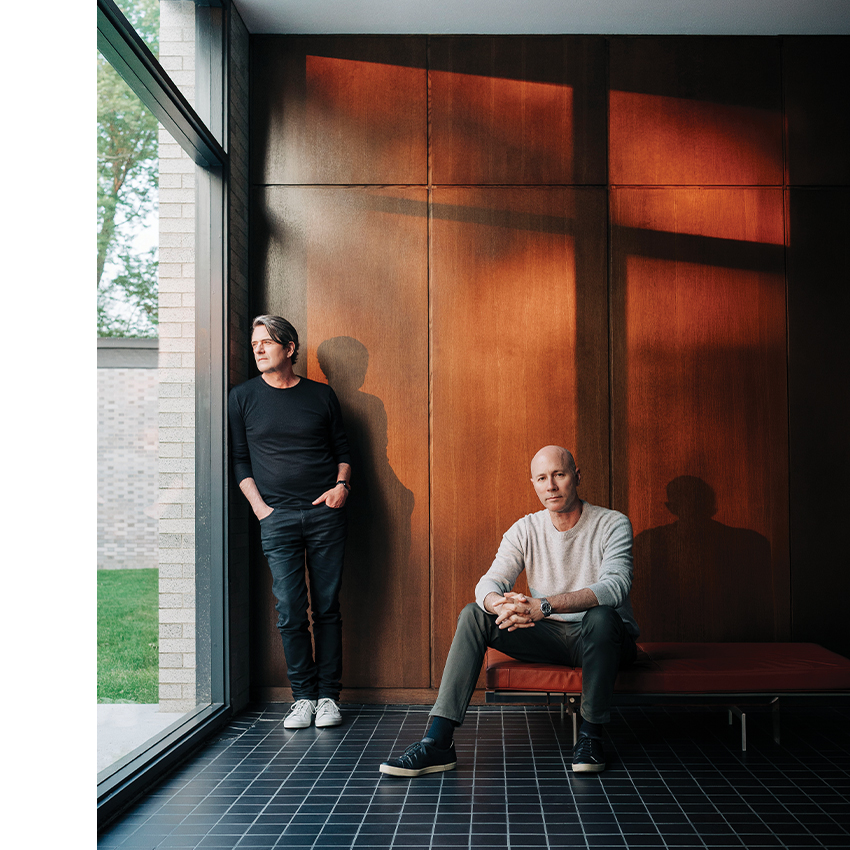
The Craftsmen: Craig Bassam & Scott Fellows
Architect and creative director of Bassam Fellows. Integrating modernist design at home and at work. (Photo by Sam Interrante)
 Can you.)
Can you tell us about your company and its mission/philosophy?
We founded our furniture and design brand in 2003 with a focus on Modernism, craftsmanship and beauty. Everything we do ties into the modernist philosophy: how we design our products, where we live and where we work.
What is the history behind your office space?
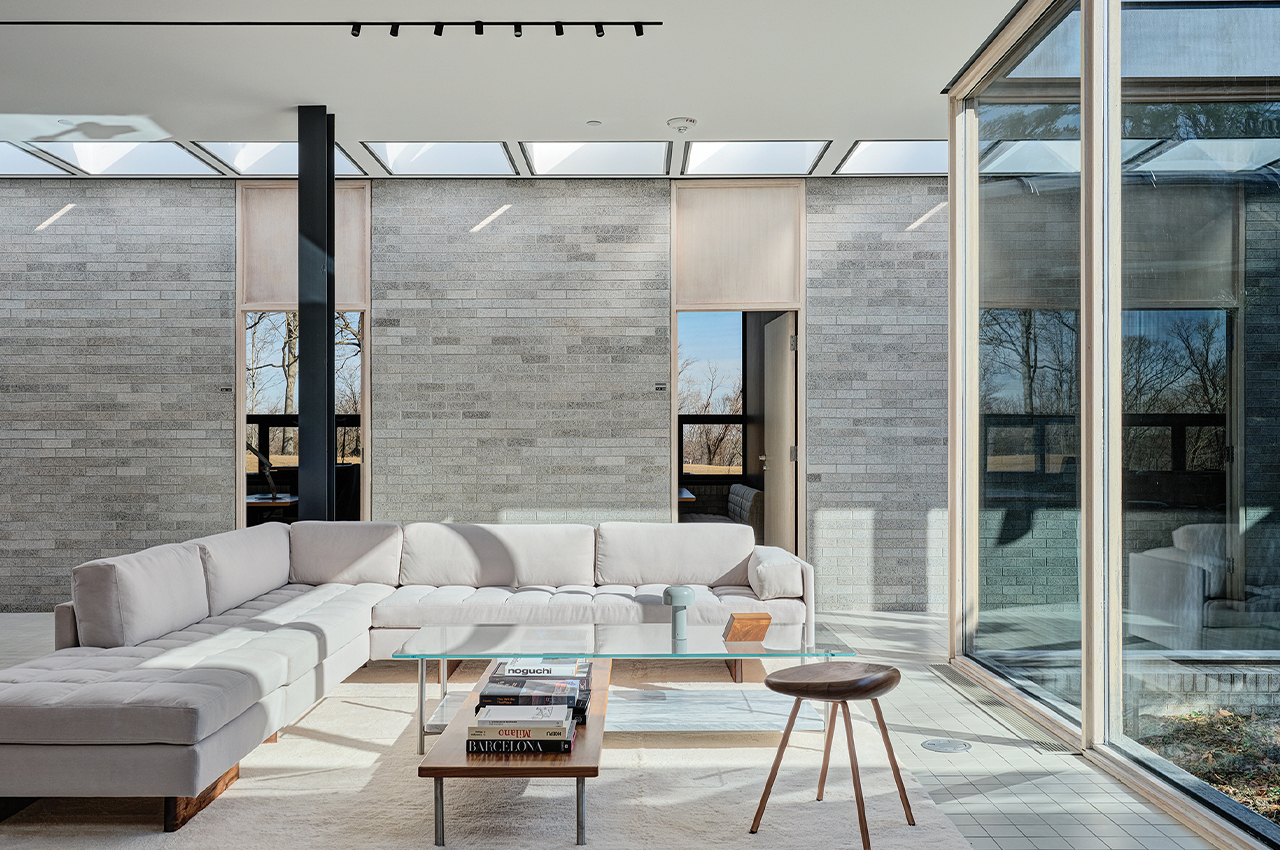
The building in Ridgefield was the former Schlumberger Research Center Administration building, designed by Philip Johnson in 1952.
It took us two full years [to restore] and was a massive project. The building had been cut off from all services (water, heat, electricity) for several years, so it was in a sorry state. But surprisingly, much of the original “historic fabric” was intact and could be restored.
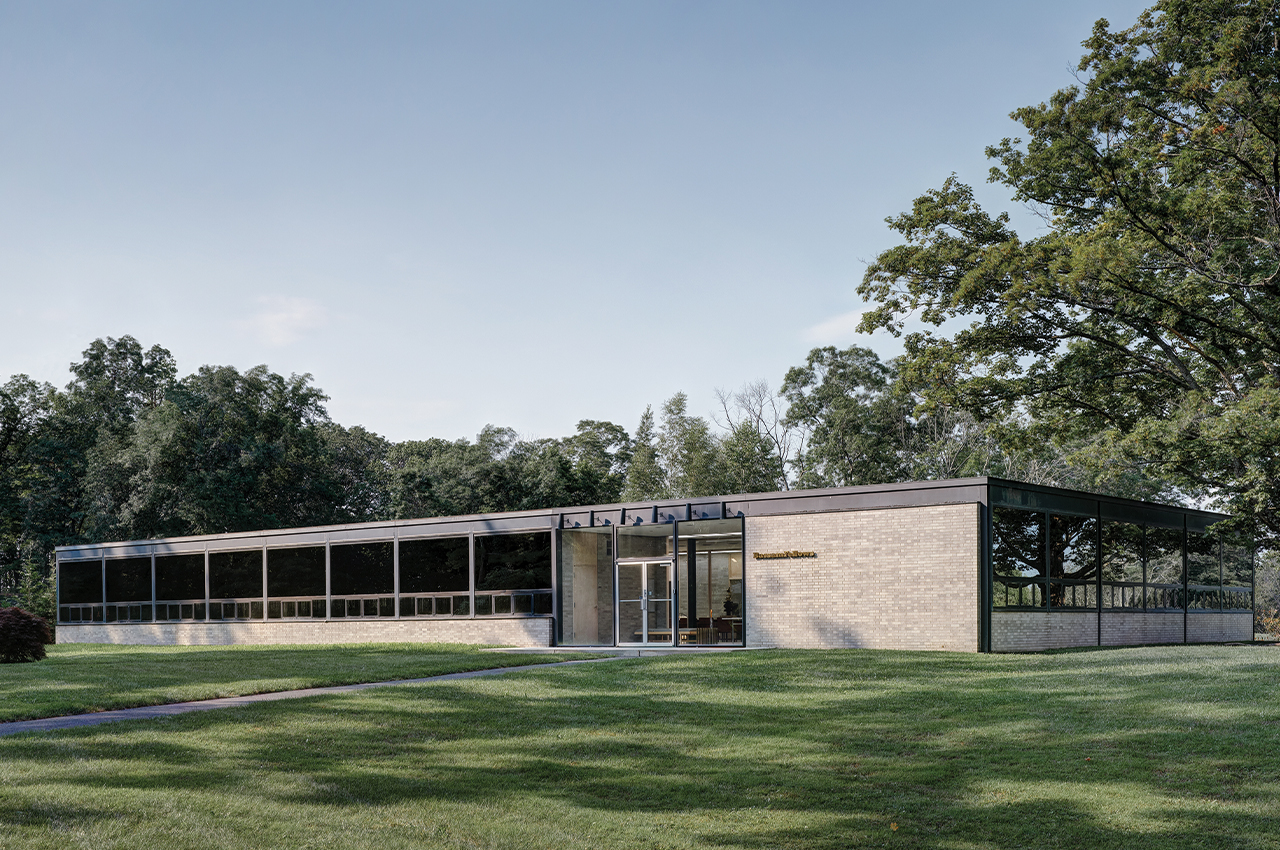
The Bassam Fellows office in Ridgefield was originally designed by Phiip Johnson in 1952.
What’s your approach to restoring historic buildings?
Restoring an old, important building is like restoring a classic car. They have historical significance, and they can be quirky. There are always a million details to be addressed. There’s a fine line because you want to avoid making the space feel like a museum, but you want to keep it fresh while respecting the integrity of the building. Our intention was to honor the building’s past while evolving its use as a showroom and office for our brand.
What was your first Modernist restoration in New Canaan?
Our first house was the Willis Mills House on Ponus Ridge. We bought it in 1998 and painstakingly restored it over a four-year period. These older modern homes do require changes to be livable today, but when restoring a special home like this you must maintain its historic character. Because there’s so much modernist heritage in New Canaan, the Glass House commissioned a modernist survey completed in 2008 to establish a group listing for the National Register of Historic Places. We’re very proud, as the Mills house was listed on the National Register after the renovation, which meant that our alterations were sympathetic with the original design of the home. We sold this home in 2007 but since then, the current homeowners commissioned us to design an entertainment and guest pavilion by the pool in 2023.
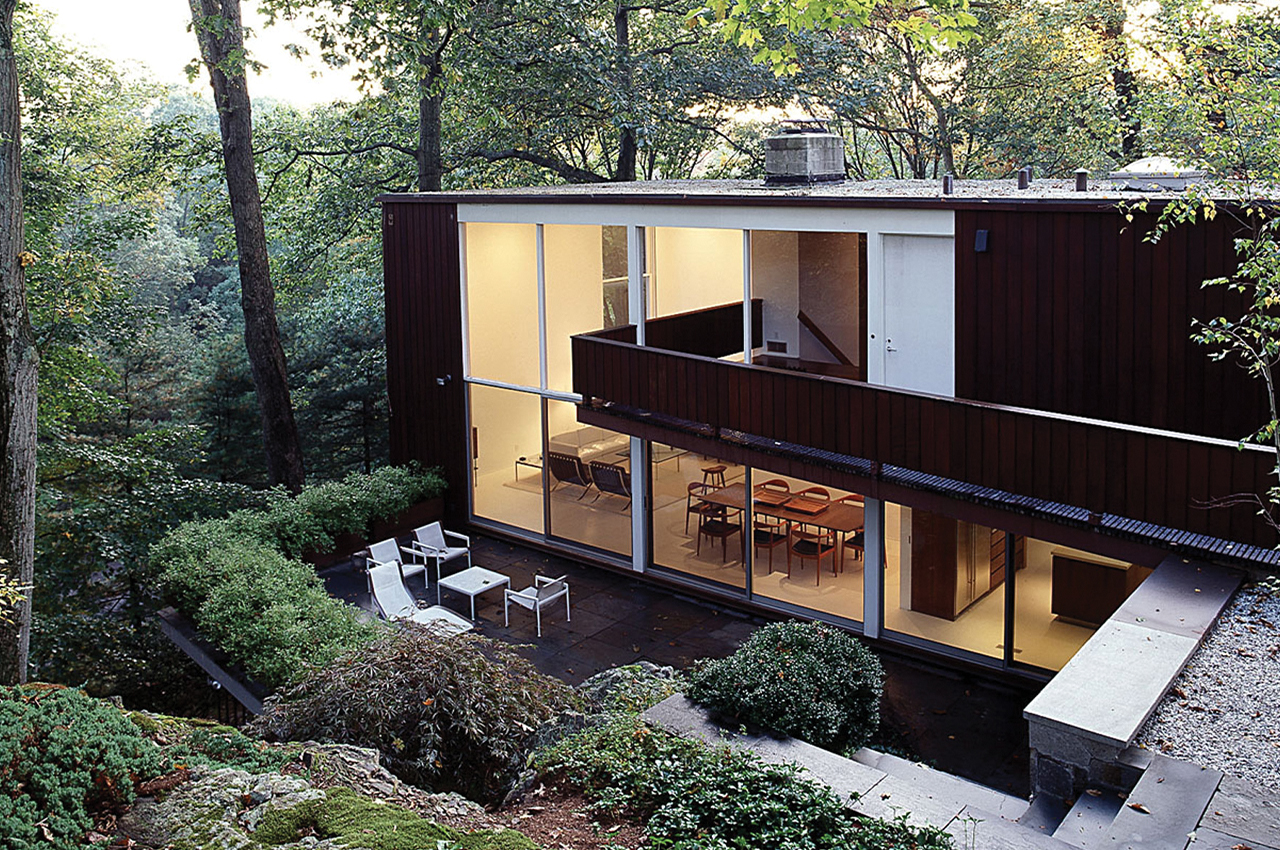 The duo’s first modern restoration, the Mills House, is listed on the National Register of Historic Places. (Photo by Mark Seelen)
Tell us about your current home, the Hodgson House.
In 2007 we bought the Hodgson House, designed by Philip Johnson in 1951, from the Hodgson heirs. It’s on the National Register of Historic Places, and in addition, it has preservation easements administered by the National Trust for Historic Preservation, the highest tier in this kind of historic designation. The Hodgsons, to preserve their legacy, put these easements on the house prior to our purchase, which means the fundamentals of the house cannot be altered. Because of our passion for Modernism, we take the responsibility of preserving this home very seriously.
This house was important for many reasons, but mainly because it won an international award in the 1950s for a single-family dwelling. The Glass House was built in 1949 and considered to be somewhat of a modernist experiment in living. One year later, Johnson designed the Hodgson House with family living in mind. The proximity of our home to The Glass House makes it even more important for preservation. Our home is built in two pavilions: One contains the living spaces, and the other is the bedroom wing. The pavilions were built in two stages in 1951 and 1955, as banks would not grant a mortgage on a modernist house at the time.
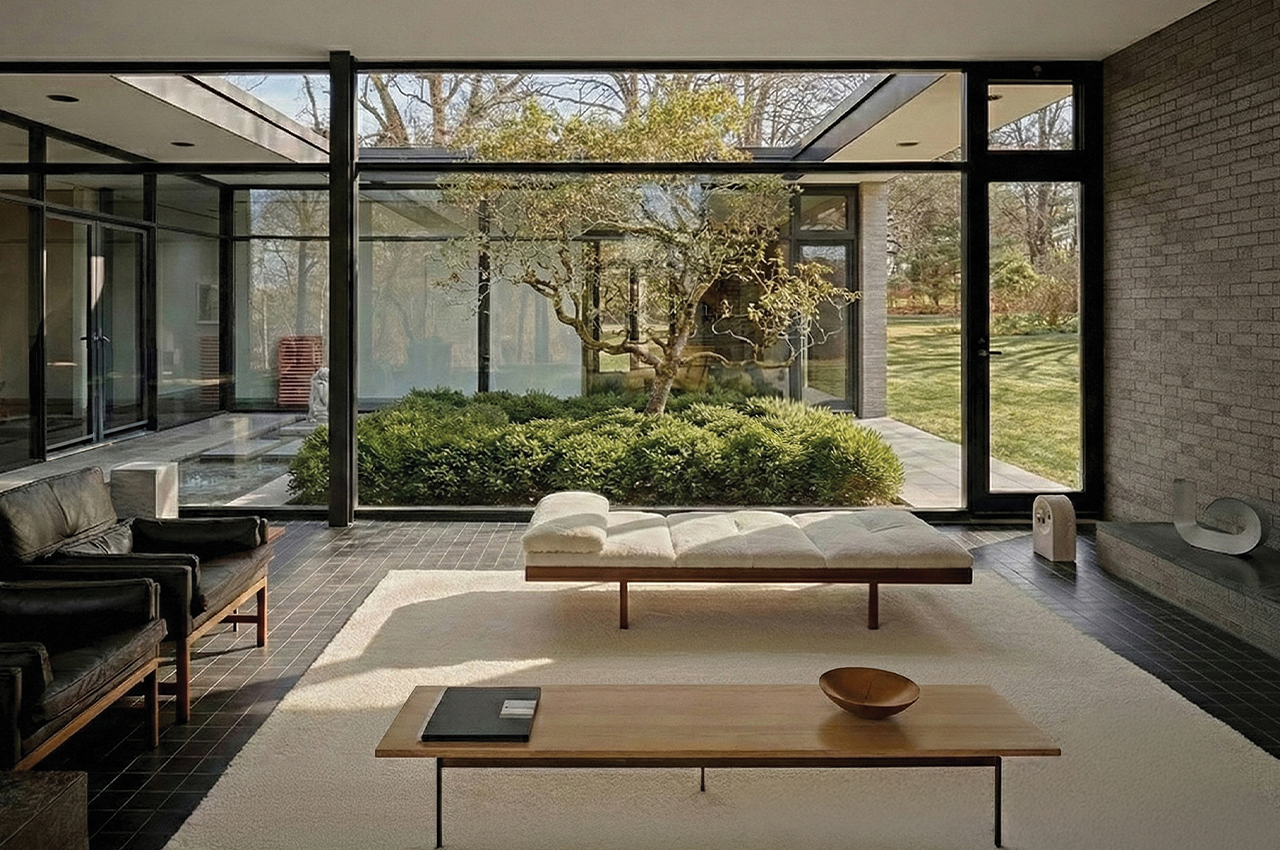 Their lighted-filled home and office are furnished with Bassam Fellows-designed pieces.
How does your passion for the Modernist life affect wow you live?
We believe that great architecture is art and can improve the quality of your life. Simplicity, clarity, light and a strong connection to nature all contribute to your well-being. These are very calming buildings in which to live and work. At our office, for example, every space directly connects to nature via giant windows. In both our work and home spaces, there’s a real optimism because they’re flooded with natural light. They feel rational, calm and ordered, but mostly they feel alive.
How is this different from living in newer construction?
With modernist homes, people tend to hang on to them for decades and see themselves as stewards of something special. You’re constantly editing and curating when you live in a Modern, and the same is true of your life. With young people, we’re always trying to instill this idea that before you buy anything you should consider: Do you need it? Is it long-lasting? Does it do what you want it to do? If the answer is no, forgo it. The idea is to do more with less and this translates into the home.
The other thing with modernist architecture is that it isn’t forgiving if not designed well. If done right, however, every room has well-designed storage, and everything has its place.
Tell us about your reissue of the Johnson/Kelly Floor Lamp
The original 1953 lamp was a collaboration between lighting designer Richard Kelly and Philip Johnson to create a lamp for The Glass House that didn’t emit a glare off the glass walls. Johnson experimented with several ways to illuminate the space, but he wasn’t satisfied with the results. Kelly solved the problem by positioning a high-powered bulb near the floor and directing light upward onto a conical shade that in turn reflected the light back downward. The result is a soft pool of light at the perfect level when sitting in a chair or sofa. There’s no harsh light from above, so it makes a room feel warm—and makes everyone look good. The lamp became iconic and lived in the Glass House, as well as many modern homes and art collectors’ residences of that time.
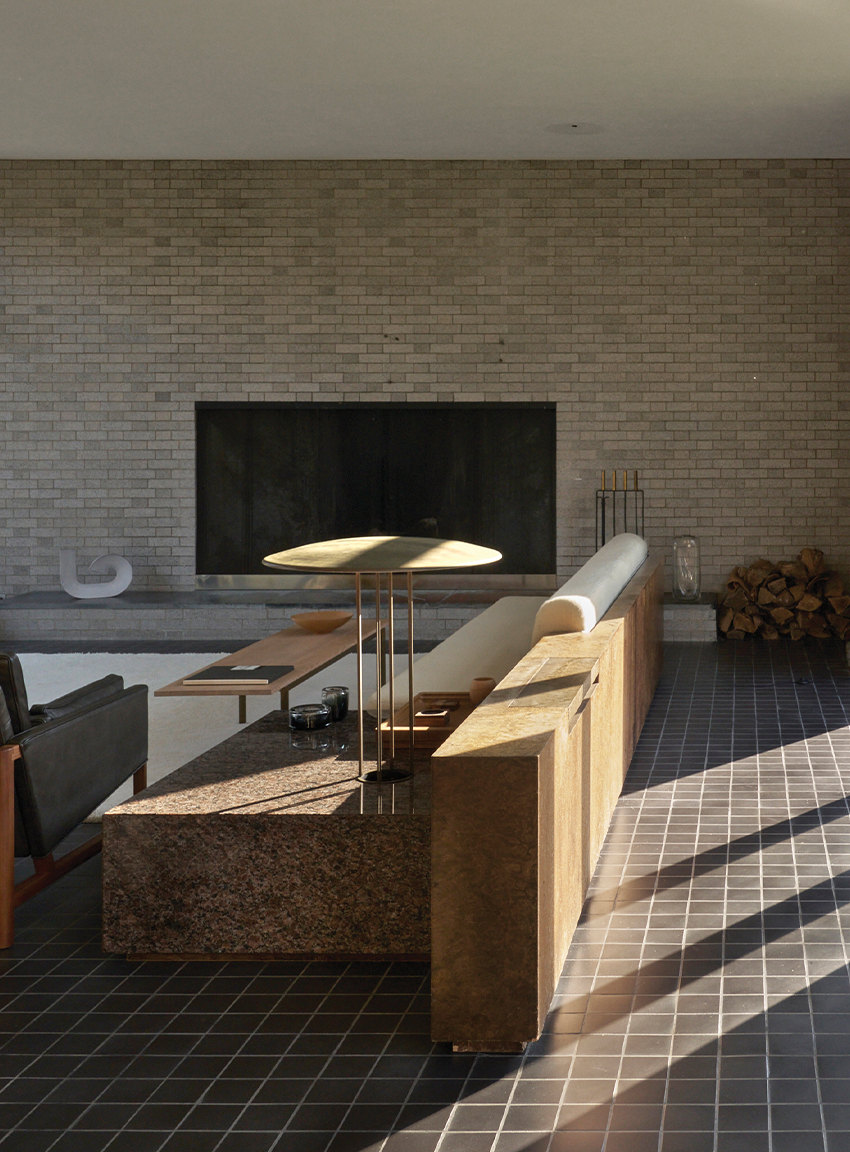 The iconic Johnson/Kelly lamp, seen here in the Hodgson House living room.
How do the Harvard Five’s ideas about simple, functional design and nature connect to your work?
We believe in the concept of “total design,” which is what Frank Lloyd Wright believed in, too. Furniture is how you experience architecture. It can either make the building feel comfortable or disjointed. Rooms should be designed for the people who live in them, and the furniture designed for those people.
How do you design with longevity in mind so that your pieces remain both beautiful and functional over time?
If you’re designing for timelessness, that intention has to be built into the design. You make certain choices when you’re making something for forever. Clean lines, functionality and simplicity are important as are material choices. We use natural materials and are obsessive about the quality of anything we build. Natural materials do not date–instead, they patina and look more beautiful with age.