





The Heir: Fred Noyes
Architect, educator and son of Eliot Noyes. Carrying forward the legacy of the Harvard Five.
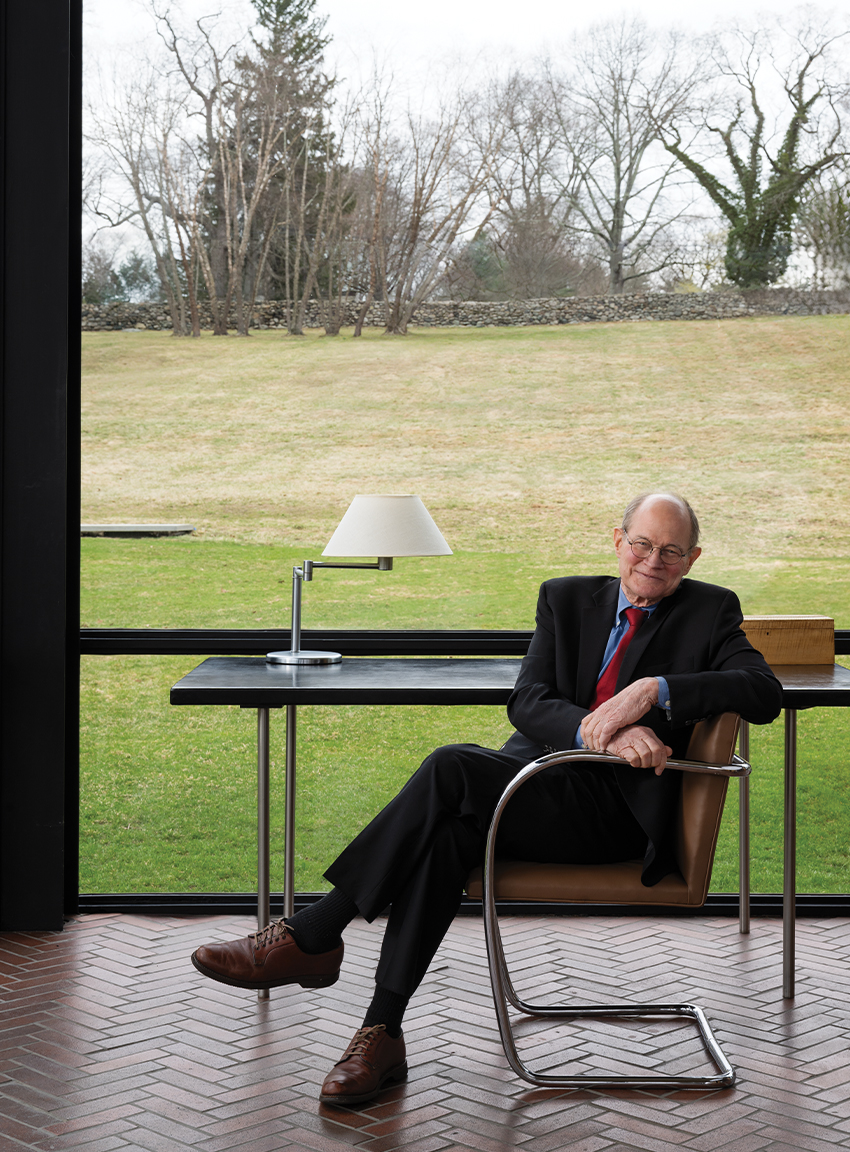
How did your upbringing in New Canaan—and your father’s legacy—shape your path and work today?
New Canaan was more rural in the ’50s. I spent much of my time in the woods, which led me to study biology at Harvard then later teach this subject at Miles College in Birmingham, Alabama. But as the son of Eliot Noyes, the draw was so strong that I later switched careers, earning a Masters of Architecture at Harvard. After years of practice and teaching, I was elected a Fellow in the AIA and subsequently awarded an honorary doctorate from the Boston Architectural College. I continue to track biology and practice architecture.
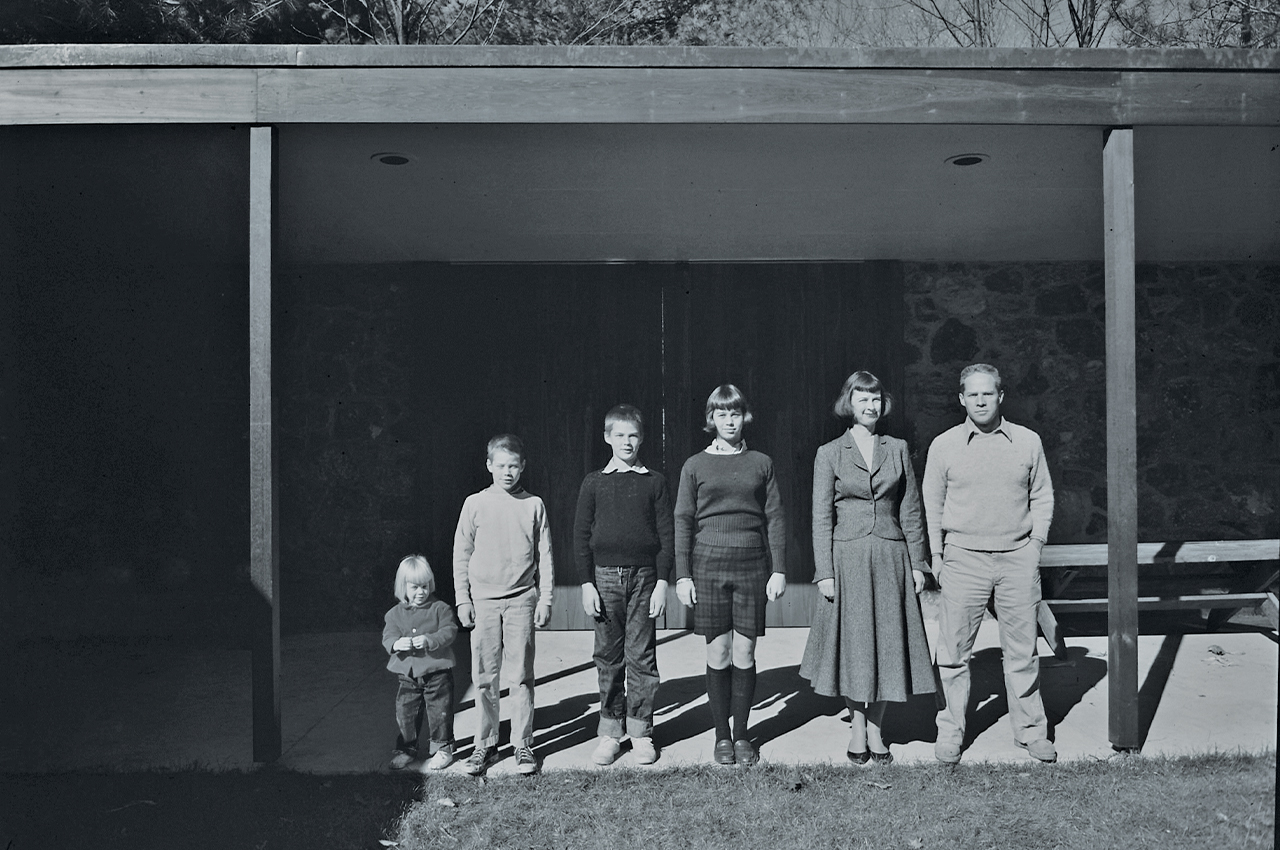
The Noyes family poses in the courtyard of their New Canaan home.
Can you sum up New Canaan’s role in Midcentury Modernism, and why it was so important at that time?
With WWI and WWII, everything changed. Skilled craftsmanship was scarce; class distinction diminished; many of the returning soldiers were unskilled and needed houses and the wars introduced new technologies such as steel beams, concrete, large glass panels and central heating systems. These conditions foisted—almost demanded—revolutionary thinking on what and how to build. The Harvard Five and other New Canaan architects were some of the best, inventing anew to respond to these circumstances, and they settled in New Canaan because of ripe conditions for new thinking, like inexpensive land, relaxed codes and access to New York.
What other concepts did your father employ in your own childhood home?
In the Eliot Noyes II house, where I moved at age nine and which is still in the family, my father challenged two traditional constructs of what a home should be. First, the front façade is an unbroken stone wall so that the house merges with the landscape. Second, in a normal home the downstairs has the public spaces, and a second floor upstairs has the private bedrooms. In this house, he thinks anew about this private/public norm by making two houses on one floor: a private “wing” (with bedrooms), and the public “wing” (with kitchen, living and family room). The two wings are not connected but separated by an outdoor courtyard. It’s clear he is integrating this home with nature in that he requires you to go outside from public to private, and vice versa. He’s forcing those who live here to be part of this concept, and by doing so reinterprets the whole idea of what defines a house. In the summer, it becomes a big screen porch and there are no thresholds between interior and exterior. In the winter, you have snow floating all around, and you’re amidst a snowstorm.
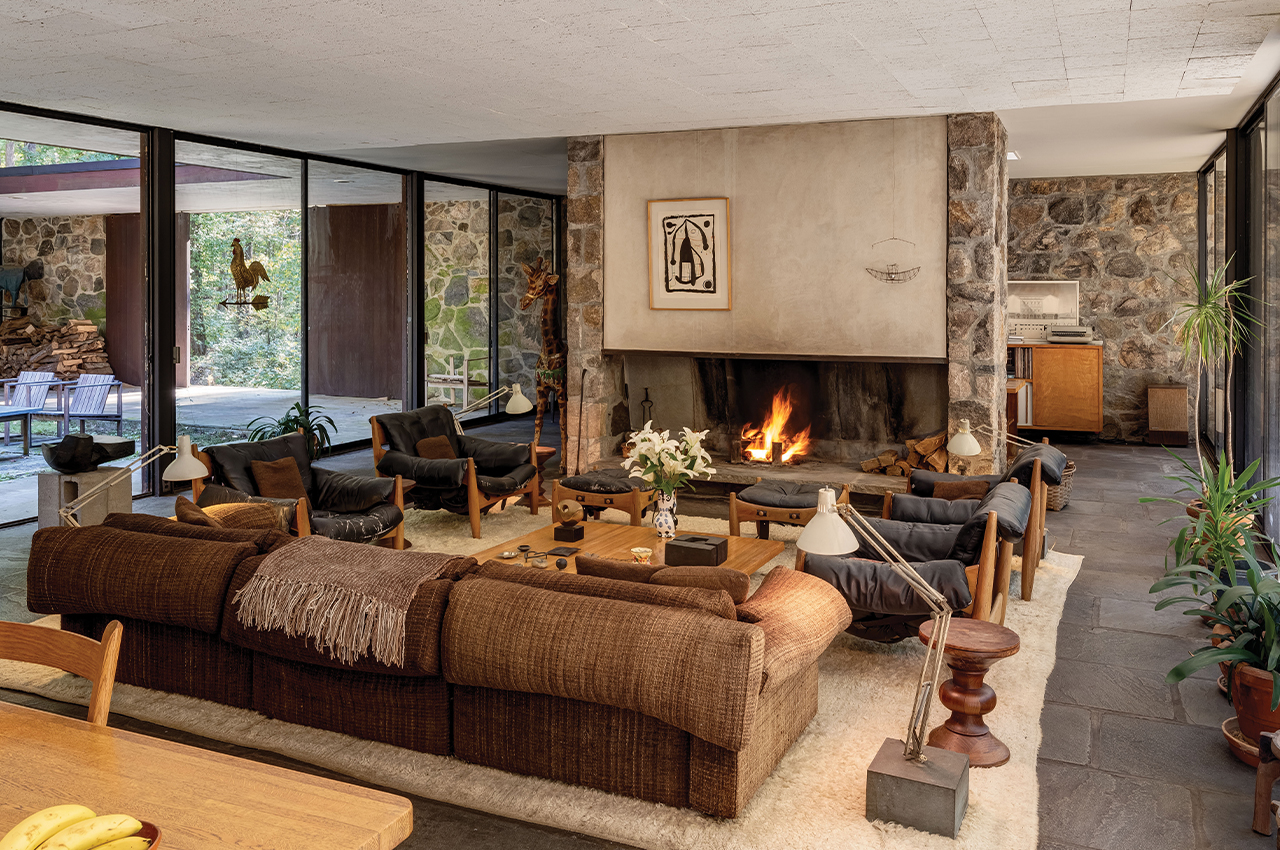
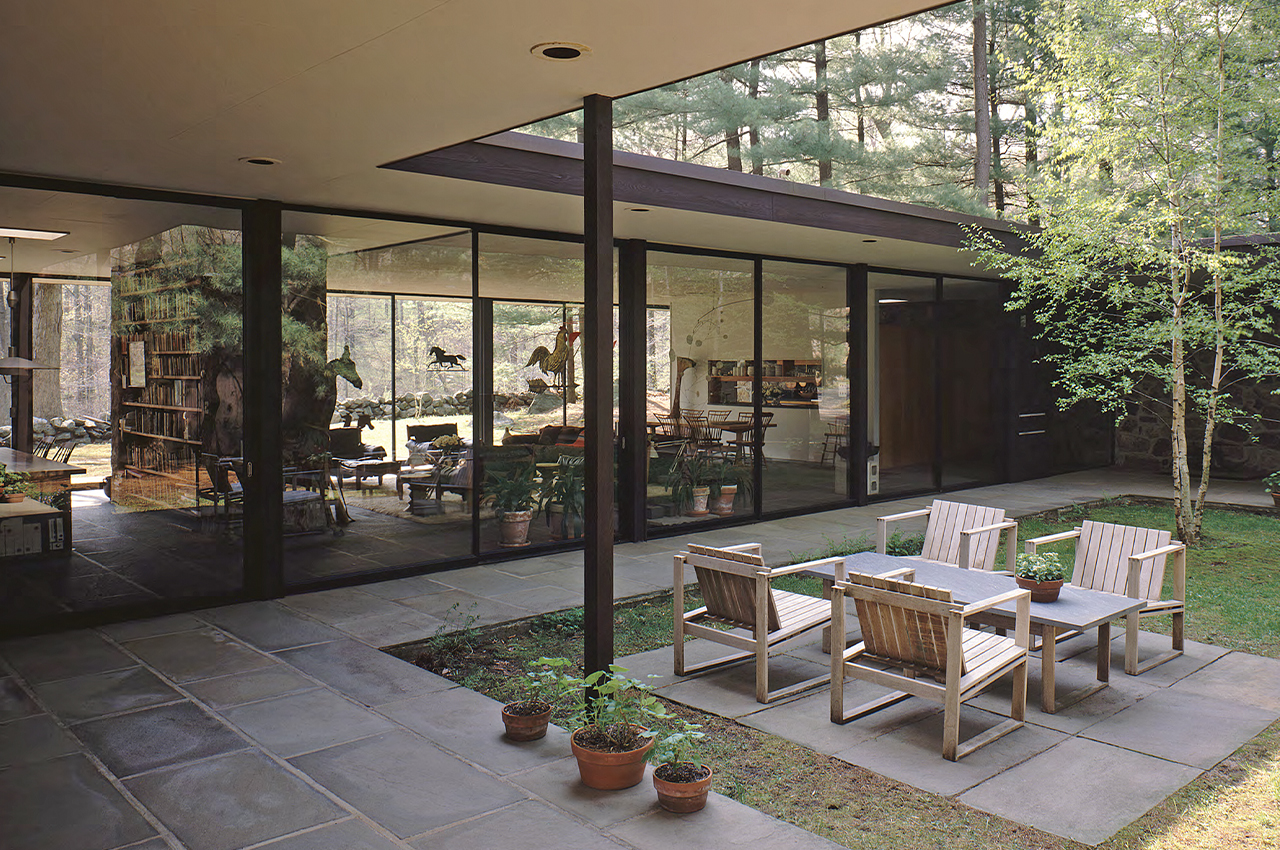 The Noyes home was designed with two wings around an open courtyard. The social wing houses the living room and the kitchen.
Do you have a favorite home or other building that your father built?
Our house in Vermont. It’s small but very sophisticated. It’s simple, but spatially there are overlapping definitions of volume. Based on four columns, a half-balcony wall, a chimney and a deck; there are multiple readings of what is one single space. Each element is doing multiple duties. I frequently liken this house to a sonnet: with only 14 lines, every word can have multiple meanings. The more times you read a sonnet, the more you feel the richness. That’s what’s going on in this house, too.
How did the New Canaan community respond to modernist architecture as it emerged?
It was a real mix. There was a portion of the town that didn’t understand or like the new houses. Many people had an image of modern homes as “white shoeboxes.” This is how they were described in one New Canaan Advertiser’s Letter to the Editor! But there was also a part of town that was interested in the new thinking. New Canaan’s Modern House Tours were started by my father in 1949, opening some of these homes to the public and allowing everyone to see what these guys were inventing. It was very successful and is still a bi-annual event sponsored by the New Canaan Museum & Historical Society.
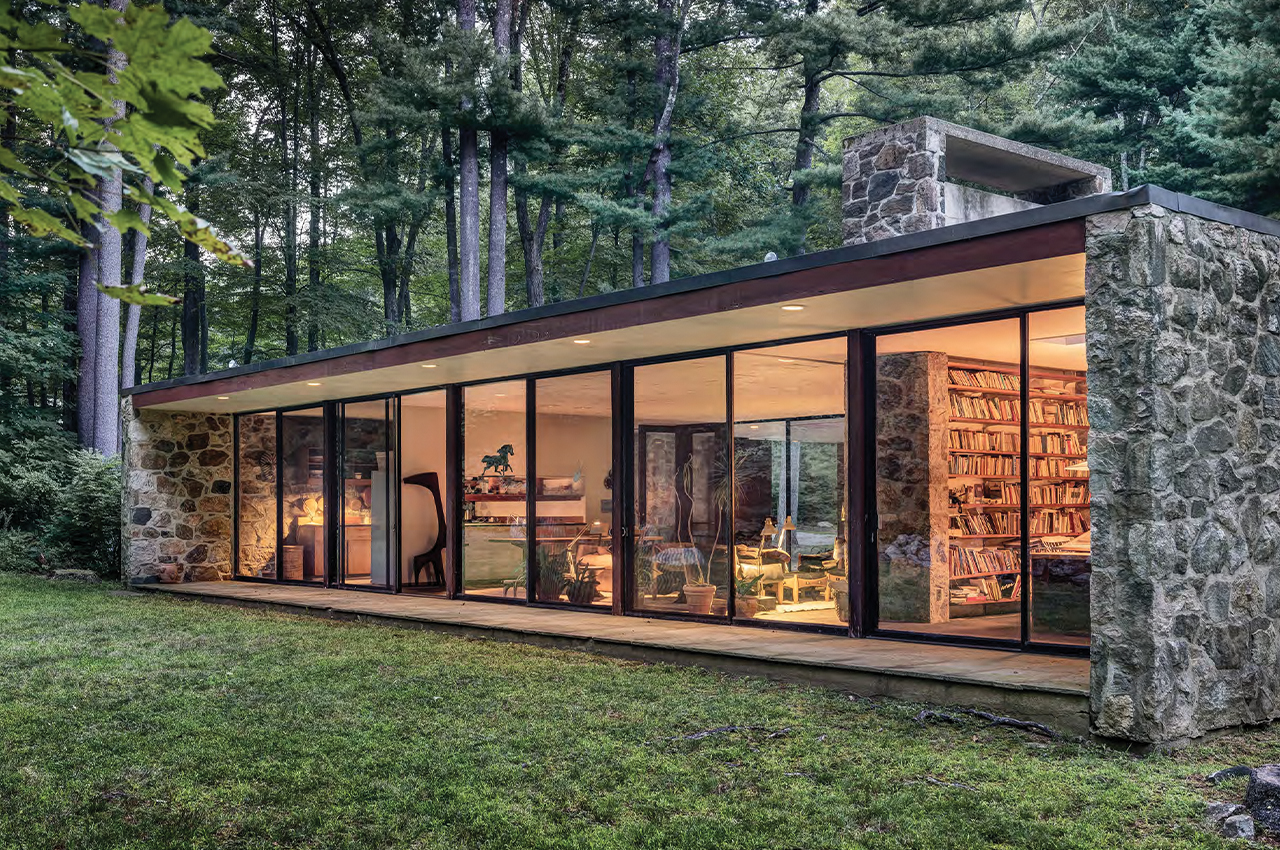
The Noyes House, designed by Eliot Noyes in 1954.
Can you speak to the ongoing cultural significance of the Midcentury Modern movement?
It’s a continuum, not just a reference to the past. Design ideas need to keep moving forward to keep current with other cultural developments. The breadth of Midcentury influence is wide, showing that design applies everywhere. My father took his Harvard architecture training and built great houses. He also used the same architectural principles and moved sideways, applying them to industrial design and then to corporations themselves.
Your father has been credited with defining the Modern corporate aesthetic. What does that mean?
Eliot Noyes was first the Director of Industrial Design at MOMA. With his understanding of the universal power of design, he was hired as a consultant by Tom Watson, Jr., son of IBM’s founder. With Watson, he looked deeply into what IBM was all about, to understand the very nature of the company. Not unlike comprehending the nature of an individual home, he used the same principles but applied them in a broadly different direction. The result was the idea that, yes, IBM sold computers, but the heart of this was that computers were supposed to make people’s lives easier. This inspired the concept of developing a program where all aspects of IBM would be consistent in support of this mission: corporate policy, architecture, graphics, packaging, industrial design and advertising. That, in turn, led to the moniker that my father was the “Curator of Corporate Character.”
His work made IBM synonymous with clarity, order and innovation, and after that project, Westinghouse, Mobil Oil and Cummins Diesel all came to him. He helped those corporate executives look deeper into their own companies, to define and understand them and, as a result, how this could help sales. My father developed a cohesive design program for each—far beyond branding and marketing. The idea was widely influential, and we see it today in companies like Apple. This is just one example of how we see the influence of New Canaan Modernism applied in the most worldwide universal sense. Design is a way to improve everyday experience, whether through a chair, house or a corporate campus. My father’s work stands as a reminder that Modernism wasn’t just a style but a social and ethical project.
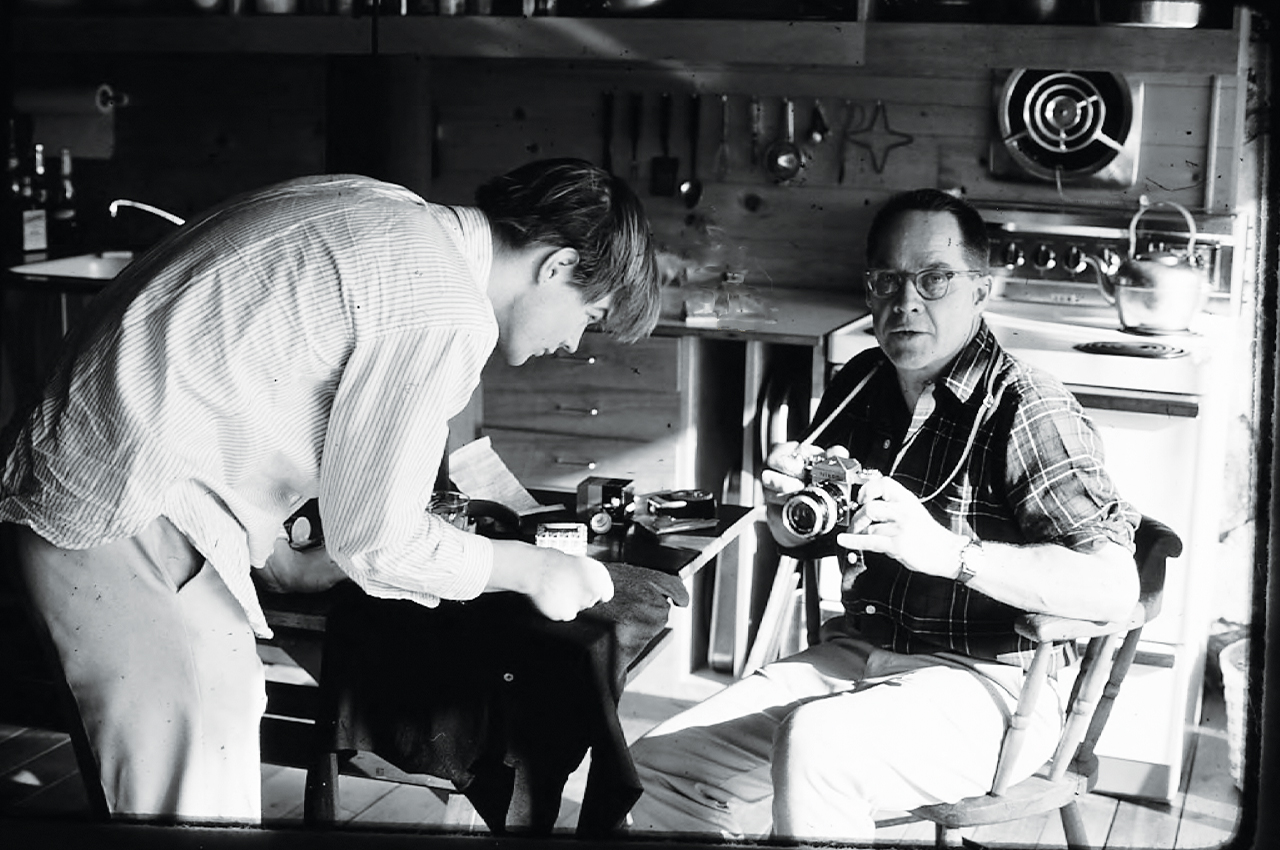
Fred and Eliot Noyes are seen working on a project in the family’s kitchen.
What’s next for Fred Noyes?
We recently launched The Eliot Noyes Center. It is a platform to elucidate and advance the dictums that my father used: to help people understand the power of architectural thinking and how it can be applied. Marcel Breuer said, “The solution almost falls out of the nature of the problem,” which remains true today, but first you have to look deeply at the nature of the problem.
Eventually, we’d like the Noyes House to be saved in perpetuity, but the first step of the Center will be to develop a fellowship program, inviting people who demonstrate an inventive, collaborative breadth in their work (my father’s hallmark), whether it be in architecture or another field. We will develop further steps for the Center over time, and I’d like to work with various entities such as local schools and startups. I recently brought the Boston Architectural College to town with the intent of developing an ongoing teaching relationship, and we have also spoken with undergraduates at Harvard as well as the Rhode Island School of Design. The crux behind these efforts is that my father’s time was 50 years ago, but we need to define today’s current problems and how design principles can be applied going forward.