


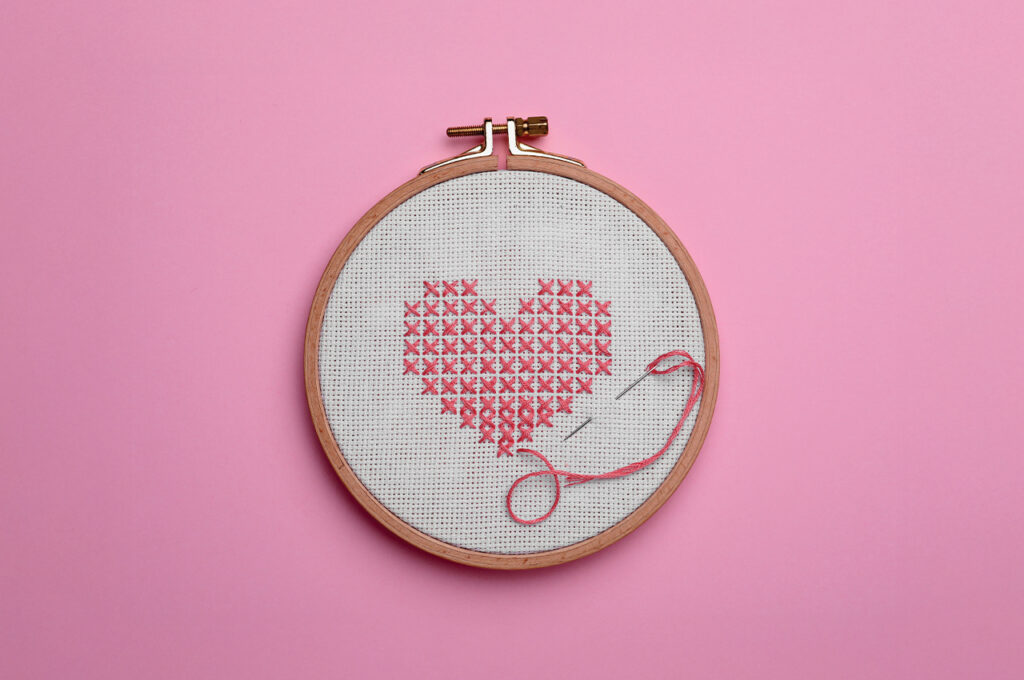
Activities like needlepoint and mahjong are enjoying a surprising revival—and it’s not just nostalgia driving the trend. These so-called “granny hobbies” offer benefits including social connection, cognitive stimulation, stress relief and even improved self-esteem.
Dr. Kelly Foran Tuller, a New Canaan–based clinical psychologist, says, “In terms of mental health benefits, these hobbies positively impact mood and cognitive functioning in a variety of ways. They are healthy coping tools to use when under stress and often promote connection and community, and can increase feelings of self-esteem.
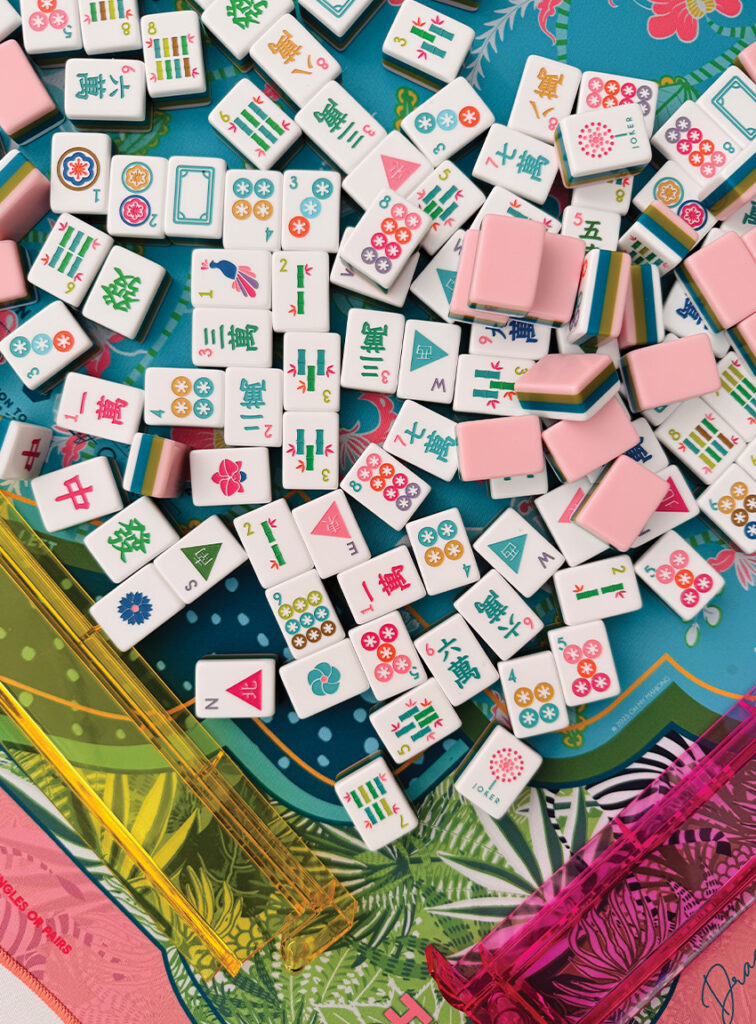
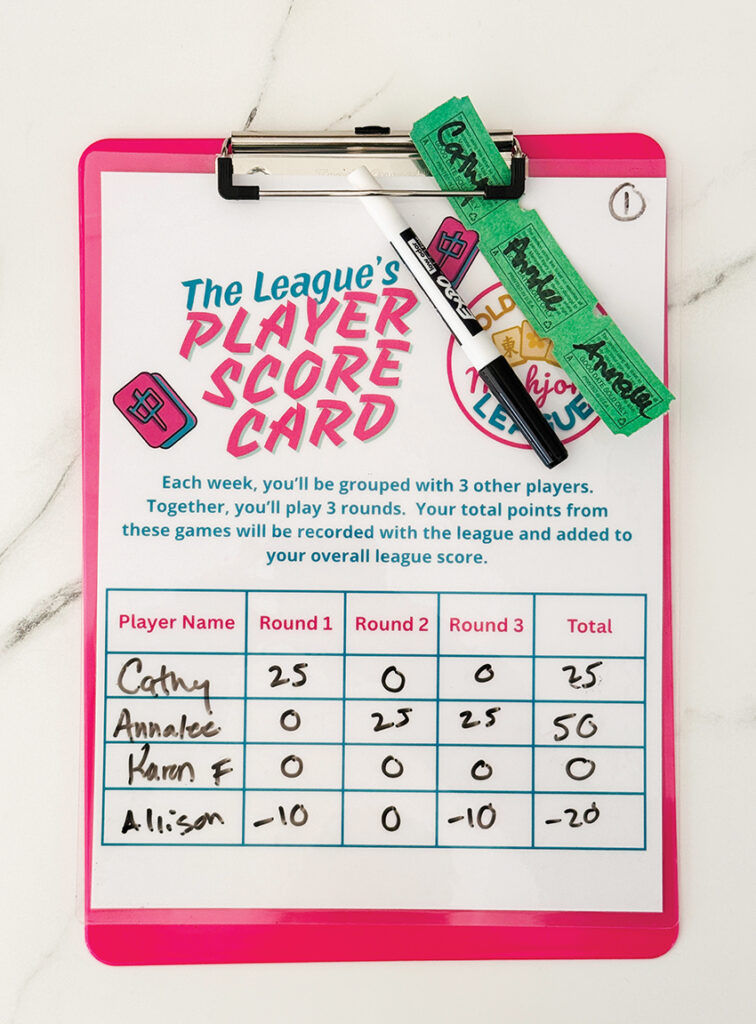
Wanting more opportunities to play together, the founders of the Gold Coast Mahjong Club launched a weekly league.
Emily Brown and Jamie Dalton, founders of Gold Coast Mahjong Club, have experienced these benefits firsthand. Brown, who grew up in Greenwich, moved to the West Coast with her husband for work, but struggled to find a community: “We really tried to meet people, but just never found that community there.” Even after welcoming their first child, she recalls, “We had no people. I was so homesick.” After four years in Los Angeles, they returned to Fairfield County and settled in Darien.
Dalton experienced similar challenges. After moving to Darien from New York City, she found it difficult to make friends while working full time. “One of my best friends wasn’t working, and so I would meet all her friends,” she remembers. “But then when she moved, I was like ‘Oh my God, how am I going to meet people?’”
When Dalton and her husband eventually started a family, she left her job and had time to get more involved in the community. She also discovered a new hobby when she started playing Chinese mahjong with a preschool mom group. Her 101-year-old grandmother played, but it was an intro class for the American version at Make Modern in Darien that proved serendipitous. Placed at a table with Brown, their shared passion sparked not just a friendship but a mission: to bring the joy and camaraderie mahjong had given them to a wider community.
Connection That Sticks
Brown describes herself as an extrovert who loves bringing people together. Dalton calls herself “more reserved, more conservative.” Yet the two hit it off, and mahjong became their gateway to finding the connection they’d both been missing.
“These types of group games are an excellent way for individuals who are socially anxious to participate because there is a framework for the activity, and there is less of a need to make small talk,” says Foran Tuller.
Erika Allen, founder and creative director of Make Modern, sees this dynamic daily in her classes. “Handwork is neither competitive nor collaborative; it’s adult parallel play,” she says. “That greases the wheels of friendship and community very nicely.”
She adds that community is one of the biggest reasons adults sign up for her classes: “A weekly class is a standing date to either be with your people or meet new people. It facilitates conversation and engagement—but there’s also something to do when you don’t have something to say.”
The social component is a major mental health boost—but the emotional benefits run deep too.
Mindful Moments
Activities like needlepoint or mahjong foster mindfulness and flow, both shown to support emotional well-being. As Foran Tuller notes, “The feeling of being ‘in the zone’ is considered a state called flow… individuals who practice mindfulness are often found to improve concentration, avoid distraction and better stay engaged in activities in which they ultimately achieve flow.”
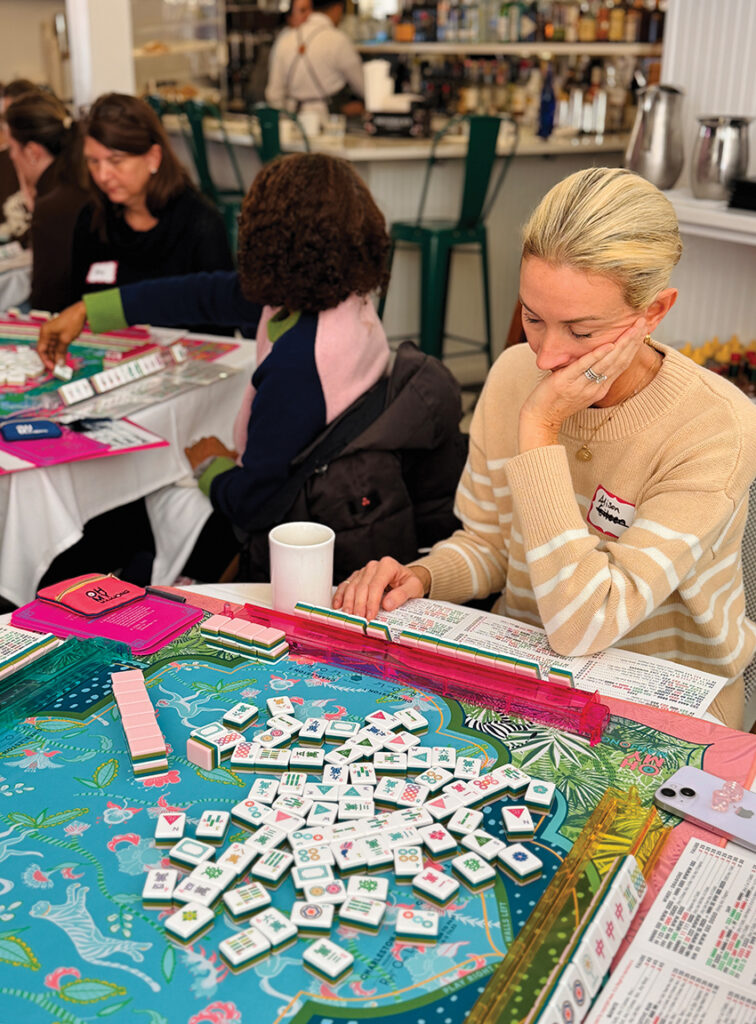
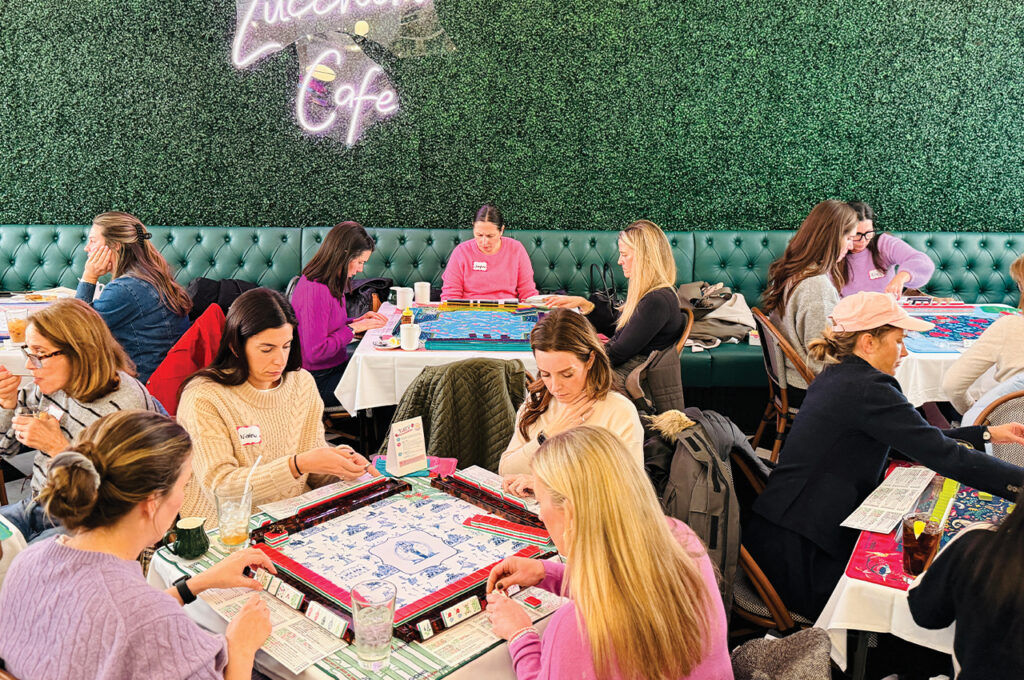
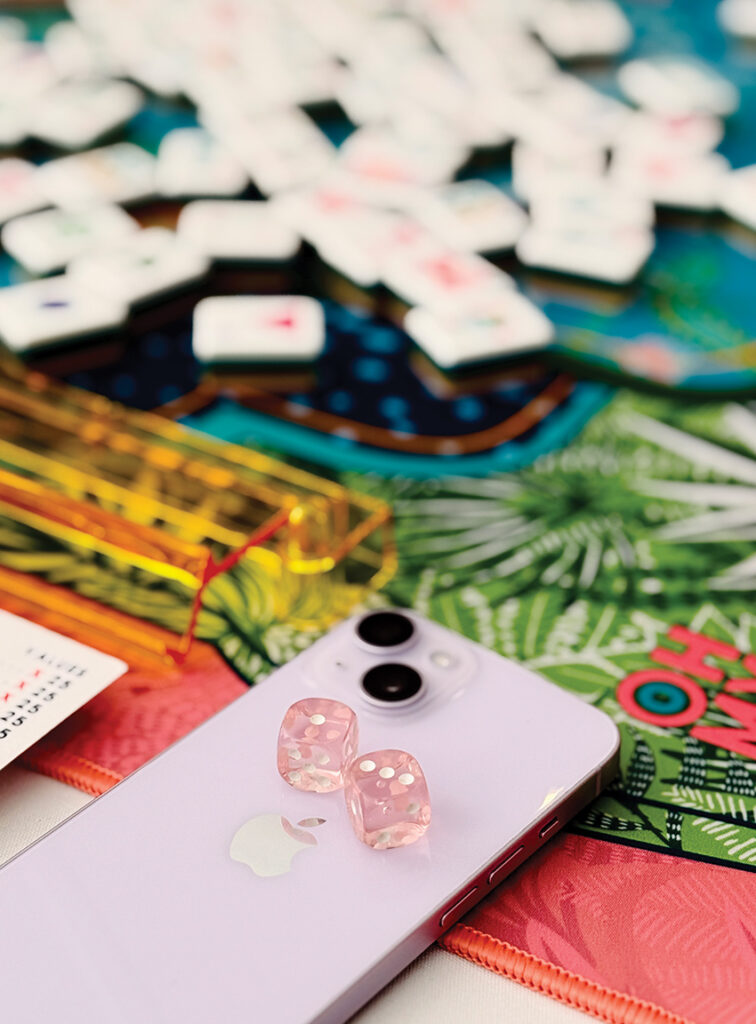
A packed mahjong room with barely a phone in sight. Players at the Gold Coast Mahjong Club savor the chance to sit, connect and tune out the digital noise.
Needlepoint is a perfect example of this blend of creativity and calm. Allen says the soothing repetition is part of its magic: “Handwork can offer either a framework to think through something you want to meditate on—or an escape from thinking entirely. I truly believe it’s an antidote to so many of the modern challenges kids and adults face these days.”
She compares it to another grounding practice: “The physical nature of watching stitches add up on a needlepoint canvas is quite like focusing on your breath. I always have handwork on a plane trip. Turbulence worries me a lot less with a needle in my hand.”
From a clinical perspective, the impact is measurable. Foran Tuller notes, “Both research and clinical practice are showing that these sorts of hobbies can improve mood by reducing symptoms of anxiety, boredom and depression. In addition, creating something new and beautiful can lead to powerful feelings of pride and achievement, which positively impact self-esteem.”
There are cognitive benefits too. “Learning a new hobby, especially one that uses hands-on dexterity skills like knitting or needlepoint, builds new neural pathways and can lead to cognitive growth and improved problem solving,” Foran Tuller explains.
A Welcome Break from Screens
At a recent Gold Coast Mahjong Club event, one detail was impossible to ignore: the absence of phones. More than three dozen women were completely absorbed in their game—a remarkable scene in today’s connected world.
Dalton says this is part of the appeal. “When you’re out, everyone has their phones all the time,” she notes. The mahjong table, on the other hand, is “a nice place to sit, disconnect, put the phone away.”
Foran Tuller agrees that screen-free hobbies are extremely valuable—especially for younger generations. “I see a lot of teenagers in my practice who turn to screens when they are bored, and when they are wanting to avoid discomfort,” she says. “The average teen spends seven to eight hours a day in front of a screen. If we can encourage even a fraction of that to be spent on a tangible hobby, I am certain we would see the rates of teen depression and anxiety decrease.”
Allen sees the same instinct toward unplugging in her studio. “So much of life today exists in the not-physically-real digital world,” she says. “The materiality of handwork scratches a very human itch to do something real.”
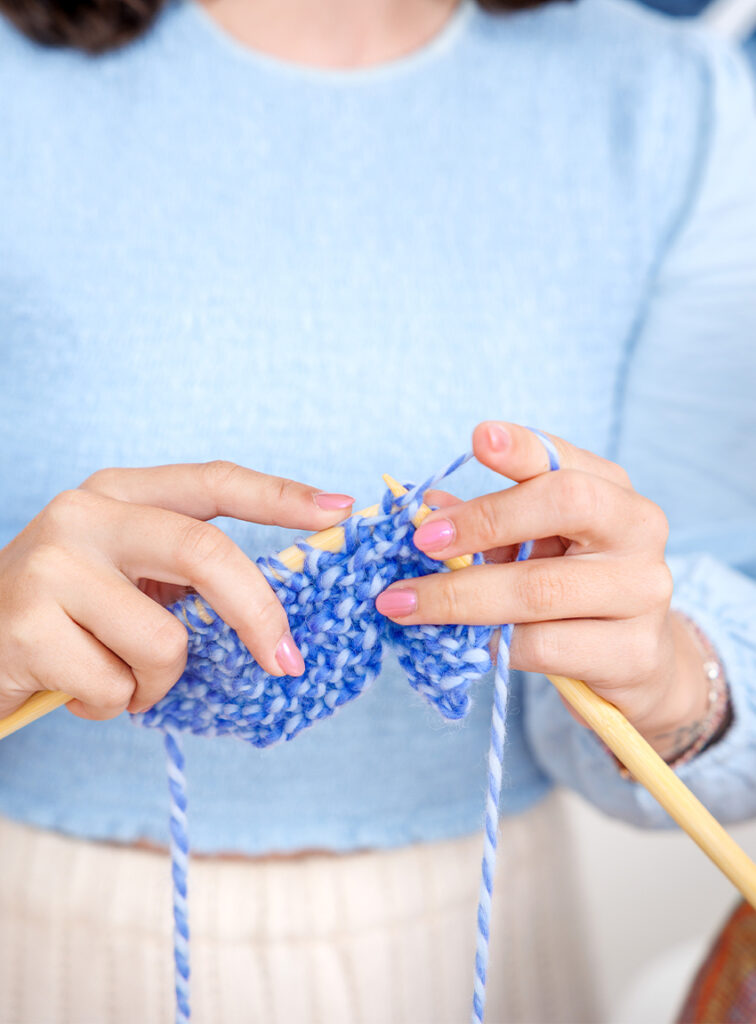
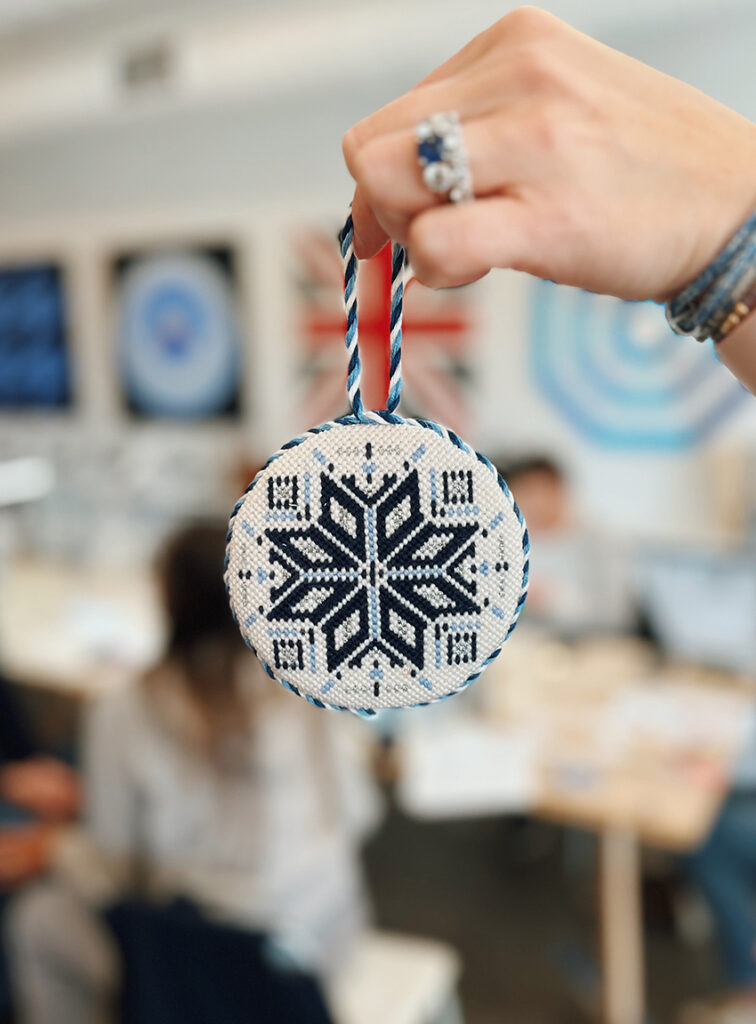
Knitting and needlepoint both have cognitive benefits – courtesy of makemodern
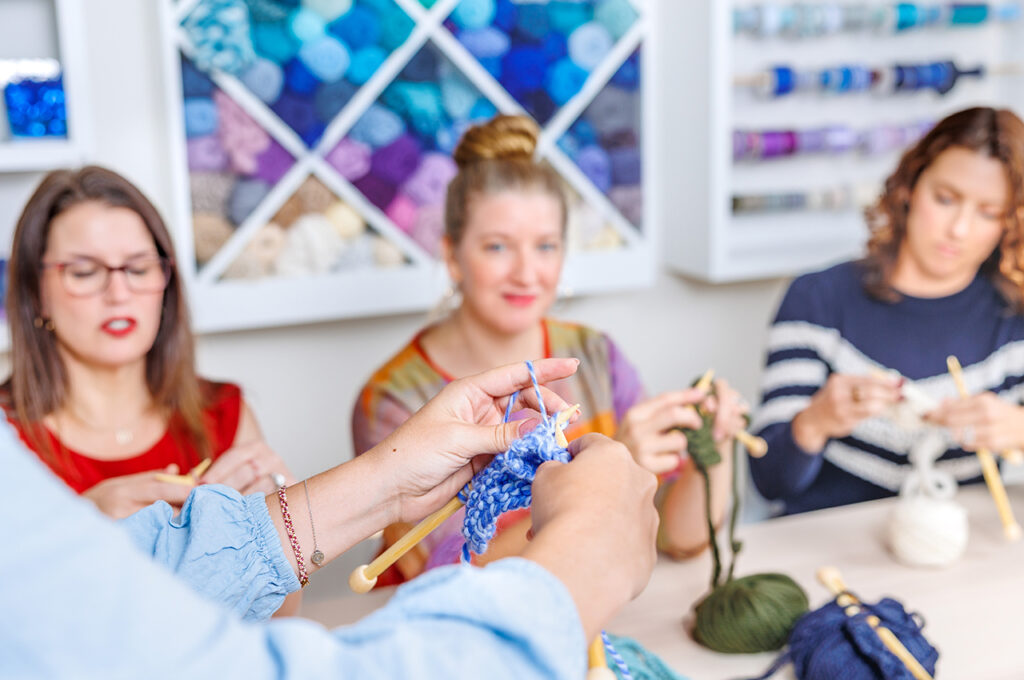
Adult classes provide a sense of community.
Ageless Appeal
From mahjong tables to needlepoint circles, “granny hobbies” prove that these activities transcend generations. They’re hands-on, comforting, communal and good for the mind, body and soul.
“Social engagement is a primary way to combat loneliness, which is a leading contributor to depression, especially in the elderly,” says Foran Tuller. “Social games such as mahjong, bridge and bingo are often organized in senior centers for this very reason.”
Allen sees multigenerational connection flourish in her shop. “I love seeing how a child learning to sew or crochet so often forms a new connection with her grandmother. Kids will FaceTime Grandma after every class to show what they’ve made,” she says. “And on the flip side, I see adults reconnect with lost hobbies they had earlier in life. It helps them reconnect with parts of their identities that have gotten a little sidetracked since becoming parents.”
Get Involved
For anyone curious but unsure where to begin, both Gold Coast Mahjong and Make Modern have made getting started easier than ever.
Make Modern is currently enrolling for its winter term of classes running January through March. Adults can sew, knit, crochet or needlepoint in once-a-week, six-week sessions. For those who prefer a more customized experience, the studio also offers private workshops—just pick the date and the craft, gather your friends, and they handle the rest.
“All of Make Modern’s classes are for beginners,” Allen says. “The key to a great beginning is helping students have early success. We’re focused on helping people make something beautiful the very first day—it inspires confidence right off the bat.”
Gold Coast Mahjong Club also offers regular beginner and refresher classes and is always exploring new ways to bring people together. They frequently host public events at local spots like Lazy Sister in Norwalk and La Taqueria in Darien, with Brown and Dalton carefully designing these gatherings to be welcoming for newcomers. Tickets are available in groups of four for established player groups or individually, with Brown thoughtfully matching solo participants to compatible players.They also offer “guided tables,” giving beginners the support of an instructor as they learn.
The enthusiasm for playing has been so strong that the pair recently launched a three-day, two-night mahjong retreat at The Mayflower Inn in Washington, Connecticut. It sold out so quickly they added a second—and then a third.
A Return to What Matters
The overwhelming enthusiasm for these “granny hobbies” is less about trendiness and more about reclaiming something essential: time, presence and genuine connection. They remind us that fulfillment doesn’t always come from productivity or screens, but from creativity, community and the pleasure of doing something with our hands and our minds.