







Almost two years after Hurricane Helene devastated western North Carolina, Stamford-based Americares is still on the ground
Celo, North Carolina, is about an hour’s drive from Asheville along a rural mountain road so lush and green it’s hard to imagine anything bad ever happening there. But a walk through the behavioral health clinic and a few conversations with the providers on staff makes clear that the trauma still stings fresh and burrows painfully deep.
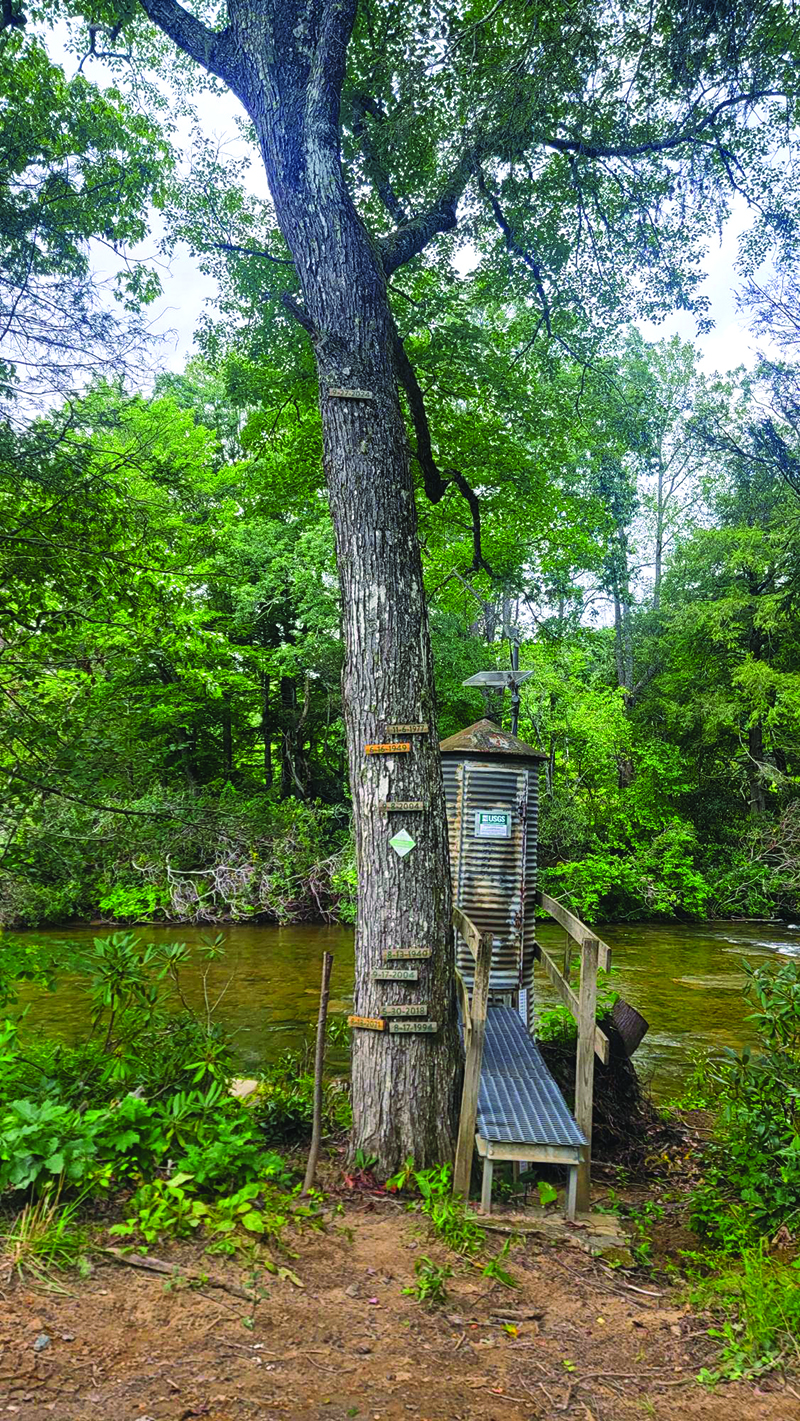
There’s a gravel walkway along the nearby creek. That walkway leads to a tree, one so big and old that you can feel small if you wrap your arms around its trunk. The 15 or so visitors with the global health and disaster relief organization Americares stood beside that tree and looked at the notches that local folks had taken the time to mark. Each notch denotes a year that a storm came through, a storm big enough that people remember it. And the damage it caused. And the families and friends who got hurt.
Most of the marks are near one another. “There’s a cluster, so your eyes go there automatically,” says Saqi Maleque Cho, vice president of U.S. programs for Americares.
And then there’s the mark for where the water topped out during Hurricane Helene.
“You have to literally look up, and there’s nothing for many, many feet of the tree,” she says. “And at the very top of the tree, there’s the little line that says 2024. It is so hard to fathom water levels that high.”
The Americares group went silent. Some people folded their hands behind their backs. Others stood with their necks craned and their jaws dropped, almost as if in reverence.
“You’d need a huge ladder to get to that—no, I don’t even think you can,” Maleque Cho says. “It’s that high. I wouldn’t want to be on that ladder.”
Hurricane Helene smashed into North Carolina in September 2024, killing more than 100 people in the state and causing the kind of destruction that leaves whole communities without power, communications and hope for far too long. Americares, based in Stamford, was among the first groups to respond, and it continues to provide support to the recovering communities more than a year later.
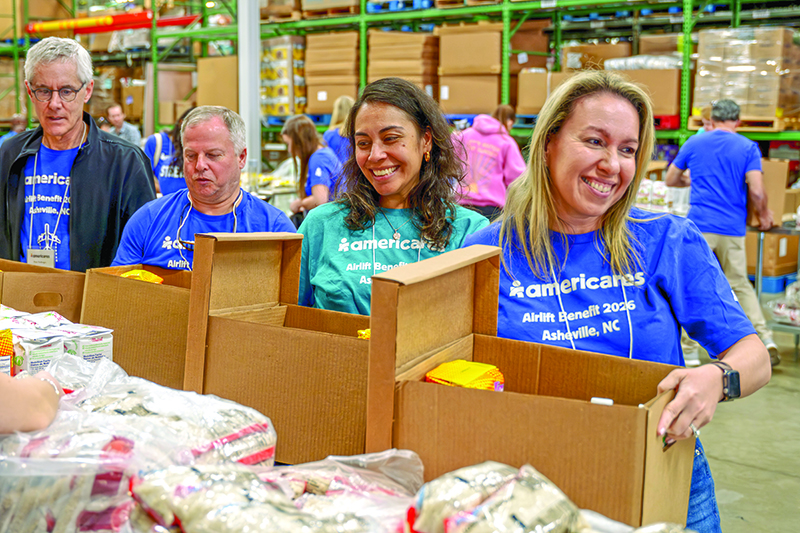
The 15 or so individuals who visited Celo this past spring were part of a larger group of dozens of participants in anAmericares airlift. It’s a fly-in to show donors the importance of the organization’s work.
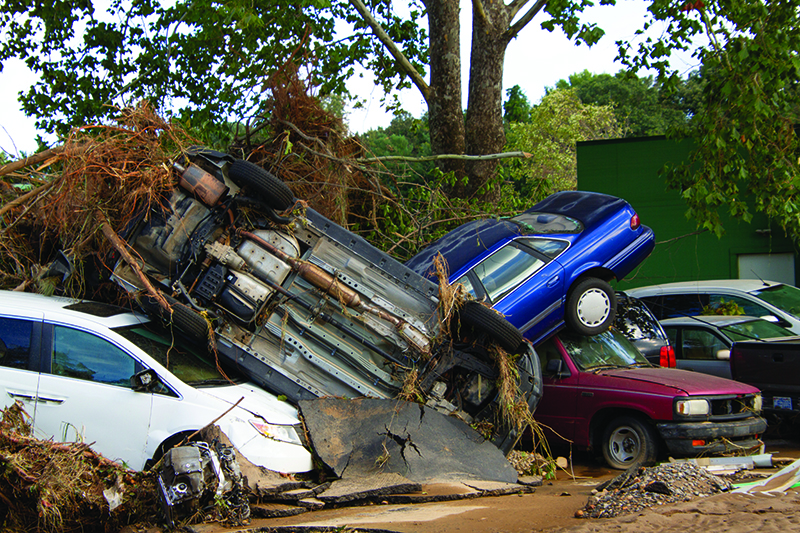
This particular airlift was the first to a U.S. location since Americares founding in 1979. It followed a 500-person benefit at Pier Sixty in New York City, where screenwriter Shonda Rhimes presented actor and director Tony Goldwyn with the Bob and Leila Macauley Humanitarian Spirit Award.
“It was a beautiful, amazing, wonderful evening where we got to tell the Americares story,” says the organization’s President and CEO Christine Squires, who lives in Connecticut and joined the airlift group after the benefit.
The airlift, Squires says, was far from her first. And sadly, it likely will not be the last to a U.S. location where the kind of help Americares provides is desperately needed.
“We have been showcasing our international work, and more and more of our work has been in the U.S., especially as storms and disasters increase,” Squires says. “I went there one month after Hurricane Helene hit. I’ve visited other areas around the world after a disaster, but I was really struck by not only the physical devastation, but the toll that it was taking on communities that we visited in the health centers.”
Craig Olin, a Stamford resident and physician based in Old Greenwich who is also a longtime volunteer at the Americares Free Clinic of Stamford, says some of the stories he heard during the airlift in North Carolina were about how early assistance from Americares was key to getting health centers back up and running.
“Hearing from the people there that they had nothing, and the first generator that showed up was from Americares, we were able to help people get their medicines because of an Americares generator,” Olin says. “Almost everything just goes right to the people who need it.”
Francine Gingras, who lives in Greenwich and is a member of Americares Board of Directors, says the airlift to North Carolina was her second. The experience drove home for her that it is paramount to help the helpers in a community going through a significant crisis. “We got to really talk to the people, to meet with the ministries, the health workers,” Gingras says. “Caring for the caregivers is critical. They, too, are survivors of the hurricane. They’ve lost homes, they’re struggling with their own family needs, yet they’re on the ground. They’re there to look after the people, and so they need support too.”
Alexa and Ward Horton, who live in Southport and are members of the Americares Leadership Council, have been on four airlifts between them. Even still, the airlift to North Carolina left a big impression.
“Being able to set foot into the worlds of the people affected by these disasters is really powerful,” Ward says. “In particular, going to western North Carolina, we were really moved by the self-reliance and the sense of pride that the community showed in the aftermath of Hurricane Helene. Americares partnered with these health clinics by asking what they needed most—not going in and being overbearing. They were able to develop a level of trust by doing it that way.”
It’s a key point, Alexa adds: “They get to know the people and know how the community functions.”
And those relationships continue long after many other relief organizations are gone, Ward says. “It’s been a year and a half since Hurricane Helene came through there. The needs of people change. Right now, they need mental-health services. Especially for children, the presence of rain or a storm is a problem.”
Squires says that having such a deep level of understanding—knowing that needs continue long after a crisis initially hits—is key to how Americares operates.
“We want to make sure that there is a long tail to recovery, and some of it is physical and some of it is emotional,” Squires says. “A disaster isn’t quick. It’s not in and out, and it does really take a toll on the community.”
Working with trusted local partners, she adds, is another critical element of the Americares program. Americares doesn’t just show up and give whatever it wants to give. The organization listens to try and understand what kind of help is most needed.
“Whether we’re talking about Asheville, North Carolina, or we’re talking about Jamaica or the Philippines or anywhere, we have about 900 clinic partners that we provide medicines and medical supplies to,” Squires says. “It is really important to understand what the needs are.”
Maleque Cho says the Americares staff includes technical experts who can offer mental-health and psychosocial support, as well as training tools that might be appropriate at different phases of a community’s recovery.
“It could be psychological first aid. It could be mental health first aid,” she says. “It’s doing that individual and group counseling in the moments, focused on things like stress management, tools to help people realize the distress that they’re feeling, how to respond effectively during moments of crisis, and how to lead through crisis trainings and workshops on developing practical coping strategies.”
Olin says he was also impressed with the way Americares managed to get those resources into the hands of North Carolinians who weren’t accustomed to asking for, or receiving, help from people they didn’t know.
“It just felt different for a very proud community that seemed to be suspicious of outsiders and not necessarily wanting to accept that they needed help from other people,” Olin says. “That the relief figured out a way—you know, we heard a story about how, whether it was clothing or food, people were too proud to say, ‘I need that, I’ll take it.’ But then someone figured out, if you just said, ‘Hey, I’m going to leave all this water, maybe you know someone who needs it,’ then they would take it. So that was pretty cool.”
Coming together in that way to help others, Olin says, isn’t something that happens every day. In fact, he says, the last time he felt the way he did after the North Carolina airlift was following September 11.
“In Fairfield County, after 9/11, there was this great tragedy, and everyone just wanted to get together and help everyone else,” he says. “We were cleaning out rooms in the hospital, every sector of our economy. Everyone knew someone who we didn’t know if they were going to make it home, and obviously a lot of people didn’t, but the whole community came together in that moment. Everyone was there to help people.
“And you know, that’s what happened after this flooding down there,” he says of the storm in North Carolina. “Everyone opened their doors and made efforts to just help their neighbors clear their driveways, bring them food, bring them clothes.”
Given all the stress of day-to-day life that people feel nowadays, he adds, makes seeing that kind of community effort even more significant.
“There are times when you kind of forget the humanity that still exists in people, to just care about other people and do the right thing,” Olin says. “It was really energizing to see that even in 2026, there are so many people who just are committed to helping other people. There’s a lot of noise in the world today, but at our core, we’re human beings, and we care about other people.”