





Ben Shattuck would probably agree with William Faulkner’s observation that—to paraphrase him—the past never dies. Growing up on the south coast of Massachusetts in the cradle of the earliest English settlements and walking in the footsteps of his ancestors, Ben’s writing life reflects a DNA-deep connection to history. It naturally follows that The History of Sound, his collection of ingeniously-paired short stories, has emerged from well-planted roots. Using his own experiences and his familiarity with a world circumscribed by New England’s borders and the Atlantic Coast, he reawakens the past through the voices of his characters.
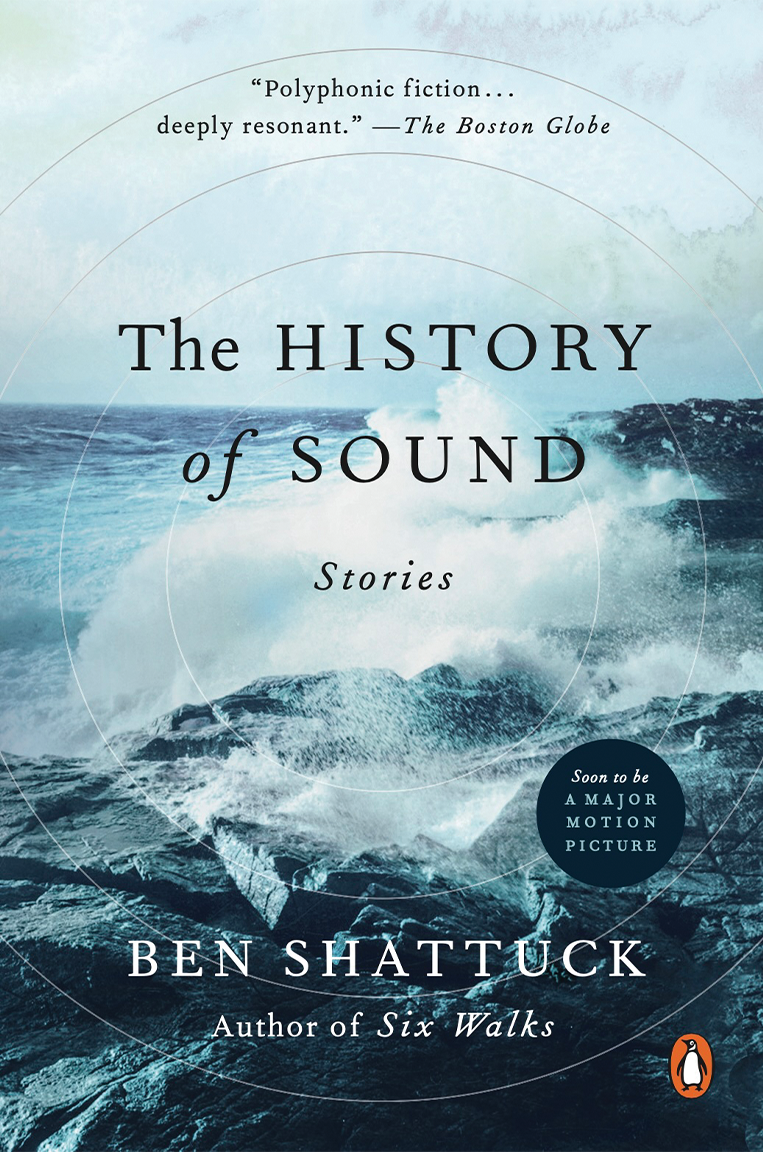
Selected as the 2025 choice for Greenwich Library’s townwide read together program—a celebration of great contemporary storytelling now in its fifteenth year—the book’s content has received wide attention and awards. Adding to the buzz around its publication, The History of Sound’s title story has been captured on film, released in theaters on September 12 in the U.S. Optioned soon after the story was published in the literary journal The Common in 2018, the project percolated for some time before it wrapped last year, almost parallel to the book’s arrival.
Ben wrote the film’s screenplay, and its director Oliver Hermanus won a nomination for the prestigious Palme d’Or award at the Cannes Film Festival in May. The story, about two Boston Conservatory students, played by rising stars Josh O’Connor and Paul Mescal, opens with the men as they meet at a piano bar pre-World War I. It follows their post-war relationship as they coax the taciturn singers of traditional folk songs to commit their voices to a then brand-new technology—Edison’s phonograph—and trace a musical route through the backwoods and backwaters of Maine.
Like every piece in The History of Sound, Origin Story (the last in Shattuck’s dozen) happens late in the twentieth century, and takes place around Bowdoin College and two Penobscot Bay islands. This contemporary setting connects the men’s musical and very personal odyssey in an almost magical way to a modern woman engaged in her own quest for self-discovery.
Sitting for an interview this past July, Ben talks about the mix of elements that create his approach to historical fiction in the book’s six pairings. Story forms diverge. One story consists of crucial pages in a young man’s journal. Another is a revealing author’s introduction to an academic book about the leader of a strange religious sect in the Pioneer Valley of Massachusetts in the late seventeenth century. In one pairing that examines a reported 1991 sighting of a seabird long thought extinct near a remote Newfoundland village, the first story of the pair is written as a transcript from NPR’s popular Radiolab podcast.
“Years ago, when I was living in Brooklyn, a couple of my roommates were Radiolab producers,” Ben recalls. “It gave me a very close look at how these reports are put together.” He notes that, unlike long-form reporting that sometimes takes months, podcasts that are assembled on short deadlines, with less time for definitive research, leave room for the doubt that accompanies the report of an improbable discovery.
In addition to these stories’ focus on a species that has become mythical, birds played an important role in Ben’s development as a writer. After graduating from Cornell in the unsettled economy of 2009, he took a job with the university’s ornithology lab at a field station in a remote wooded area of California, studying bird behavior and habitat.
“We did our field work in early morning, when birds are active, which gave me hours and hours of time to fill, so I started writing stories,” says Ben.
While many of his early attempts never reached the publication stage, consistent practice and enrollment at the Iowa Writers’ Workshop helped him develop and refine his craft over time. An art student, he also continued painting, a family talent going back to Aaron Draper Shattuck, an ancestor associated with the Hudson River School. Learning first as a boy watching his father paint in his studio in Massachusetts, Ben studied art in college, spent time painting in Europe and has shown his work in numerous galleries.
Perhaps unironically, it is the story of a painter who treks across the rugged coastal environment of Coskata in Nantucket, unsettling the lonely world of a young widow of a Revolutionary War soldier and her son, that established his literary credentials. Edwin Chase of Nantucket was Ben’s first work of fiction accepted for publication in the Harvard Review in 2017. It won the PEN/Robert J. Dau Short Story Prize for Emerging Writers that year. The story and its paired tale, The Silver Clip, set in the same location two centuries later, are included in The History of Sound. Both feature one small painting, left behind in the first story and regifted in the second. It is a poetic piece of literary symmetry.
Like the painting, other artifacts of history feature in the stories. The rusted ends of a crosscut saw protrude from an ancient tree, deep in the New Hampshire forest. A small, white, vase-like ceramic falls from its hiding place in a Nantucket chimney flue. An “as-is” antique home in Brunswick, Maine, reveals to the new owner a box of unusually patterned wax cylinders, hidden beneath its floorboards. Each of these mysterious objects connects readers to the past, and to the characters who will interpret them for us, the modern readers, revealing the timelessness of human motivation and emotion.
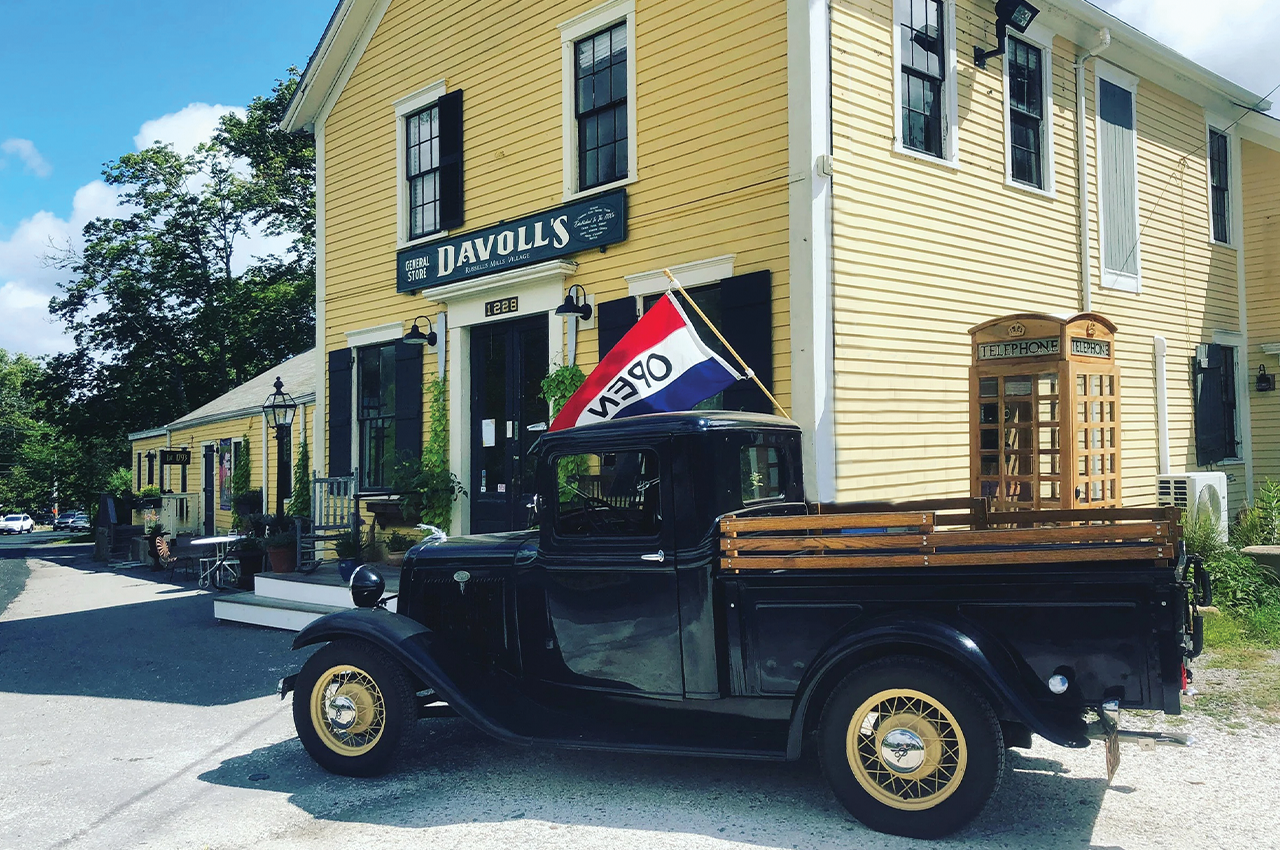
All the stories take a penetrating dive into New England history, as told by little-known inhabitants across centuries and a multitude of its varied and evocative landscapes. So, it comes as no surprise that Ben has made a significant investment with historic real estate. Davoll’s General Store in Dartmouth, Massachusetts, where we met the author, happens to be the oldest continually operating general store in America, not far from the home where Ben grew up. His great-grandmother shopped here; he and his brother bought penny candy at the counter. In 2021, Ben became the thirteenth owner since its opening in 1793. No doubt, it will help provide another rich trove of tales for us to enjoy.
Ben Shattuck will read from his book at the Berkley Theater at Greenwich Library
Tuesday, October 28, 7 p.m.
Registration opens three weeks ahead of the event, which will also be livestreamed on the library’s YouTube channel.
The History of Sound is available at libraries and for sale at Diane’s Books on Grigg Street. The audiobook, for sale online, features a wonderful cast of readers, including Ben’s wife, actress and author Jenny Slate, as well as actors Chris Cooper, Paul Mescal, Nick Offerman and others.