


The Guardian: Amanda Martocchio
Award-winning architect based in New Canaan. A leading voice advancing Modern architecture today.
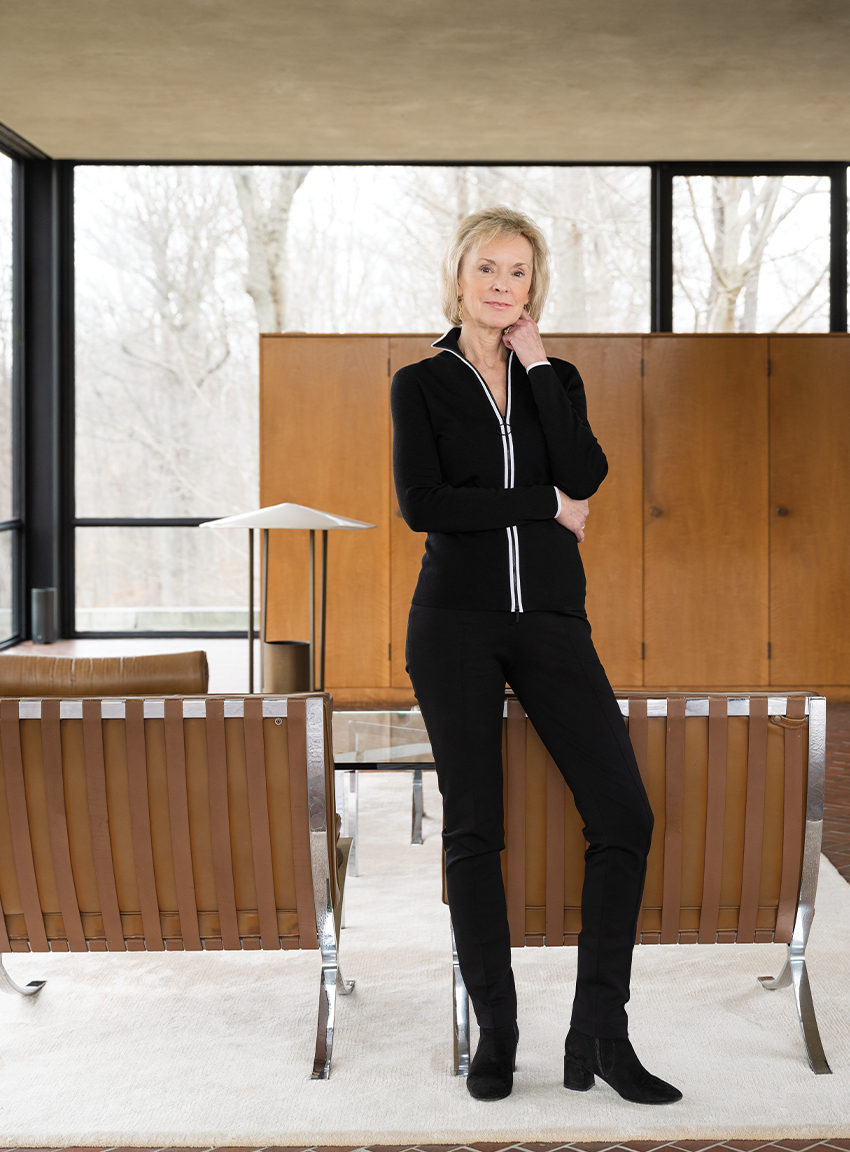

Can you walk us through your path into architecture and the founding of your firm?
I began my career in New York City, where I worked in architecture firms doing large commercial and institutional projects. Previously I completed my architectural studies at Cornell (Bachelor of Architecture) and Harvard GSD (Master of Architecture II); studied classical architecture in Greece and taught at Syracuse University’s program in Florence, Italy. Later, I left my New York City position as a junior designer at Ennead (formerly Polshek & Partners) after my first child was born with challenging and unexpected medical needs. This life change resulted in relocating to New Canaan, where I was drawn by its legacy of Midcentury Modern architecture, as well as the town’s Special Education program. I launched my architecture and design firm in 2004 which has now evolved into a highly regarded residential architecture practice recognized for design innovation and a process of collaboration.
How does Midcentury Modernism and its ethos affect your life and work?
Midcentury Modernism is a term used to describe a movement in design and architecture that grew out of the social and cultural post-WWII period. Lives that had been placed on hold during wartime began to flourish, and there was optimism fueled by a promising economic security. Young couples that had refrained from having children during the war sought small homes in suburbia that could house their expanding families. These were modest homes, but newly equipped with household appliances and a more open floor plan. There was experimentation and innovation in the design and fabrication of domestic objects, furniture and fashion. The Bauhausian embrace of industrial materials and mass production had come to the U.S. Home décor magazines celebrated and popularized these modern architectural features along with a contemporary lifestyle. What MCM brought forward was relaxed and modest: a starter home for young families. At its best, dwellings were efficient in scale, but expansive in their connection to the outdoors through large windows. These 70-year-old design principles are ones that are still relevant for me and other architects who are designing contemporary modern homes.
In what ways do you integrate MCM principles into your designs?
Many of the principles that emerged in domestic architecture of the midcentury are ones that I embrace in my work: clarity of structure, connections with nature, openness of space from one room to another and less is more. As I mentioned, many of the MCM homes were quite compact and efficient. The glazing for windows was not insulated, exterior walls and roofs were not thermally robust, so the homes became leaky and were energy inefficient.
What has evolved is how we see the architect’s role in reducing our carbon footprint and energy consumption, given climate change. Houses are typically built much better than they were in the midcentury. Also, there are many innovative, sustainable materials now employed in the design of single-family homes. Innovation was central to Midcentury design thinking, but the challenges and resources that we have today require a different mindset.
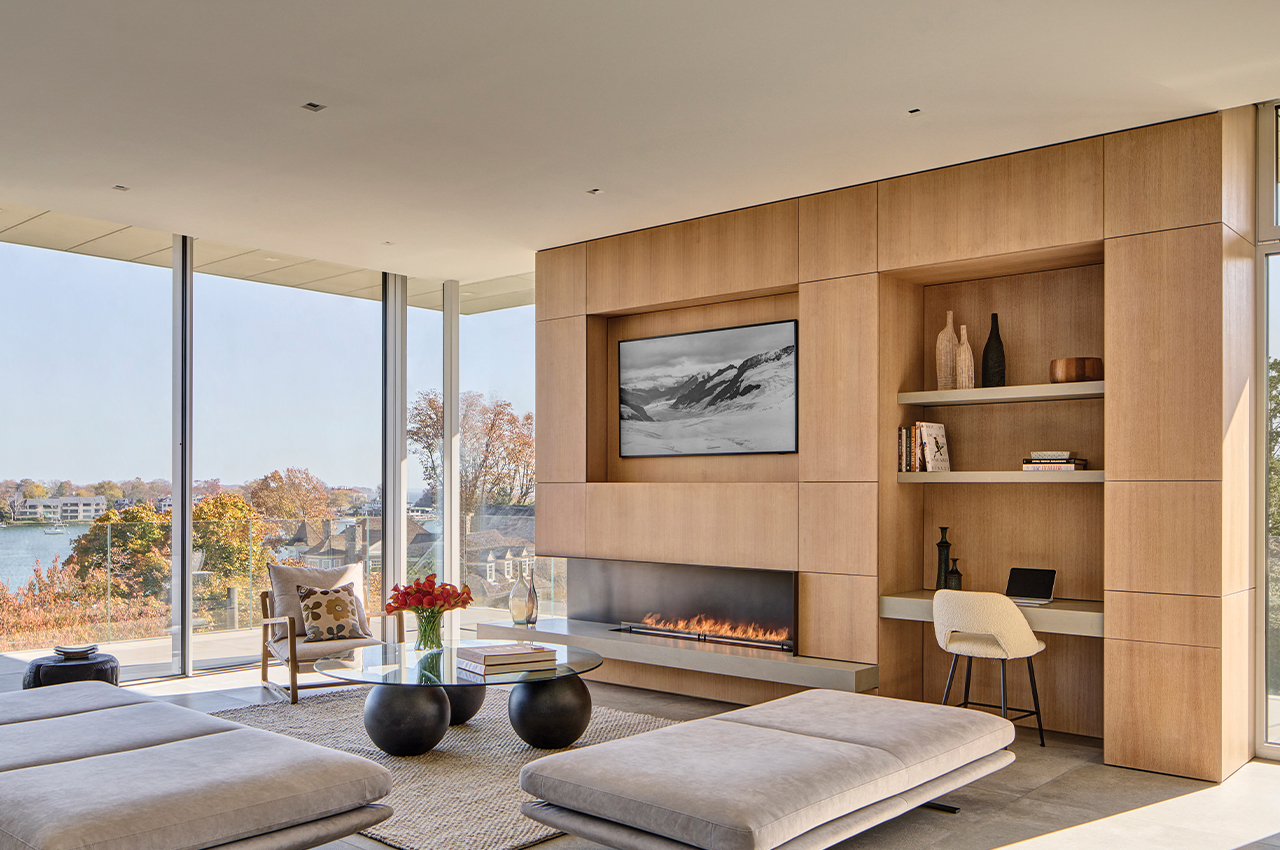
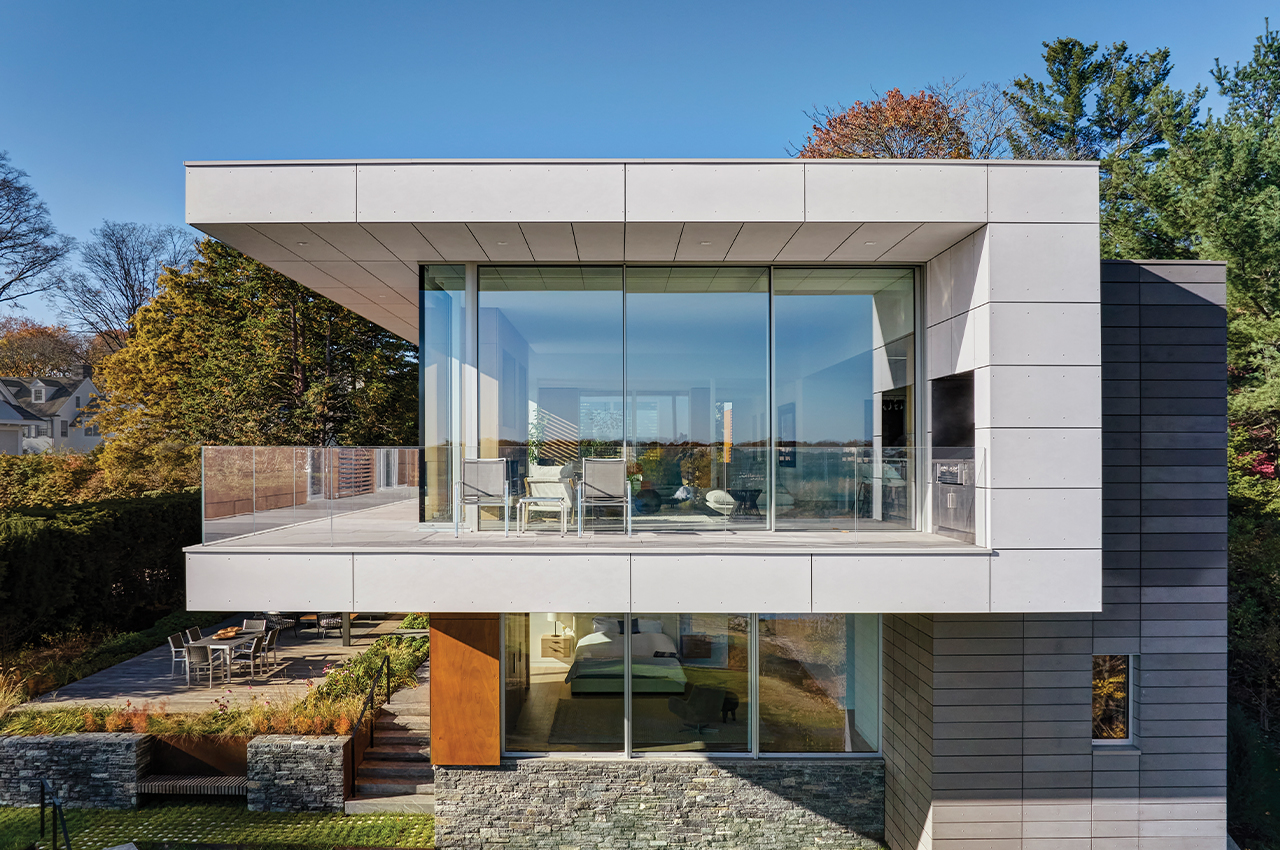 At this Amanda Martocchio–designed home, floor-to-ceiling windows capture sweeping views of Greenwich Harbor from both the bedrooms and the living room (below). Photos by Michael Biondo.
How has the legacy of the MCM movement in New Canaan influenced your architectural philosophy?
New Canaan’s Midcentury architecture is one of many influences on me as an architect. The New Canaan architects, most notably the Harvard Five, were experimenting with new building techniques and materials, and many of their clients had bold aspirations and embraced Modernism. The approach they took in their designs was not always celebrated by a more conservative and tradition-loving public. Many consider these New Canaan dwellings as ground-breaking and important in the continuum of architectural history. It was the architects’ boldness and commitment to a new vision that gives me inspiration today and, I believe, is their true legacy.
What do you find most rewarding about working in a community with such a strong architectural identity?
I am proud to live in a community that values not just the legacy of its midcentury domestic architecture but also that of the historic New England vernacular. This community is knowledgeable and appreciative of the arts and culture and celebrates its local architecture.
Are there particular Harvard Five architects whose work has shaped your thinking?
I have studied the work of Eliot Noyes, and his New Canaan home is simply perfectly conceived. Proportions, materials, spaces… everything has its logic, as a supporting piece and as part of the whole. I love the way the house connects both to the woods and the outdoor courtyard and employs stone and wood such that it disappears into its landscape.
I was lucky to know John Johansen when he was in his 90s. He was so lively both socially and creatively— in his continuous experimentation of architectural form and construction techniques—a true innovator. Also, he was unafraid of decoration and pattern, used appropriately, to reinforce his architectural ideas. He was radical in that way, as decoration was counter to many of the Midcentury Modernists working at the time.
How do you balance modern needs (comfort, technology, storage) with the original MCM aesthetic?
When we are tasked with renovating a MCM home, our first question is: Is it an architecturally superior example of the period and worth taking a preservation approach? If so, we are sensitive to not compromising the original features but replacing or modifying that which has run its useful life span.
Often, we encounter a home designed and built in the midcentury that is less noteworthy, is tired and needing repair. It may need new windows, proper insulation, new, discrete lighting and mechanical upgrades. If the footprint is simply too tight, we’ll consider an addition that allows for ample storage and the expansion of floor area. We would design an extension that is architecturally in sync but not slavishly identical. Sometimes, a new connecting hallway or linkage space allows the new addition to be less about mimicry. Adding new, for example, may be an opportunity to improve flow, provide a contemporary kitchen or family space, make a stronger connection to the exterior with high performance sliding doors, etc. Balancing modern needs within an existing MCM requires sensitivity and establishing priorities in order to create an updated environment that is cohesive with the original and also achievable within budget.
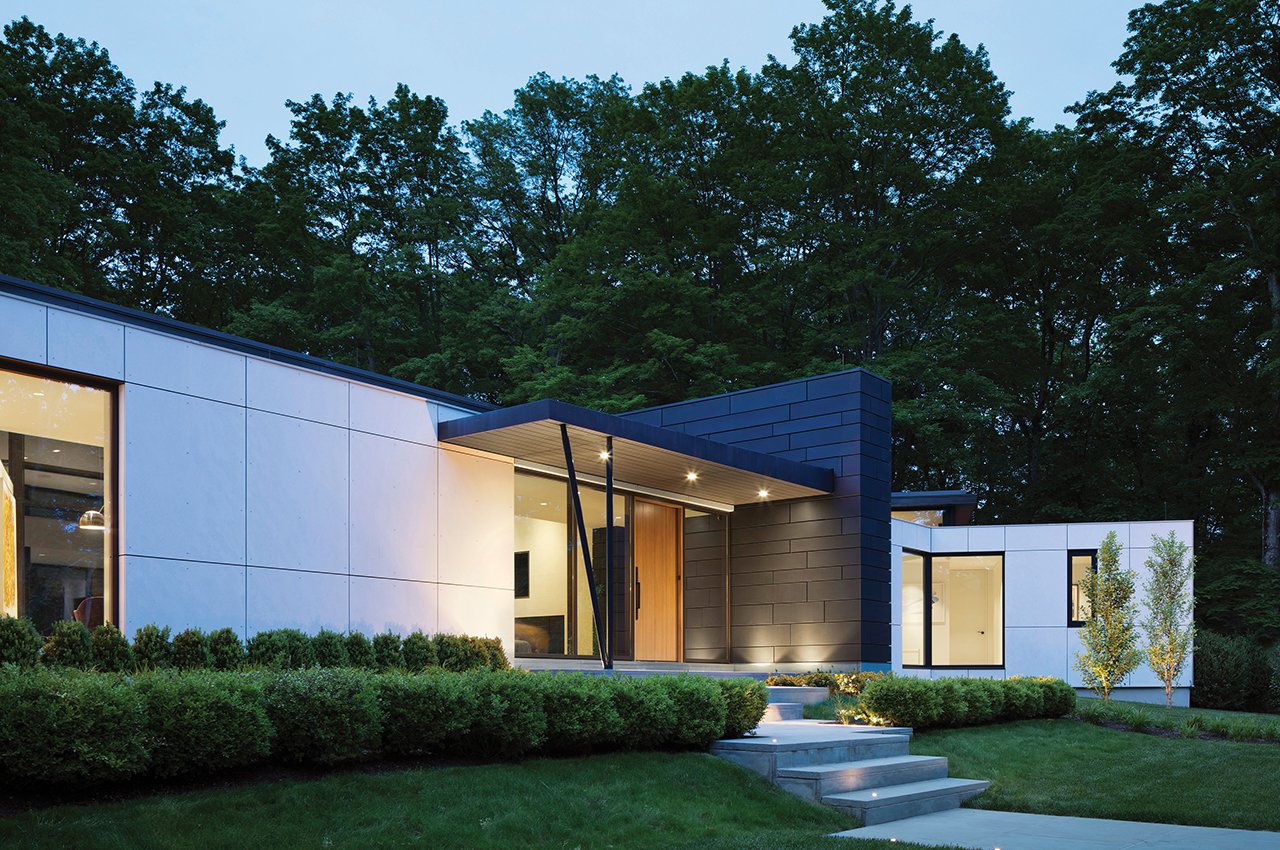 Martocchio redesigned this 1960s Greenwich home to give it a clean, reconfigured form. (Photo by Michael Moran)
How has your expertise in MCM architecture affected your client base?
Sometimes clients come to us with a studied appreciation of Midcentury architecture. More often, they have seen either historic images of midcentury homes or photos in magazines, or on social media, that feature new homes with large expanses of glass, contiguous space, edited detailing and an abundance of daylight. These are components that we often include in our development of a design. Our client base may find us because they appreciate the originality in our work, they recognize and respond positively to elements they see in our portfolio and they observe a consistency of thoughtful detailing, quality and warm, comfortable modern environments. Our clients may not be the average homeowner who seeks a home like their neighbor. Ours is a singular client who is looking for a unique contemporary home like no other.
What do you see for the future of the MCM movement in our area, and how do you plan to be a part of this continuum?
New Canaan and surrounding communities are fortunate to have a higher share of noteworthy Midcentury Modern homes built in the ’50s and ’60s. Homeowners have either preserved them or updated and reimagined them for our current time. Amanda Martocchio Architecture joins the enthusiast for preserving and updating the noteworthy examples of these homes. We draw inspiration from this period and seek to honor the local legacy of innovation. Yet, we are principally interested in designing new homes that feature forward-thinking and original solutions that address current-day environmental and energy concerns, as well as addressing our clients’ contemporary lifestyle.