







above: Photo: ©zphoto83 stock.adobe.com
Pickleball America at Stamford Town Center has experienced 300 percent growth since it opened in 2023, with players of all ages and abilities now hitting dinks, volleys and lobs throughout the 40,000-square-foot, 13-court space that was formerly home to the Saks Off 5th department store. Earlier this year, six new pickleball courts opened at Scalzi Park, and more are expected to open at Cove Island Park later this year.
“People thank me for getting them off the couch,’’ says Jay Waldner, co-owner of Pickleball America. “We’ve built a facility where people go to play, but also to just hang out, read a book and enjoy the culture around the courts.”

Pickleball has been the fastest-growing sport in the United States for four straight years, with more than 24 million players in the U.S. One of the most astonishing trends in the game’s growth has been the change in demographics. At the outset, pickleball quickly became popular with older players, especially former tennis enthusiasts: The 60-foot court is half the size of a tennis court and requires much less running. But over the past few years, younger players have gravitated toward the sport for its social and team-building aspects. Children are also getting into the game, and some area schools have been helping students discover its appeal.
“The biggest feedback that we get is people enjoy the sociability,’’ Waldner says. “It’s a great game to meet people. We do a lot of dating games and events. It’s almost like speed dating. People will come out in groups, maybe do a ladies’ night, and they’ll just have fun and listen to a little background music. It’s a very entertaining sport that does not entail trying to kill the ball and your opponent.”
Waldner and his ownership group have leaned into the social experience at their facility with in-house catering, event planning and party resources, player/spectator lounges, a child play area, a hi-fi listening lounge with a DJ table, and a child play area. The venue regularly hosts social gatherings, clinics, fundraisers and tournaments. It is open seven days a week.
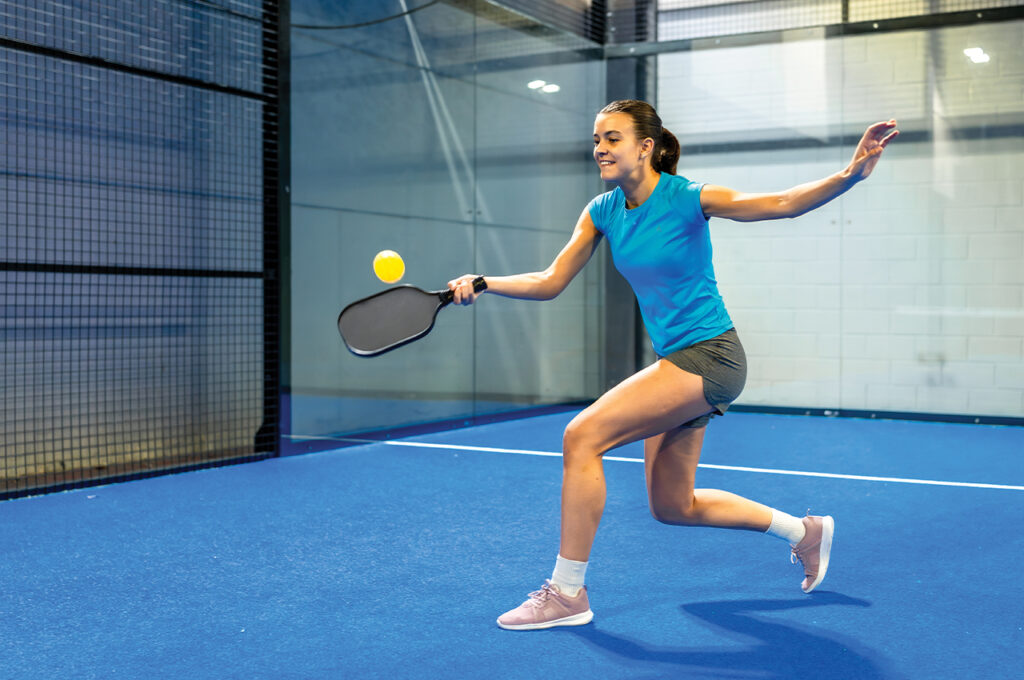
“We’re surprised by how quickly people have become interested in it,’’ Waldner says. “It’s the No. 1 team-building event for schools and corporations. An organization will come with 20, 30 or even 100 people to play pickleball and have a team-building session before returning to work. It’s become a great activity where you don’t have to be an expert to play. It’s like ping-pong in that when you start, you pick it up in a couple of minutes and can have a rally back and forth.”
As with any racket sport, hand-eye coordination will make the game more enjoyable. Waldner says rackets have good space for “hitability,” and players will develop quickness and agility over time.
“When you’re at the net, you’re getting balls hit to you quickly and you have to react quickly, kind of like a goalie in hockey,’’ Waldner says. “But if you just want to have some fun and be in the back to hit ground strokes, like tennis, you can do that all day long. You don’t have to be a superstar. It’s exhilarating for people who have never played before to start rallies and have some consecutive back and forth.”
People who want to learn how to play can enroll in an introductory class, attend a clinic or sign up for private lessons.
“In the television show Cheers, the motto was to have a place where you could go hang out with your friends,’’ Waldner says. “That’s what we’ve created here. It’s a great place for people to hang out and just relax with their family or friends.”
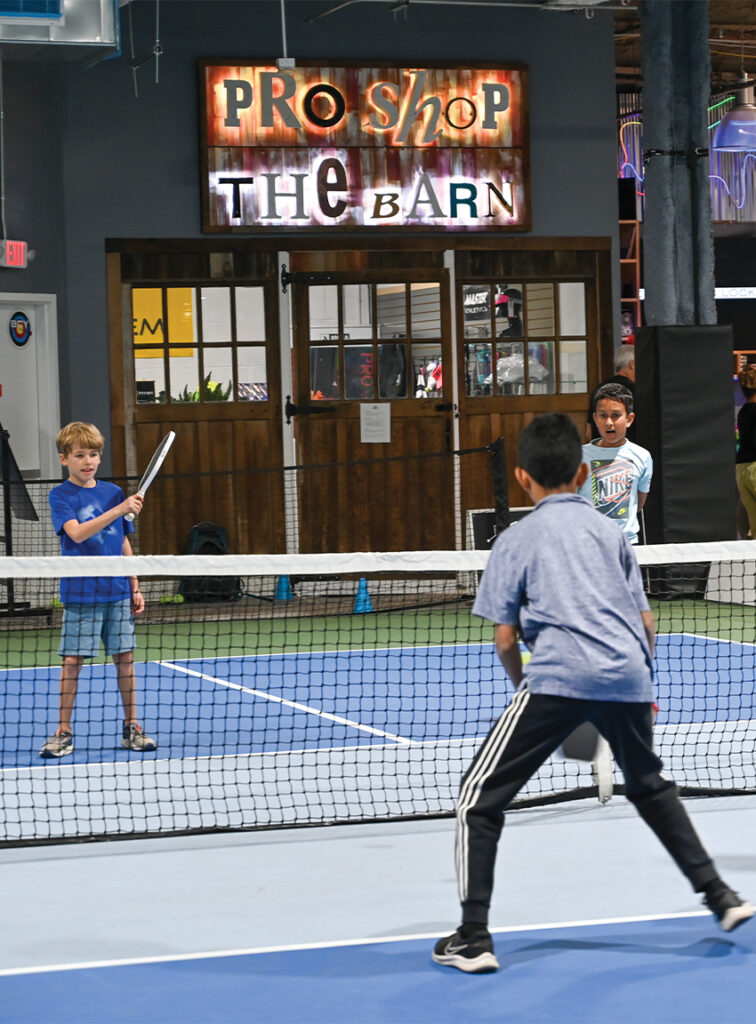
PRO TIPS FOR NEW PLAYERS
Pernille Halbro is head professional and director of pickleball at Pickleball America in Stamford. Here are her tips to improve your game.
SERVE: The serve starts every rally, and while it’s not an offensive weapon like in tennis, it sets up the point. The paddle head must stay below the wrist at contact, and the serve must be struck with an upward motion. My advice is to prioritize consistency and depth. A deep serve keeps your opponents farther from the kitchen line, making it more difficult for them to attack their return.
THIRD SHOT DRIVE: The third-shot drive is an aggressive shot designed to pressure your opponents and force a weaker ball. It’s especially effective when your opponents are still transitioning to the kitchen or when you see an opportunity to attack. Many players with a tennis background naturally favor the drive but learning when to drive is what separates stronger players.
THIRD SHOT DROP: This is one of the signature shots in pickleball and one of the most valuable skills to develop. It’s a soft shot that lands in your opponents’ kitchen, making it difficult for them to attack while giving the serving team time to move safely to the non-volley line. At higher levels, players often combine drops and drives, choosing the best option based on the situation rather than relying on only one shot.
THE KITCHEN: This area on both sides of the net is where players cannot volley the ball while standing in the zone or touching the kitchen line. This rule makes pickleball unique. It prevents players from dominating at the net and creates longer rallies that reward patience and smart shot selection.
LOBS: The lob can be an effective change-of-pace shot when used at the right moment. While it’s not a shot you want to rely on consistently, a well-executed offensive lob can push aggressive opponents away from the kitchen and create opportunities to move forward or regain control of the point.
DINK: The dink is one of the most important shots in pickleball. It’s a soft shot played into the kitchen that forces your opponents to stay low and be patient. At beginner levels, players often prefer to hit hard because it’s more familiar, but as they improve, they learn that the dink creates opportunities to move opponents, force errors and set up attacks.
THE SOFT GAME: One of the biggest adjustments for players coming from tennis is learning the soft game. Power can win points, but control, consistency, patience and decision making win matches. The best players know when to speed the ball up and when to slow the game down.