





After a successful corporate career, Jen Potter of Fete Home helped build Bunny Williams’ product empire before finding her own creative voice through custom textiles and wallpaper
Jen Potter was raised in Oyster Bay on Long Island. She moved to New York City after college and spent more than a decade working in financial services. The career made sense on paper, but something never quite fit.
“There was this creative part of me that needed more,” says the founder of Fete Home.
That instinct eventually led her to legendary interior designer Bunny Williams, where she spent ten years helping launch and grow Williams’ product line. Introduced through family connections, she entered the role with an operations and finance background, becoming part of a small but ambitious team building a major design business from the ground up.
It was an education in both creativity and entrepreneurship. “She’s incredibly generous with her knowledge,” she says of Williams. “And she’s a real businesswoman.”
But even while helping shape another designer’s vision, her own creative instincts were getting antsy.
Her mother, an artist, filled her childhood with paint, fabric, antique beads and “freedom.” There were no rules in the studio.
Creativity remained a constant thread. Potter loved painting and drawing. She experimented quietly on the side while building a successful career in business. Eventually, she reached a turning point; “I wanted my name on the door,” she says.
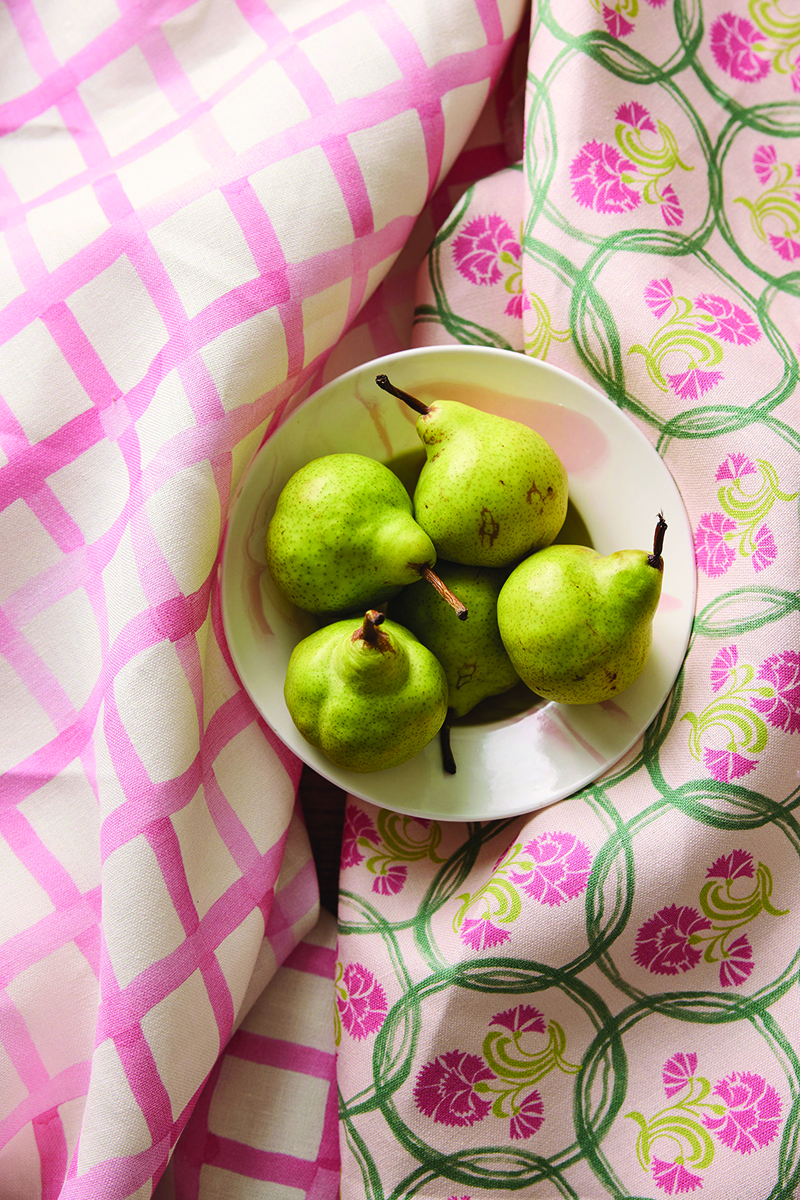
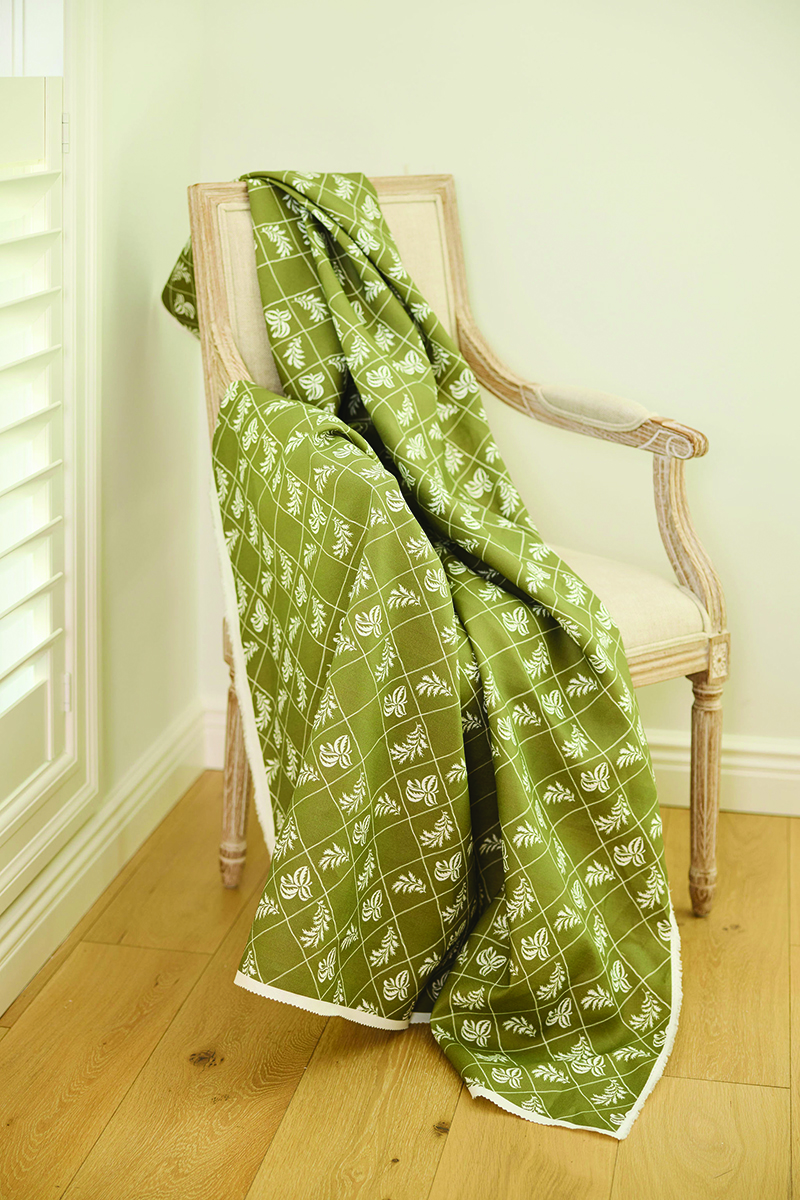
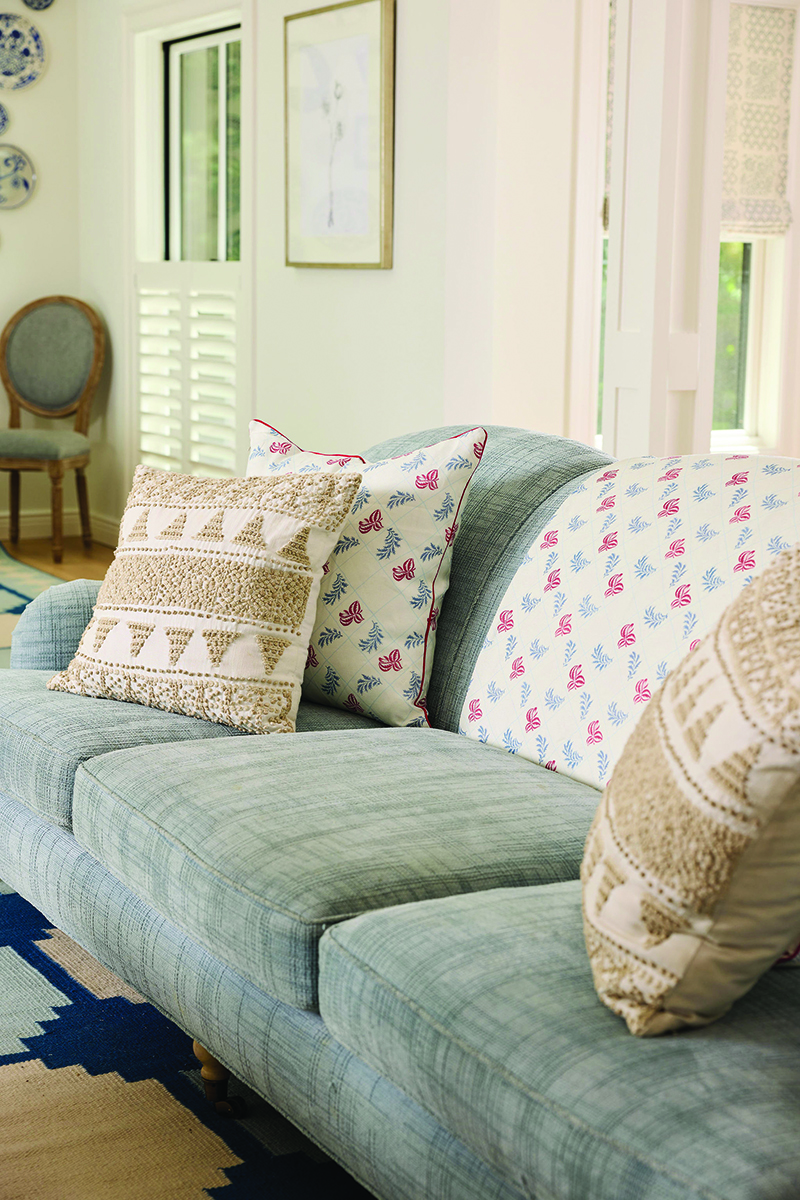
Just before the pandemic, Potter began designing textile patterns inspired by historical motifs, reworking them through color and scale into something distinctly her own. Her fabrics were block-printed in India, and she launched what she envisioned as a small, design-driven brand centered around vibrant pattern and color.
Then COVID hit.
Like many entrepreneurs, she was forced to pivot quickly, as supply chains stalled and consumer habits shifted. Her business evolved into an e-commerce home décor brand, with tabletop products and curated goods that resonated with customers spending more time at home.
The business grew rapidly, but success was pulling her further away from what she actually wanted to create.“I found myself growing a business I never really intended
to have,” she says. “There was so much heavy lifting.”
So she paused and reassessed.
Today, her business focuses on custom textiles and wallpaper produced through partnerships with printers in Connecticut, Pennsylvania and New Jersey.
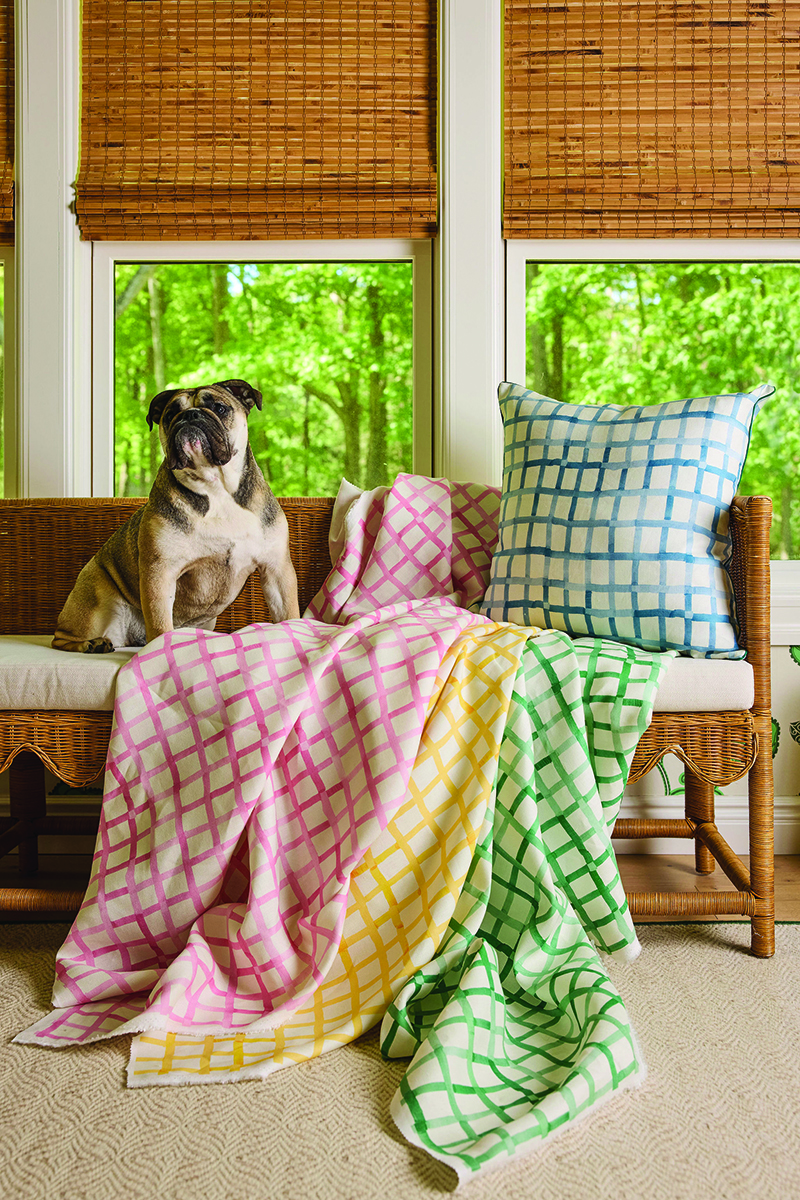
Every piece is printed on demand, allowing clients to customize color and scale for their homes.
The shift has also become more personal. While her earliest collections referenced historical patterns, her current work increasingly originates from her own paintings and hand-drawn artwork.
Her newest collection experiments with the origins of block-printing itself—not with carved wooden blocks, but with found objects and natural forms. A dried citrus slice might become a repeating motif. A painted detail from a separate textile may evolve into an entirely new pattern.
“I’m trying to be more comfortable in this skin,” she says. “Which is fun and scary.”
In 2021, she and her husband left Manhattan with their two children during the post-pandemic migration out of the city. After years on the Upper West Side, they landed in the New Canaan part of Silvermine, drawn to the neighborhood’s creative spirit and natural beauty.
The house they bought was far from turnkey. “It needed a lot of love,” she says. What followed was an 18-month renovation completed while the family lived inside the construction zone—an experience involving plenty of chaos. But the process became deeply personal, allowing the family to shape the home slowly and intuitively.
The result is a layered, colorful space that reflects her philosophy on design: Homes should feel lived in, welcoming and deeply individual.
“If you love it, you should live with it,” she says. “I don’t really believe in following all the rules.”
That ethos extends to entertaining, something she and her husband love. Their home is a frequent gathering place for friends. “One of the best compliments we get is that people feel comfortable here,” she says of her home.
Professionally, her brand continues to expand. Her collections are now available in showrooms in Dallas, Chicago, Palm Beach and Richmond, and she recently launched a collaboration with J Wilkinson Chair, a North Carolina furniture brand known for monogrammed dining chairs.
Still, despite the growth, she remains candid about the reality behind the business. “I’m basically a one-woman band,” she says.
What distinguishes her work, however, is her uniqueness. Designers aren’t simply ordering fabric off a shelf; they’re collaborating directly with the artist behind it. “People want homes that feel unique to them,” she says. “And now I can create that.”
After years of reinvention, Potter finally feels she has arrived where she was always meant to be.