







Supporters of the Stamford Harbor Lighthouse Project are working to bring the city’s 1882 landmark back from the brink
Sunshine spilled across Long Island Sound as Brendan McGee motored out to the Stamford Harbor Lighthouse to help prep for a fresh paint job earlier this summer. Soon, he and a small crew began the grinding task of removing stubborn rust from the historic 1882 structure. Working on the cast-iron caisson—part of an ambitious $2.2 million restoration project—wasn’t a smooth-sailing process.

“People are really going to be surprised at how beautiful this lighthouse is when we’re finished,” McGee says.
The structure sits on 10 acres of submerged land, about two-thirds of a mile from shore. “We’re doing early mornings this week because of the heat,” he says, referring to a recent wave of sweltering days punctuated by afternoon thunderstorms.
After standing watch for 144 years—and saving countless lives—the 60-foot lighthouse needs saving of its own.
McGee, an entrepreneur who grew up fishing local waters (even working on a lobster boat), and Gary Kalan, a retired anesthesiologist whose home overlooks the beacon, are spearheading the rescue.
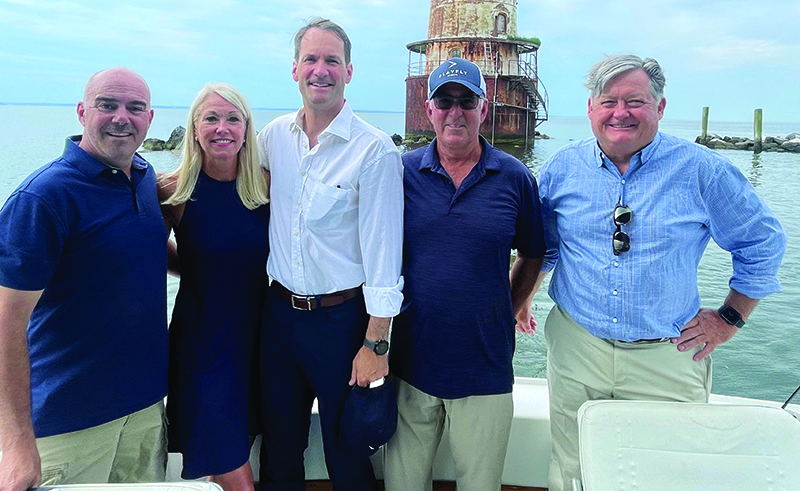
“This is a race against time. This lighthouse has been dormant for 40 years, and there was no plan to acquire and save it for future generations,” says McGee, who teamed up with Kalan in 2022 to create the nonprofit Stamford Harbor Lighthouse Project.
“Ultimately, we’d like to have it accessible so the public can get a feel for what it was like for a lighthouse keeper to live here,” Kalan says. They also aim to revitalize the property and collaborate with SoundWaters on education and research involving oyster bed rehabilitation.
Stamford’s harbor, a popular commercial and recreation area, is known for its hazardous rocks and ledges, and for its past as a bustling international hub of ship traffic. In the 1800s, erecting a lighthouse became “a front-burner issue,” writes Karen Jewell in A Maritime History of the Stamford Waterfront.
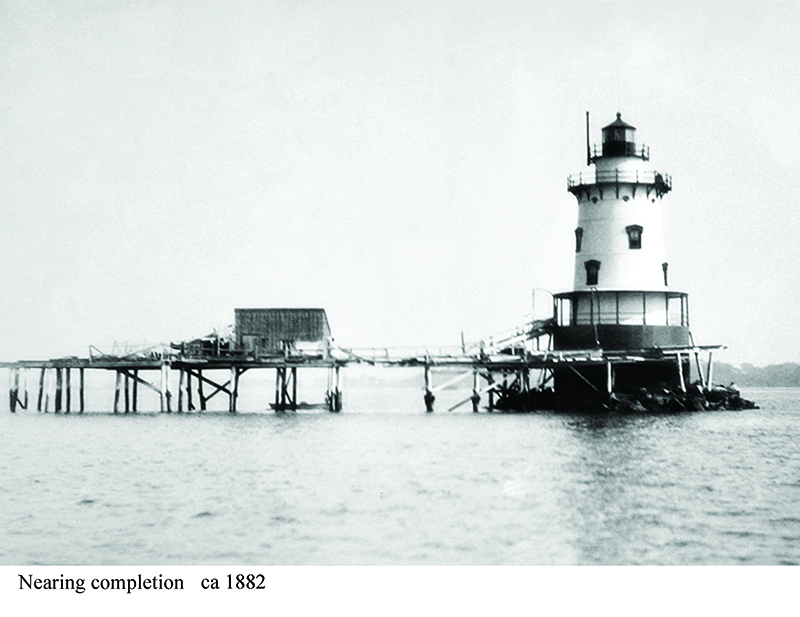
“The success of Stamford came by the sea,” says McGee, noting ships moved everything from food to lumber. “It all came by sea; there was no I-95.”
Only 33 “sparkplug” lighthouses remain. McGee says this is a beautiful example “with intricate Victorian details.”
In the beginning, “the only way to get in there was a rusty old staircase that we had to replace,” Kalan says, of the lighthouse that was home to multiple keepers and their families.
Jewell writes of Nahor “Naylor” Jones, a Civil War veteran who built a dock and brought a chicken coop out there. He lost both when a nor’easter hit and sent his chickens out to sea. Next was Adolph Obman, (1904-1907). His wife was the first to have a baby there.
John Cook followed. Cook (1907-1909) made the newspaper when he struggled to reach the lighthouse landing in a small boat with his wife, Martha, while his mother-in-law watched from the lighthouse. They hit rocks and lost an oar before disappearing from view as a steamer ship passed. Martha’s mother thought they were lost at sea, but they were found “stumbling on the beach” on Long Island.
Jewell’s book shares more, as does the Stamford History Center, where the city’s maritime past is preserved in newspaper clippings and photos. (Learn more at stamfordhistory.org.)
The last official keeper was Martin Luther Sowle (1938-1953), who earned a Congressional Silver Medal for rescuing a distressed vessel and its captain in 1939.
When the federal government decided a flashing light and foghorn would be put into service and operated from the mainland, the seven-level lighthouse, which has a kitchen and bedrooms, was offered for sale.
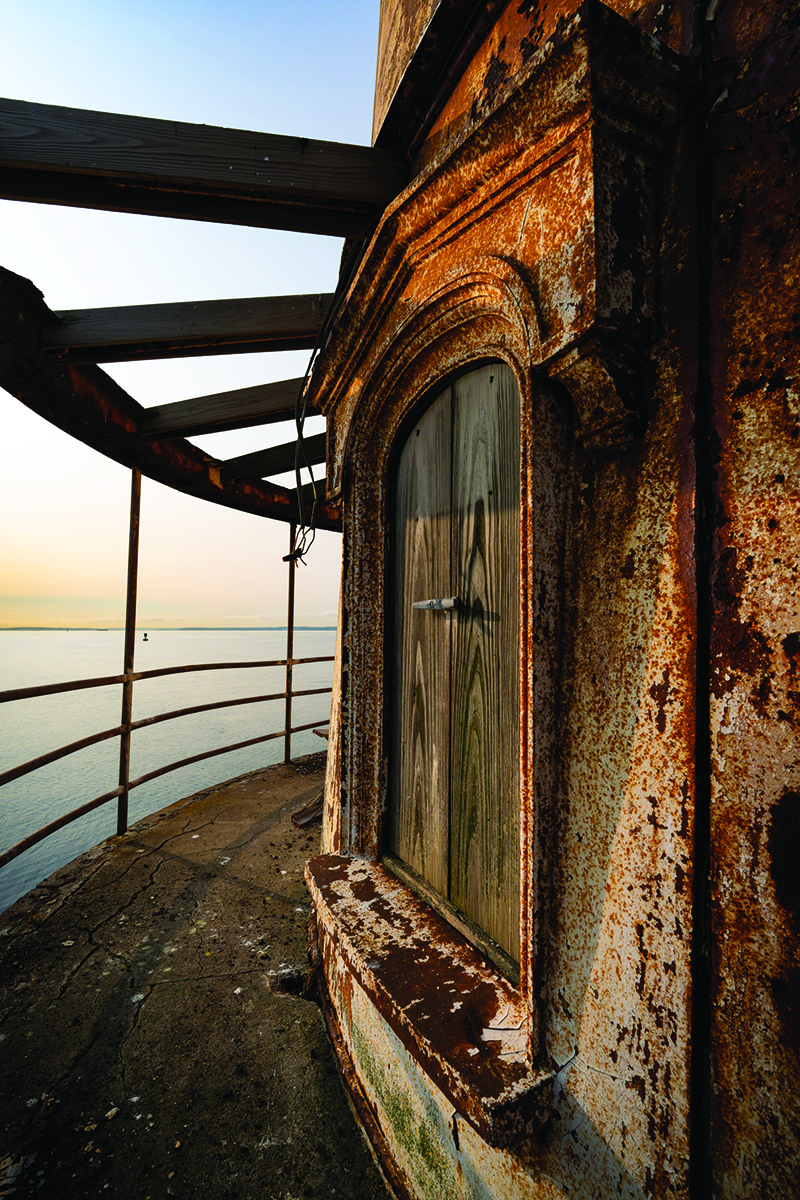
Over the years there were several owners. In 1984 it was auctioned to a banker who restored it as a second home but never stayed there, and it passed to his son, Kalan says.
The lighthouse was then boarded up. It was in urgent need of repair when Kalan and McGee created the Stamford Harbor Lighthouse Project to raise the $500,000 needed to purchase it.
McGee, a preservationist and longtime owner of Brendan’s 101 cafe in Rowayton, had had experience restoring Greens Ledge Lighthouse in Norwalk when he set his eyes on Stamford’s beacon. At the time, he and Kalan were strangers. Then kismet stepped in.
Kalan, who enjoys sailing and boating, says his interest piqued when he read about McGee’s success with Greens Ledge, which today offers tours, programming and overnight stays. Having recently retired, he wanted to keep busy with something meaningful.
“And literally, Brendan was on Google Earth to see who lived closest to the Stamford Lighthouse—and who he could partner with,” Kalan says. “This was the same time I was emailing Brendan to see if he had any interest in working on this. So we feel it was sort of meant to be.”
Support for the project is growing. McGee points out lighthouses are active aids to navigation and still save lives today.
“We have produced the organization that will be the steward of this lighthouse forever,” McGee says. “It’s important that communities realize the significance of these lighthouses and get involved to help us.”
stamfordlighthouse.org