
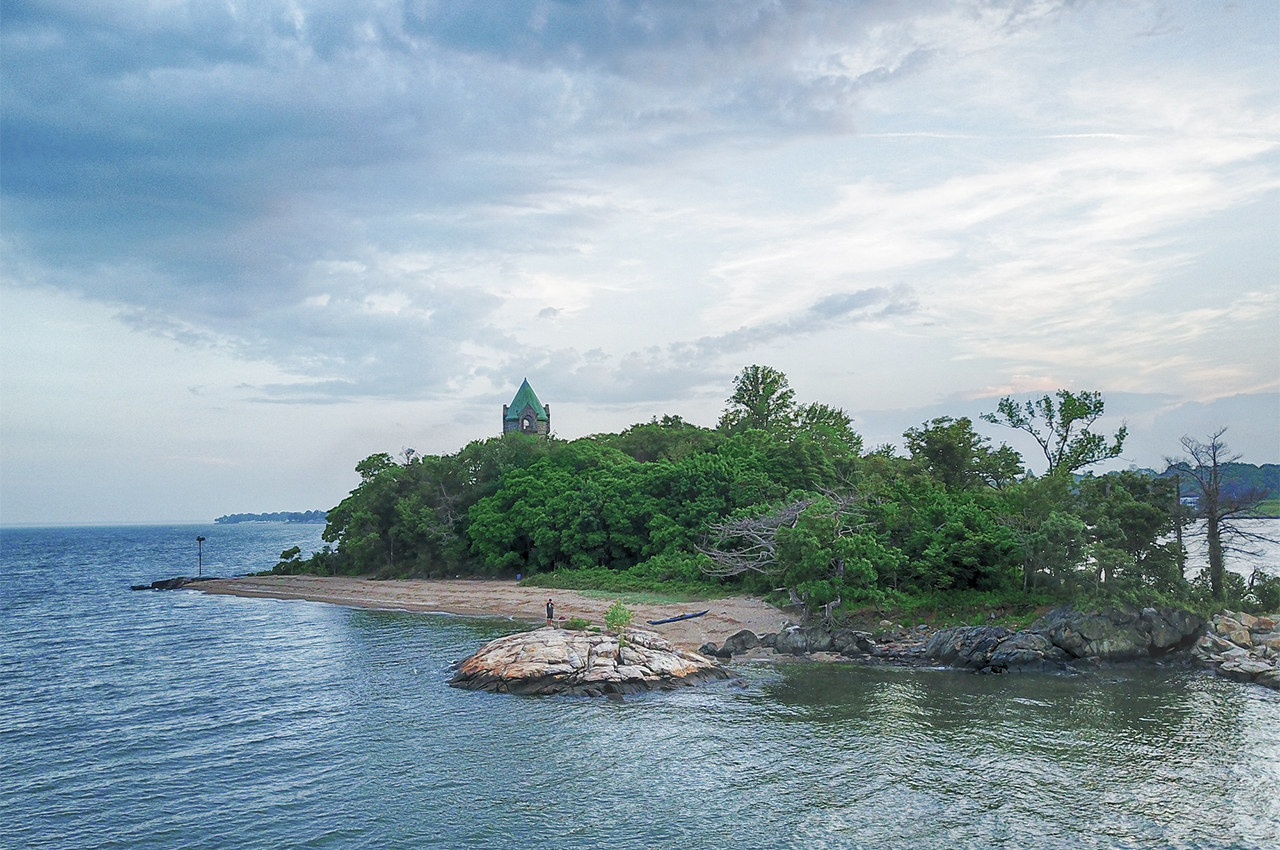
above: An aerial view of Shell Island, the five-acre waterfront preserve donated to the Greenwich Land Trust by Julius Silver in 1990. Sandy beaches, salt marshes and forested slopes provide habitat for nesting seabirds and other wildlife. In the early 20th century, the island was a summer residence, providing decades of enjoyment, for August and Mary Eimer and their family. The Eimers were known for hosting friends and relatives at their summer home, complete with gardens, fruit trees and even a tennis court, where everyone would partake in summer fun. – Photo: Michael Stempian of The Greenwich Drone
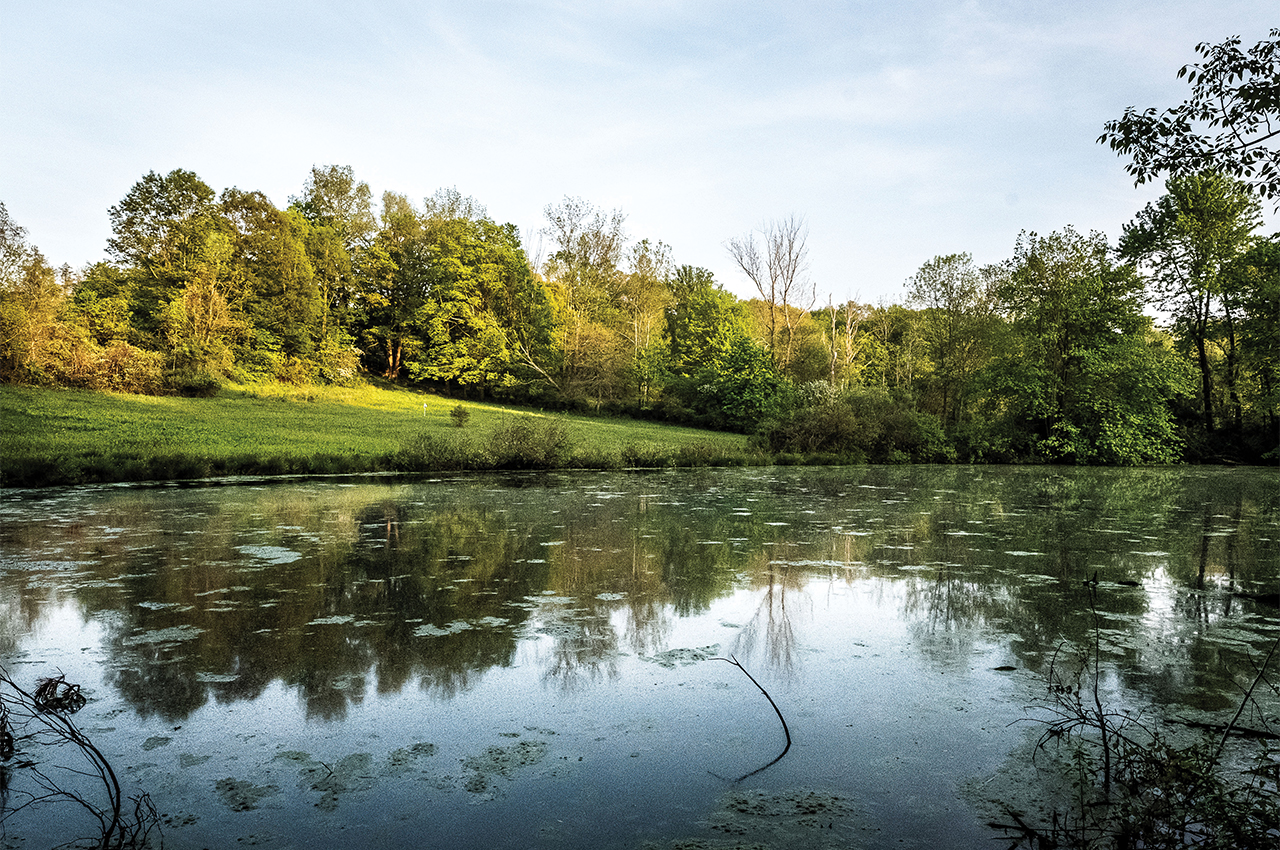
When the frenzied period of great estate building in Greenwich was over by the 1930s, the titans of industry and finance had transformed the once-agricultural countryside into their version of British country houses. If the mansions they erected were monuments to their outrageous good fortunes, it was the land surrounding them that conferred a certain special status: It was one thing to erect manor houses the size of hotels, quite another to do so on properties so sprawling that they could only be seen from the air.
Yet in amassing hundreds, even thousands, of acres surrounding their country houses, what the lords of the manors left behind were assets of greater, and longer-lasting, value than the manors: The land around and beneath them. At the same time, they also created a culture of success and wealth that bestowed on Greenwich its status and very identity.
It may well be that the landed Greenwich gentry of the day had a sense of noblesse oblige in handing down land to their heirs, but also in leaving it the institutions that would keep it in its natural, undeveloped state for future generations to enjoy.
Today, as property values in Greenwich routinely rank among the highest in the state and the country, nonprofit organizations like The Greenwich Land Trust have saved over a thousand acres from development, preserving it for current and future generations and keeping Greenwich “Greenwich.”
DOWN ON CONYERS FARM
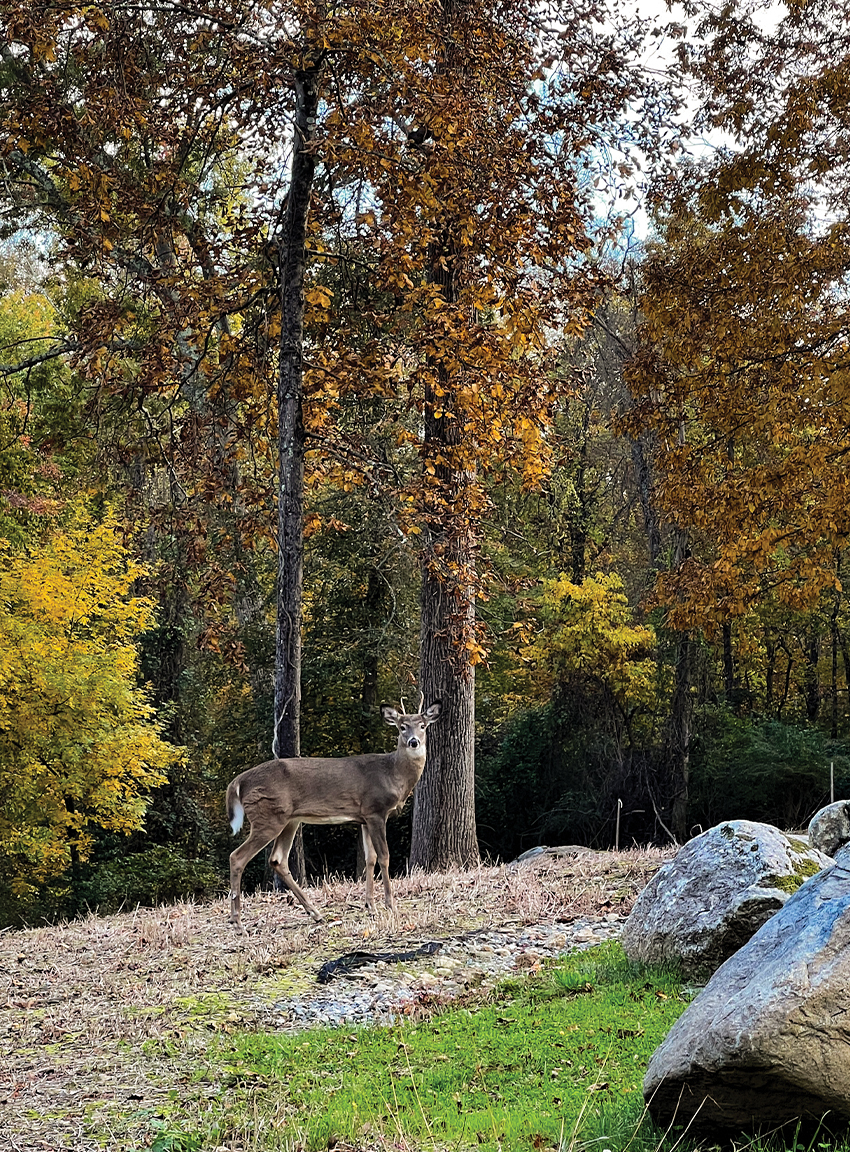
The last great estate in town—in fact, arguably the greatest sprawl of undeveloped land in Fairfield County in the past half century—was Conyers Farm, a 1,434-acre estate stitched together from dozens of small farms beginning in 1904 by steel magnate and banker Edmund C. Converse and modeled on classic British country manors and estates. (“Conyers” is the ancestral spelling of the family name Converse.)
According to the Greenwich Historic Society, in its heyday the vast property included a 52-room manor house overlooking much of the grounds and Long Island Sound; cottages for family and staff, and housing for other employees; a clock tower and extensive gardens, greenhouses and the 100-acre Converse Lake that provided water to the estate.
After Converse’s death in 1921, the once-grand manor house and dozens of outbuildings gradually fell into disrepair and the fields and orchards grew wild. What remained, of course, was the land on which they had resided. For beneath the decades of weeds and fallen trees and saplings lay over 1,000 acres in Connecticut and 400-plus across the state line into Westchester County, New York, of immensely desirable land.
In 1972, father and son entrepreneurs Murray and Peter Brant, along with business partner Joseph Allen, purchased Conyers Farm for $18 million (a steal, one might think, before adjusting for the cumulative inflation rate that would put its purchasing power today at close to $140 million!) After carving up the old estate into large parcels for themselves, the partners’ plan was to develop an elite, gated equestrian community in line with the town’s image.
Although under zoning regulations of the day the property could have been subdivided into several hundred two- and -four-acre building lots, the Town of Greenwich worked with the Brants and Mr. Allen on establishing a number of strict covenants, easements and restrictions governing the development. Among them were a 175-acre wildlife preserve that would also serve as watershed protection; wetland and stream buffers; and an extensive network of private bridle and hiking trails that would connect with Greenwich’s broader trail system.
IN LAND WE TRUST
Even so, the loss of open space to urban and suburban sprawl in Connecticut in the late-1960s and early-1970s, coinciding with a national environmental movement, gave rise to local grassroots land preservation organizations, says Amy Paterson, a land-use attorney in the state for more than 20 years before becoming the first director of The Connecticut Land Trust. That organization was created in 2010 on the foundation of a number of earlier, state-based preservation nonprofits.
Land trusts serve multiple purposes. They conserve land in perpetuity; they guarantee long-term commitment to stewardship of those lands; they advocate for the land at the local political level; and they connect people to the land and to each other. By the 1980s, some 60 to 70 local land trusts were up and running, including The Greenwich Land Trusts (GLT).
“Greenwich ticked all the boxes,” Paterson says, referencing those purposes. “It is permanently protecting the places that make their community special, and not just for Greenwich but for the entire region to thrive.”
Formed in 1976, the trust has worked in concert with large land preservation organizations like the Nature Conservancy and the Audubon Society, along with the Town of Greenwich, in saving more than 1,000 acres from developers in every part of the town, from an island and slices of the shoreline to large, untouched swaths of meadows and woodlands in mid-country and backcountry Greenwich.
This past September, the GLT celebrated its 50th anniversary, a milestone proclaimed by First Selectman Fred Camillo and accompanied by a tree planting ceremony, speeches and a champagne toast. The event also marked the launch of the Trust’s 50th Anniversary Capital Campaign, to support the protection of local, biodiverse land and native wildlife, and the future of Greenwich’s scenic landscapes.
(Fittingly, the GLT offices are located on the Mueller Preserve, a landmark four-acre property on the corner of Old Mill Road and Round Hill Road that was donated to the Trust in 2012.)
Over the years, GLT has sought or simply been gifted with a number of large or significant land donations.
In 1990, Julius Silver donated Shell Island, a rare, waterfront, five-acre haven for nesting seabirds and occasional resting spot for sea turtles and seals. The preserve features sandy beaches, salt marshes, forested slopes and a 60-foot tower.
In 2001, the Trust was part of a grassroots campaign to save Treetops, a 94-acre public nature preserve on the Greenwich-Stamford border abutting the 391-acre Mianis River Park. It was formerly the private estate and home of Broadway torch singer and social activist Libby Holman.
And, in 2021, the Greenwich Land Trust acquired the 72-acre Converse Brook Preserve in partnership with the Town of Greenwich, at an unprecedented, below-market price from the Aquarian Water Company. The acquisition enhances an existing greenway totaling more than 800 acres of open space.
Big donations of land are gratefully accepted by GLT and honored by the stewardship the Trust extends to all properties. But more critical to its long-term goals are the strategically-positioned gifts that connect relatively small pieces to one another, and to the big preserves held and maintained by larger organizations like the Connecticut Land Trust and the Nature Conservancy.
Meanwhile, these kinds of mindful acquisition suggest a great good.
“It creates this mosaic of conservation properties—this chain and long corridors—that have an ecological benefit,” says Will Kies, Executive Director of The Greenwich Land Trust. “As we look at new acquisitions, we always start by asking, ‘Is it adjacent or near an existing GLP property?,’ because that makes it all that more important.”
GREENWAYS
One of the speakers at the September 9th celebration was Louisa Stone, a former president of the board of the Greenwich Land Trust and first recipient of its Lifetime Achievement Award.
Stone, 95, has lived on Sterling Road and the northern boundary of the Greenwich Audubon Center for 60 years. She and her late husband, Emerson, settled there on eight and a half acres of rugged, rocky land and wetlands; the house they built lies 60 feet above a branch of the Byrum River and features an exposed bedrock boulder in the living room.
What perhaps most distinguishes the property, however, is what’s no longer theirs. In 1998, in a gift that exemplifies the strategic planning behind GLT’s success, the Stone family donated half of the property to the Greenwich Land Trust (Emerson Stone died in 2014; a longtime CBS newsman, journalist and conservationist, he served as founding chairman of the Connecticut chapter of the Sierra Club and chairman of the Town of Greenwich Land Acquisition Committee, among other civic positions).
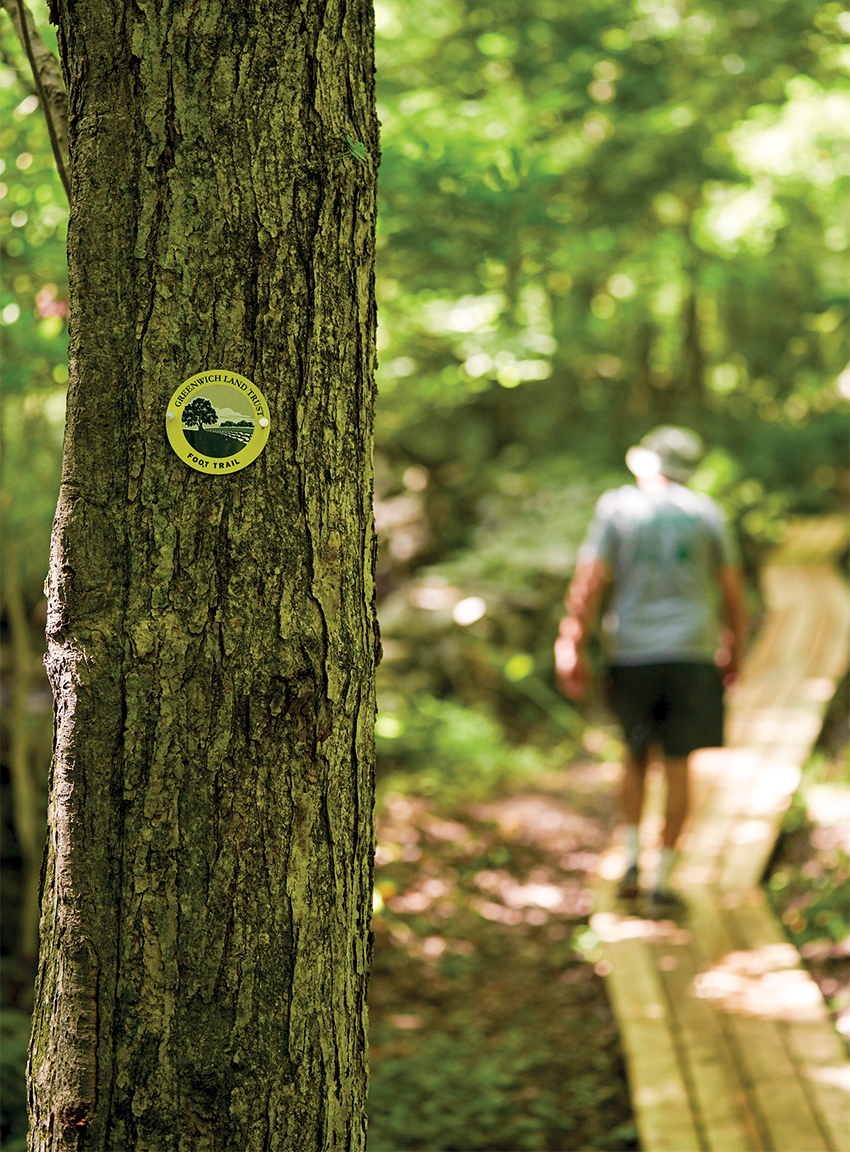
In doing so, the gift joined two earlier donations to create the Sargent-Gildersleeve-Stone Preserve—a continuous, 18.5-acre greenway of rocky ridges, woodlands, meadows and wetlands that feed additional branches of the Byrum River and connect with National Audubon property.
“I think much of the beauty of Greenwich is that we’ve preserved its natural features,” Louisa notes of the donation. “I say Manhattan might have looked like this if they hadn’t spoiled it by allowing the development of the wetlands!”
What’s more, preservation looks much different than restoring property once it’s been developed.
“Once land is gone, it’s gone,” says Will Kies of The Greenwich Land Trust. “It’s so hard to claw back an acre if already has a house on it or if the trees are cut down. It is just not the same as protecting critical habitats and important open space parcels!”
“THEY AIN’T MAKIN’ IT ANYMORE”
Just after the turn of the 20th century, Samuel Clemens—known worldwide as Mark Twain and the author of the classics Tom Sawyer and The Adventures of Huckleberry Finn—purchased a single parcel of 248 acres of land in Redding. As if to take the advice commonly attributed to him—“Buy land, they ain’t making it anymore!”—Clemens did just that, and in 1909, he bought an adjacent 150 acres of mixed farm and wooded land.
Whether rightly attributed to Clemens or not (most likely not), sounder real estate advice has probably never been uttered.
As of this past September, fewer than a dozen parcels of undeveloped residential land were on the market. According to local real estate agencies, they ranged in price and acreage from $3,250,000 for 5.13 acres in mid-country to $13,950,000 for 7.2 acres in backcountry Greenwich.
But it may also be good advice to leave a part of an estate to preserve the image and legacy of the town that no doubt inspired the making of the money to acquire land in Greenwich in the first place.
There are many reasons to give land back to the community in preparing to leave it, top among them taxes. But something less tangible may be in play.
“It’s such a personal thing to give a part or all of your property,” says Will Kies. “The desire to permanently conserve it through a land trust is often at the heart of why a couple or family would donate a property to us.
“It takes generosity and philanthropy,” he adds, “but it also takes a love of the land, for now and for generations to come!”