







Merry Thornton has seen it so many times it has become almost ritual. A woman walks into Element Medical Aesthetics in New Canaan—often after significant weight loss on a GLP-1 medication—and pulls the skin along her jawline upward, showing how her face used to look. The familiar words follow: hollow, sunken, gaunt.

Merry Thornton has seen it so many times it has become almost ritual. A woman walks into Element Medical Aesthetics in New Canaan—often after significant weight loss on a GLP-1 medication—and pulls the skin along her jawline upward, showing how her face used to look. The familiar words follow: hollow, sunken, gaunt.
Before they begin talking, I can often tell they’ve experienced rapid weight loss,” she says. “Their face will have a hollowness in the temples, cheeks, and nasolabial folds and a loose, inelastic appearance at the jawline.”
Since Thornton founded Element, she has watched this particular kind of dissonance become one of the defining patient experiences of the GLP-1 era. By most clinical measures, the medications are genuinely effective tools for weight loss. But they are tools. They suppress appetite. They do not protect the face, the hair, or the muscle. That part requires a separate strategy—and according to the specialists treating this wave of patients across Fairfield County, most people are realizing it far too late.
“Ozempic face,” as it has come to be known, is not a single change but a series of converging losses. The facial fat pads that give cheeks fullness and jaws definition shrink as overall fat declines. Collagen and elastin, the proteins responsible for the skin’s firmness and elasticity, do not regenerate on the same timeline, particularly in patients over 35. Bone density decreases. Muscle diminishes. “The skin looks thinner, dehydrated, and crepey,” says Thornton.
The hollowing of the temples, the deepening folds around the mouth—these are the visible results of a face that has lost its underlying support. And because GLP-1 medications tend to produce faster weight loss than diet and exercise alone, the skin has less time to adapt.
The standard clinical advice is to wait until a patient reaches their goal weight before addressing any of these changes. Thornton disagrees: “It is always easier to prevent laxity and volume loss that has not yet occurred than to correct these issues.” At Element, she recommends beginning collagen-stimulating treatments early in the weight loss journey.
Sofwave, which uses ultrasound energy to heat the mid-dermis and trigger new collagen production, is most effective when started before significant loss occurs. Sculptra, a biostimulator injected into the face, gradually rebuilds structural support while restoring volume, helping address the deflation many patients experience along the jawline. For the deeper issue of fat loss itself, Thornton often turns to Renuva—an injectable designed to stimulate the body to regenerate its own fat cells over the course of three to six months. It works best, she explains, in areas where facial fat naturally exists: the cheeks, temples, etc.
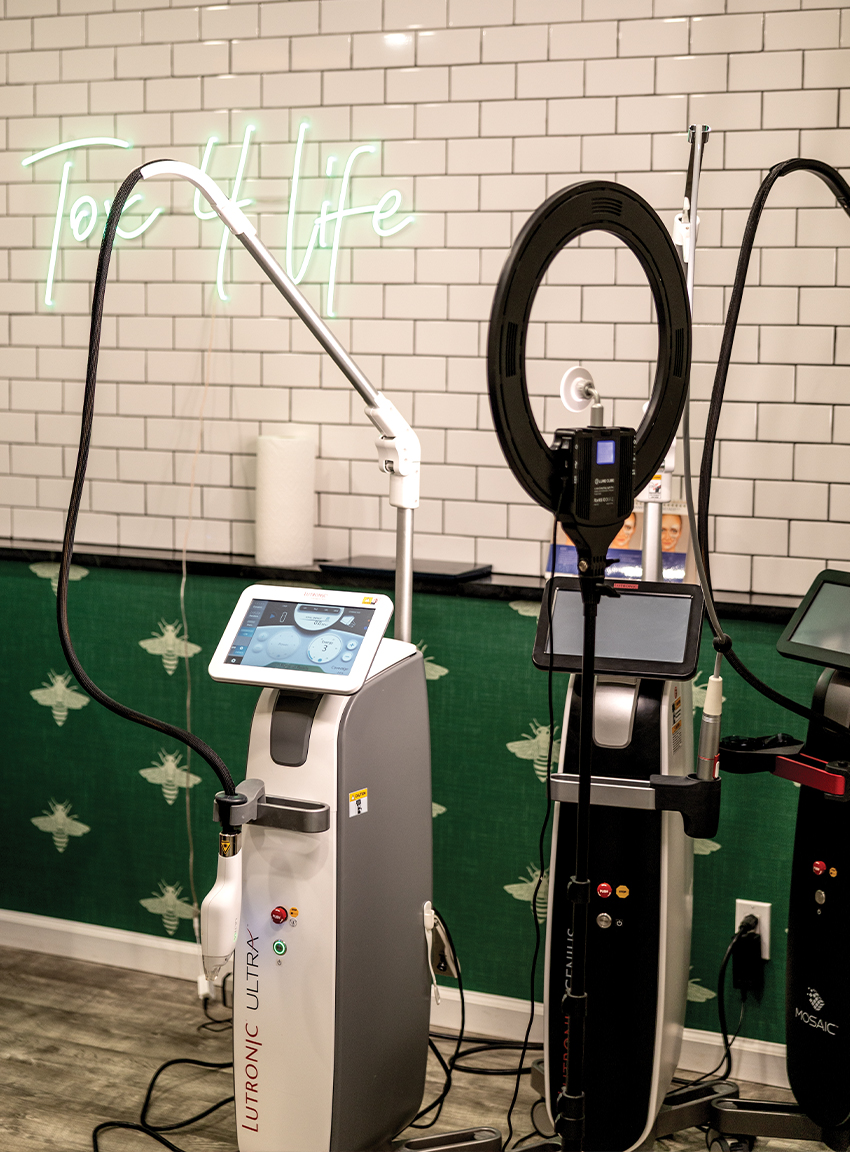

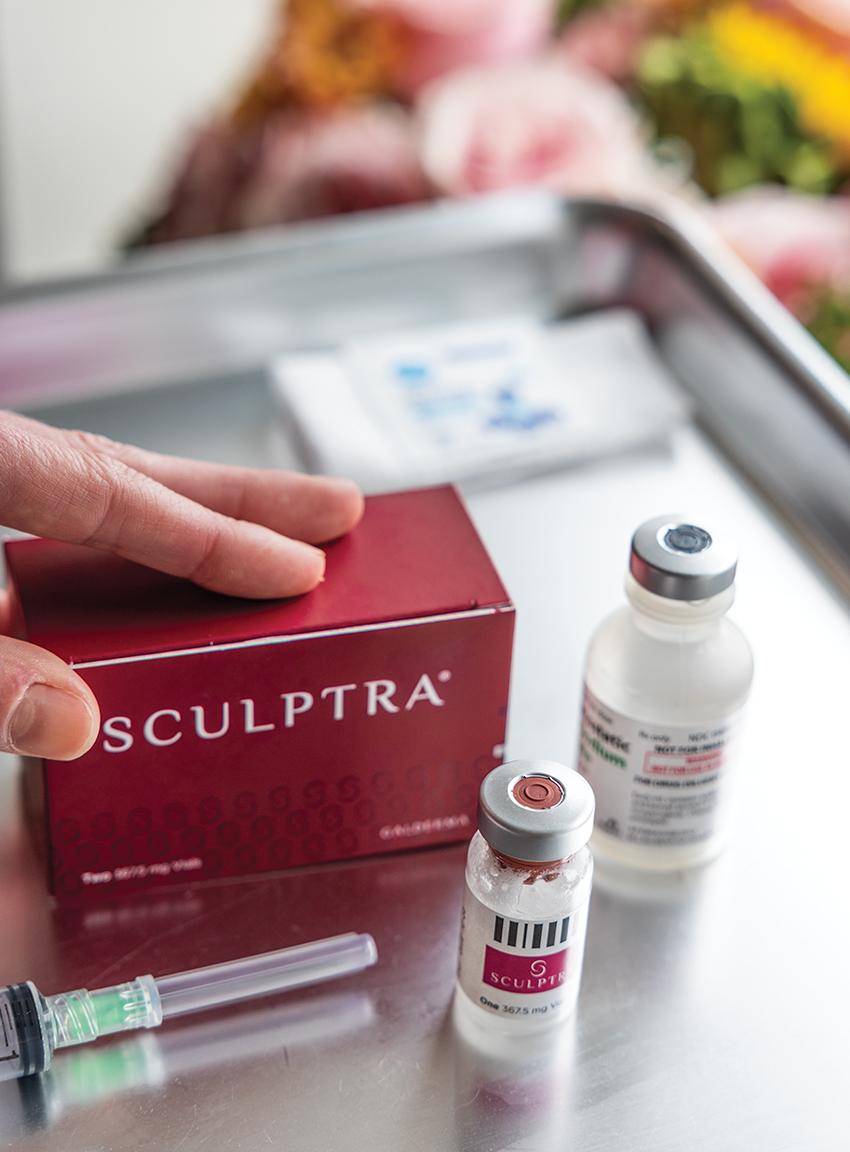
A combination approach is typically required, with follow-ups every two to three months to assess changes and adjust treatment as needed. “You don’t have to choose between your body and your face,” Thornton says. “You can have your healthiest body and the best version of your face simultaneously.”
Hair loss is the other concern she hears about regularly, and the one most likely to send patients into a panic. The shedding typically begins two to four months into significant weight loss and is a stress response. The GLP-1 drug itself is unlikely to be the direct cause; caloric restriction and nutritional deficiencies are the more probable drivers. The reassurance, however, is clear: it is almost always temporary. Once weight loss stabilizes and nutrition improves, shedding typically resolves within three to six months.
In the meantime, Thornton recommends a mix of at-home care, including nutraceuticals, laser devices and topical growth serums, along with in-office regenerative treatments such as PRP and Keralase. But she emphasizes that maintenance drives results.
The nutritional piece extends well beyond hair. Barbara Schmidt (a New Canaan-based MS, RDN, CDN) works with GLP-1 patients whose appetite suppression is powerful enough to crowd out the nutrients their bodies still need. Her focus is on pace. “One to two pounds a week is really the goal, even on these GLP-1s,” she says. Faster than that, and the body starts making trade-offs—muscle being among the first sacrifices.
Which brings the conversation to muscle. Chris Charise, a personal trainer who runs 203 Fitness, makes a point he finds himself repeating constantly: Not all weight loss is created equal. Losing 30 pounds on a GLP-1 can sound like an unambiguous success, but if 15 of those pounds came from muscle rather than fat, the metabolic picture becomes far more complicated than the scale suggests. Muscle is the primary site of glucose metabolism; losing it can increase insulin resistance (a precursor to type 2 diabetes) and slow resting metabolism setting the stage for rapid weight regain once medication stops.
His prescription is progressive resistance training: a structured program designed to get incrementally stronger over time, with enough frequency and volume to give the body a reason to preserve muscle. Adequate protein is equally non-negotiable, according to both Schmidt and Charise.
Charise points to the work of Dr. Donald Layman, a protein metabolism researcher whose findings suggest that a minimum threshold of 2.5 to 3 grams of leucine—an amino acid found most reliably in animal proteins and quality protein supplements—is required to meaningfully stimulate muscle protein synthesis. In practical terms, that translates to roughly 25 to 30 grams of protein per meal. The protein-labeled chips, muffins and granola bars now crowding grocery store shelves, he notes, rarely come close.
He also raises a structural concern. GLP-1 medications, unlike bariatric surgery, typically come without built-in guidance on exercise or nutrition. Bariatric patients are supported by multidisciplinary teams and followed closely over time. GLP-1 patients, in many cases, receive a prescription and little else. “There is no real further conversation about resistance training or the need to increase your protein,” Charise says. That gap is where patients are most vulnerable— not to the medication, but to the absence of support around it.
The drugs work. That, at this point, is well established. What is less established—and what the specialists most want people to understand—is that the sustainable results require building something alongside the medication. The face, the hair, the muscle: none of it maintains itself. But all of it can be supported.